This book, like much in broadcasting, is the product of a team. Busy colleagues, some in the BBC and some now elsewhere, have gladly made time to search memories and record shared aspects of Richard Dimbleby’s versatile broadcasting career. Several of them are professional writers. All have refused payment, or directed that it should be made to the Richard Dimbleby Cancer Fund, King Street, Richmond, Surrey, to which all the proceeds of this book will be given.
I am indebted to the Editors of The Times, the Daily Mail, the Sunday Telegraph, the Spectator and New Christian for permission freely to reprint articles which appeared in their pages, to the Managing Directors of Associated Newspapers Ltd and Hodder & Stoughton Ltd for allowing me to reproduce writings by Richard Dimbleby originally published in the Sunday Dispatch and The Frontiers are Green, and to Avril Anderson, the author of the poem ‘Tribute’. They too have waived payment for their copyright.
Mrs Richard Dimbleby has kindly supplied many photographs. David Dimbleby has given wise guidance.
Jennifer Jeremy, Stephanie Johnson and Hugh Tosh have given splendid assistance in preparing illustrations and tracing broadcasts.
The manuscript of this book could not have been completed within seven weeks of Richard Dimbleby’s death without fast and accurate typing, which has been done by Gwen Willson.
To all of them and to my colleagues in BBC Publications I record my thanks.
One evening, early in May 1936, a 22-year-old journalist sat in his Bloomsbury bed-sittingroom listening to the wireless. The announcer gave the familiar introduction: ‘Here is the news, copyright by Reuter, Press Association, Exchange Telegraph and Central News.’ The news bulletin itself was authoritative, impersonal, and rather dull. It was all culled from agency messages. There were no BBC reporters, and the unseen announcer wore a dinner jacket.
The young journalist decided to write to the Chief News Editor of the BBC, John Coatman. He made detailed proposals for a livelier method of presenting BBC news and suggested a career for himself:
45 Torrington Square, W.C.1
[undated]
Dear Mr Coatman,
Aged 23
You may remember that a few weeks ago you were good enough to give me an interview at Broadcasting House when I enquired about possible vacancies on your staff.
Since then I have been hoping to hear from you, but I quite understand that the possible opening you mentioned may not occur for some time.
Meanwhile I am daring to make a suggestion concerning the news bulletins which you may care to consider. Naturally, I should very much like to assist with it myself, but that is not the only reason for which I make it.
It is my impression, and I find that it is shared by many others, that it would be possible to enliven the news to some extent without spoiling the authoritative tone for which it is famed. As a journalist, I think that I know something of the demand which the public makes for a ‘news angle’, and how it can be provided. I suggest that a member or members of your staff – they could be called ‘BBC reporters, or BBC correspondents’ – should be held in readiness, just as are the evening paper men, to cover unexpected news for that day. (Some suggestion of this sort is, I believe, contained in the Ullswater report.) In the event of a big fire, strikes, civil commotion, railway accidents, pit accidents, or any other of the major catastrophes in which the public, I fear, is deeply interested, a reporter could be sent out from Broadcasting House to cover the event for the bulletin.
At the scene, it would be his job, in addition to writing his own account of the event, to secure an eye-witness (the man or woman who saw it start, one of the survivors, a girl ‘rescued from the building’) to give a short eye-witness account of the part he or she played that day. In this way, I really believe that news could be presented in a gripping manner, and, at the same time, remain authentic.
Everyone, I think finds the agency reports a trifle flat after a time – as, indeed, they are bound to be. It is for that reason, I take it, that you keep an observer at Geneva, and incorporate a short talk in the bulletins on some topic of the day. But these talks are always academic – they come from an authority on the subject. There can be no vital authority on a sudden news event, unless it be the man in the street who was on the spot.
Technically, the scheme should present no difficulties. Through the Saturday Magazine and In Town Tonight, you already know that the rather uncouth voices of Londoners and countrymen can be recorded or transmitted satisfactorily, and you are used to last minute arrangements. The description of the event, in addition to the story written by the reporter and any agency matter which you may care to use, could be transmitted from the studio, to which your representative could bring the eye-witness.
Alternatively, if that person should be unable to come, it should be possible to record his or her brief description in the mobile van which you keep for actuality programmes. Such a news bulletin would itself be a type of actuality programme. I do submit, however, that a journalist should be given the job of assisting with its presentation, rather than a BBC producer.
I do not propose that the whole of the news should be treated in this way, although a staff man at the regional centres could cover you in the same way, and big events of the type could be relayed for the news from these places. The usual foreign, political, and personal news would still be supplied by the agencies or by your own representatives direct.
This principle of enlivening news by the infusion of the human element is being followed in other spheres, as you know. The newspapers, of course, have demanded interviews for their big stories for many years, and I myself have had to obtain eye-witness accounts and personal interviews for hundreds of stories of all types.
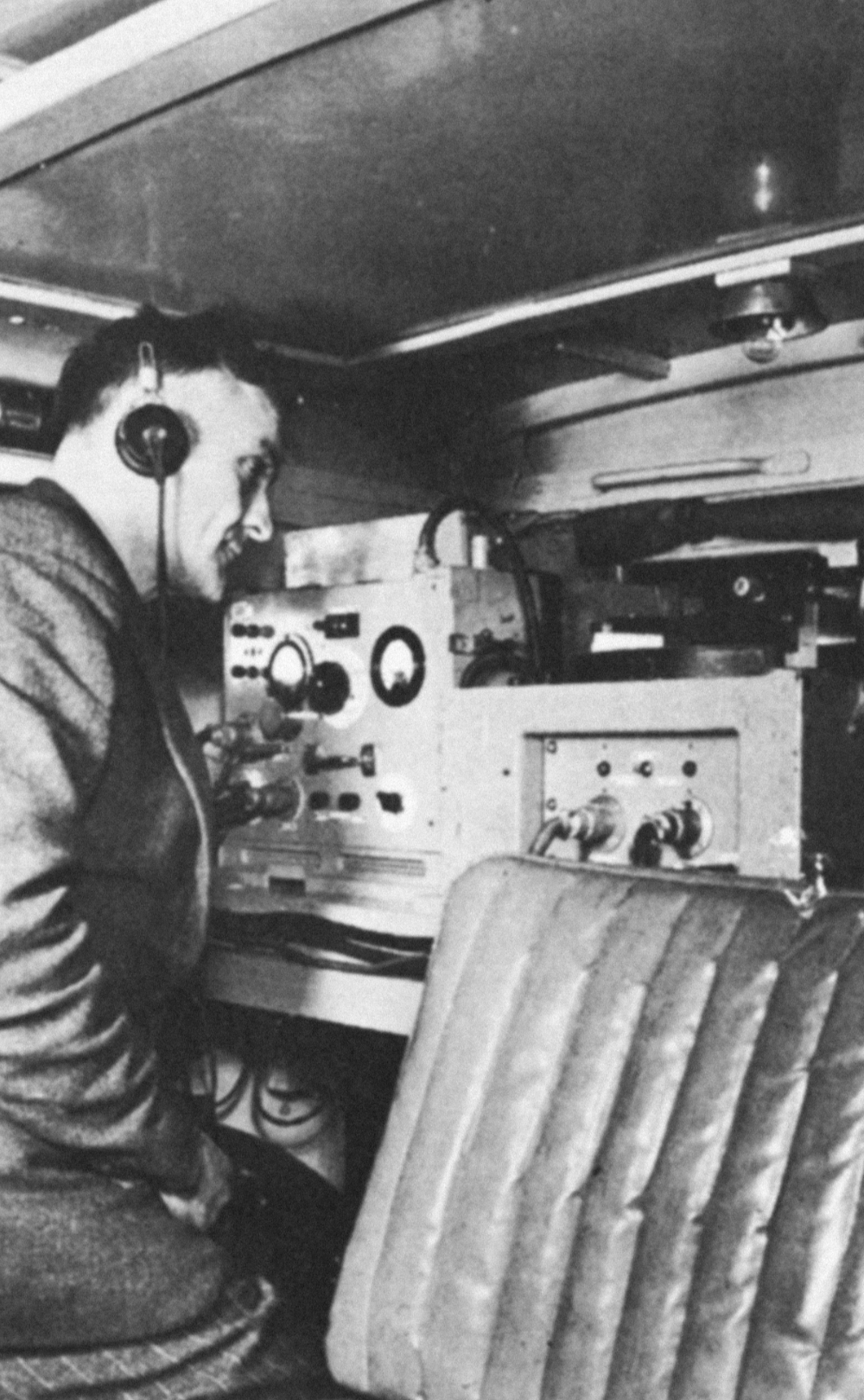
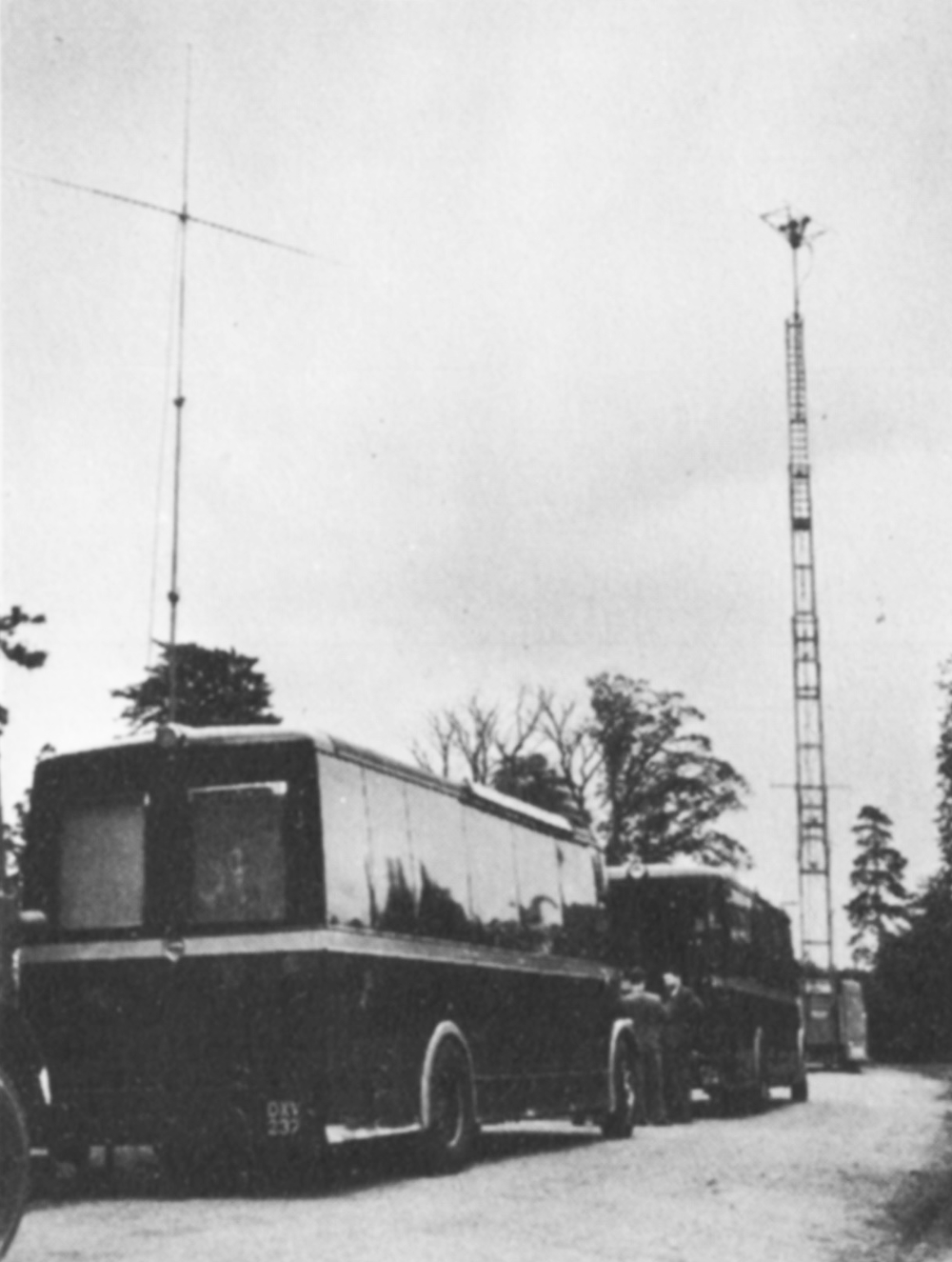
‘Professor’ Stanley Unwin operating pre-war recording van
The newsreels are following suit, The March of Time being an example. In this, as you may have seen, the method followed is that of not only showing the news, but telling why, and how, it happened. That is what I suggest the BBC could do with great success, not only with sudden events or catastrophes, but with all types of news which at present come to the listener from the pen of a Press Association or Exchange Telegraph man who gives the same story to hundreds of provincial evening papers and London dailies.
If the news service of the Corporation is to be extended, both for home programmes and those to the Empire, would this not be a valuable part of the programme? It does seem to me that in the future and particularly in the event of national emergency, the BBC will play a vital part. Recorded news bulletins of the type I suggest would also prove valuable libraries of this century, for the next.
If you put this scheme into operation, or even included part of it in your future scheme, I should be happy if I were able to play a part.
I have had the type of experience needed, both among country people in the provinces and in the suburbs. Now I am in Fleet Street, and it may possibly interest you to know that I have been appointed news editor of the Advertiser’s Weekly – I now have, I believe, the doubtful honour of being Fleet Street’s youngest editor, a position which my father enjoyed thirty-five years ago at the same age.
But I have detained you far too long already. I hope that you have found time to read this long letter, and that it may be of some use. I do hope that there may be some opportunity for me in your department in the not too distant future, for I really am interested and confident that I should be of use to you.
Yours very truly, Richard Dimbleby
The BBC News Department happened to have a vacancy for a subeditor at the time and Dimbleby was urged to apply formally for that post. In May 1936 he was not quite twenty-three, but had been working in printing and newspapers for nearly five years.
‘… I am a member of an old journalistic family – my father has been in Fleet Street and Whitehall for nearly forty years – and I have had hard experience in many branches of daily and weekly newspaper work.
‘After preparatory education at “Glengorse”, Eastbourne, I went to Mill Hill School. I was afterwards prevented from going to University, but obtained London University matriculation. Almost immediately after leaving school, I went into my family’s newspaper and printing business at Richmond, Surrey, started at the bottom, and worked my way through printing, paper, and advertising departments before joining the reporting and sub-editorial staffs of the three weekly papers.
‘I remained at Richmond, carrying out all types of local news work and sub-editing until the Spring of 1934, when I joined the staff of Southern Newspapers, Ltd, Southampton. Here I was on the editorial staffs of the Southern Echo and Bournemouth Daily Echo, and was local correspondent in the New Forest area for the leading London dailies and news agencies. I represented both of these evening papers at the same time over an area of a hundred square miles, sending each separate stories of all news events, principally from the New Forest area. As a district representative and during Head Office work, I carried out a great deal of sub-editing as well as general and descriptive reporting. I became used to all forms of rapid news work, at any hour of the day or night.
‘In December last year, I resigned and joined the staff of the Advertiser’s Weekly, Fleet Street, for the sake of coming back to London. After working for three months on the editorial staff, I have been appointed News Editor; and rank, I believe, as the youngest news editor in Fleet Street. Naturally, I am having hard experience here, as this paper has a reputation for weekly exclusive stories, and is regarded as one of the boldest and most go-ahead trade or news papers in the country.
‘I write shorthand, have a fairly fluent command of French and a smattering of German. I also have a car, and live alone within a mile of Broadcasting House. I am single….’
References were taken up. Dimbleby’s former Headmaster at Mill Hill, the great M. L. Jacks, wrote:
‘I knew him well when he was a boy at this school a few years ago, and I formed a high opinion of his character and ability. His conduct, industry, and progress were always good, and he did well all round. He had the faculty of getting on with other people, and was universally liked. I have no hesitation in recommending him for an appointment on your staff; you would, I am sure, find him trustworthy, reliable, and always anxious to do his best; I think his best will be very good.’
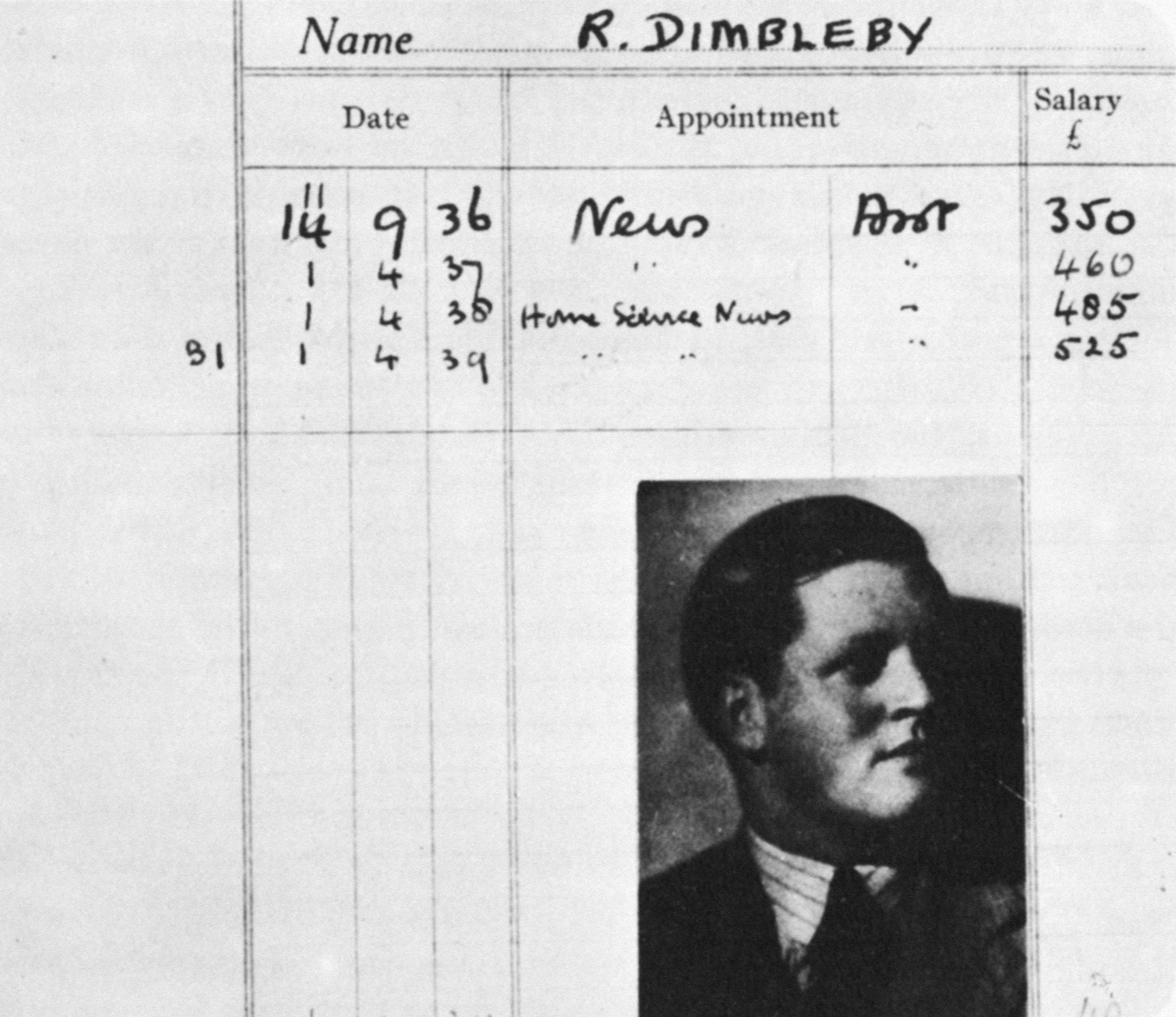
In the event, Charles Gardner, rather than Dimbleby, was appointed to the sub-editor post, but soon there was a more suitable vacancy and Dimbleby was engaged to start work as a Topical Talks Assistant in the News Department on Monday 14 September 1936. Ralph Murray, his immediate boss, was however due to leave on 16 September for Geneva to report from the League of Nations. Dimbleby arranged with Murray to arrive on Friday 11 September and work over the weekend to familiarise himself with the new job.
It was typical of Dimbleby to arrive early and do the maximum preparation. In the Staff Record ledger kept by Sir John Reith in the Director-General’s office his starting date had to be adjusted. His salary was £350 a year.
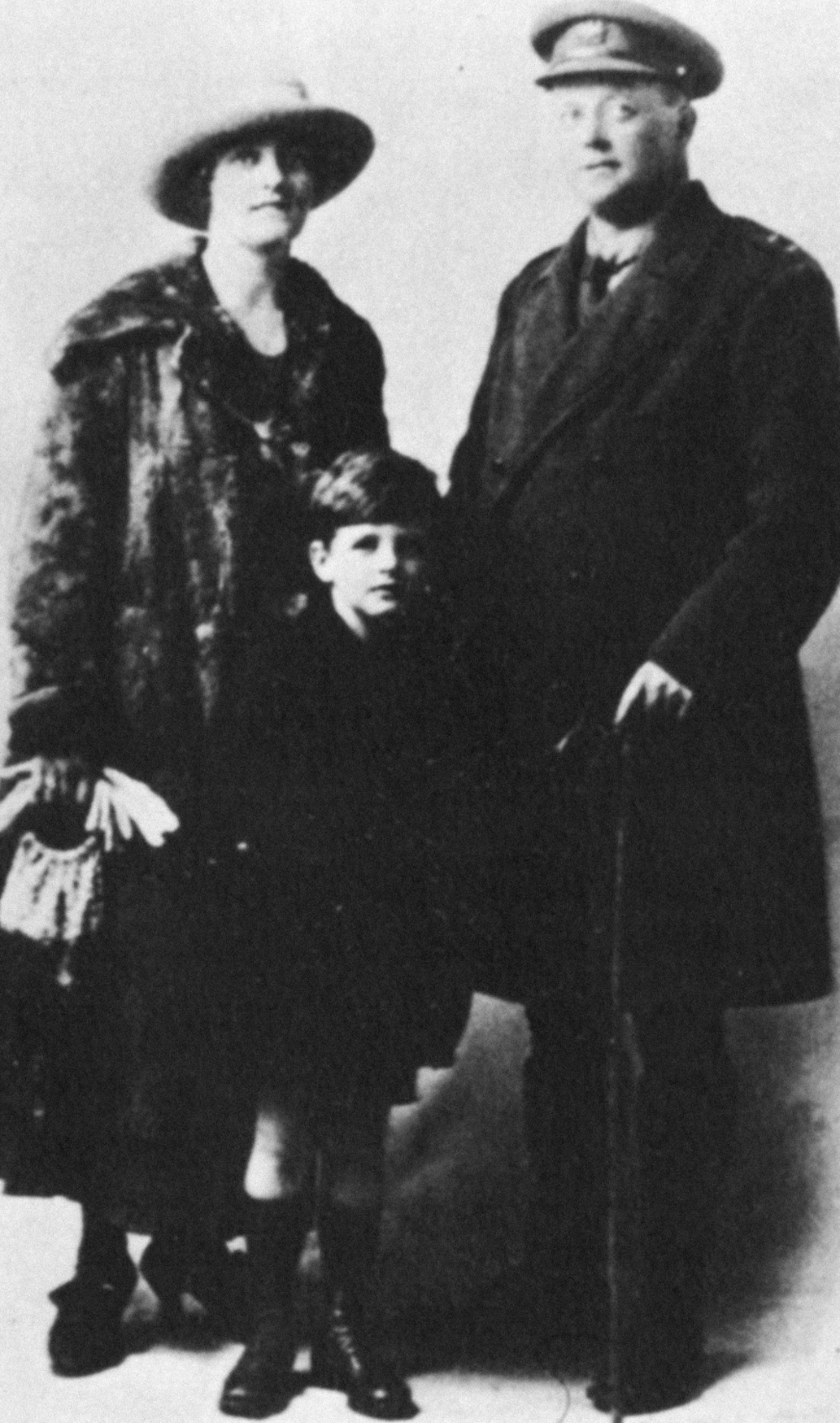
Aged 5, with mother Gwen and father Lt F. J. G. Dimbleby
Frederick Richard Dimbleby was born on 23 May 1913 into a journalistic family. His grandfather, F. W. Dimbleby, had acquired a group of local newspapers at Richmond, Surrey, towards the end of the last century. His father, Frederick J. G. Dimbleby, had worked in Fleet Street for much of his life. He had served Lloyd George, and had been press officer at the Ministry of Labour. For many years he was the political correspondent of the ‘Daily Mail’, but he fell out with his employers over pre-war attitudes to fascism and withdrew to the less lucrative field of the family local papers.
This change in the Dimbleby fortunes put an end to Richard’s hopes of going on from his public school to Oxford or Edinburgh and eventually becoming a surgeon. Instead he put on an apron and was set to work at F. W. Dimbleby and Sons Ltd to learn all about printing and the newspaper business. He was taught to set type and to write copy. He covered police court cases and organised advertising.
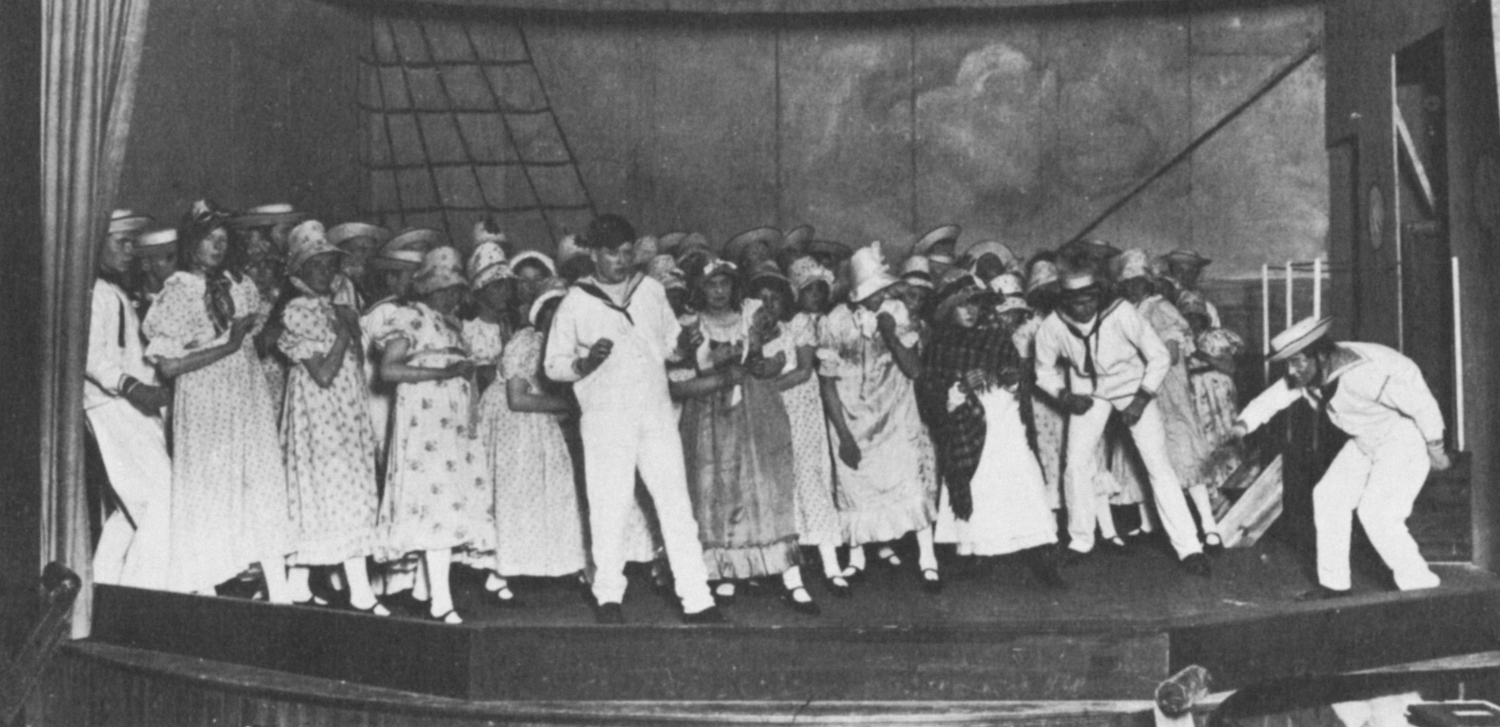
His mother, née Gwendoline Bolwell, had a pleasant contralto voice. She used to sing to young Richard and his sister Patricia. She also used to sing for the Richmond Operatic Society, in musicals such as ‘Rose Marie’, ‘The Desert Song’ and ‘The Vagabond King’. Indeed the Dimbleby background held elements of show business as well as journalism. Richard’s father was on the business-management side of the Richmond Operatic Society, and Richard himself loved the weeks when at the age of twelve he acted as call boy. At Mill Hill he played Ralph Rackstraw in the school production of Gilbert and Sullivan’s ‘H.M.S. Pinafore’, and throughout his broadcasting career he relished being produced as an actor enjoys good direction.
Richard Dimbleby was also a talented pianist and organist. Later, on countless occasions in all parts of the world he was to entertain friends with improvisations at the piano. He was the first to play publicly on the new organ at the Festival Hall, and once the London air rang out with ‘Oranges and Lemons’ when Richard played the bells at All Hallows Church at the Tower. Music and messing about in boats were always his main sources of relaxation.
By twenty-three he had had a thorough grounding in journalism, and plenty of energy, enthusiasm and self-confidence. But he had no experience at all of broadcasting.
L. F. Lewis, now the Engineer in charge of Sound Outside Broadcasts, was told to take the BBC’s only mobile recording van to the model engineering exhibition at the Royal Horticultural Hall in London, and look out for a rosy-faced young man outside the entrance. ‘For goodness sake help me,’ Richard said. ‘This is my very first BBC job.’ Twenty-four hours later he told Lewis, ‘It’s all right, I’m in.’ He was, but only just.
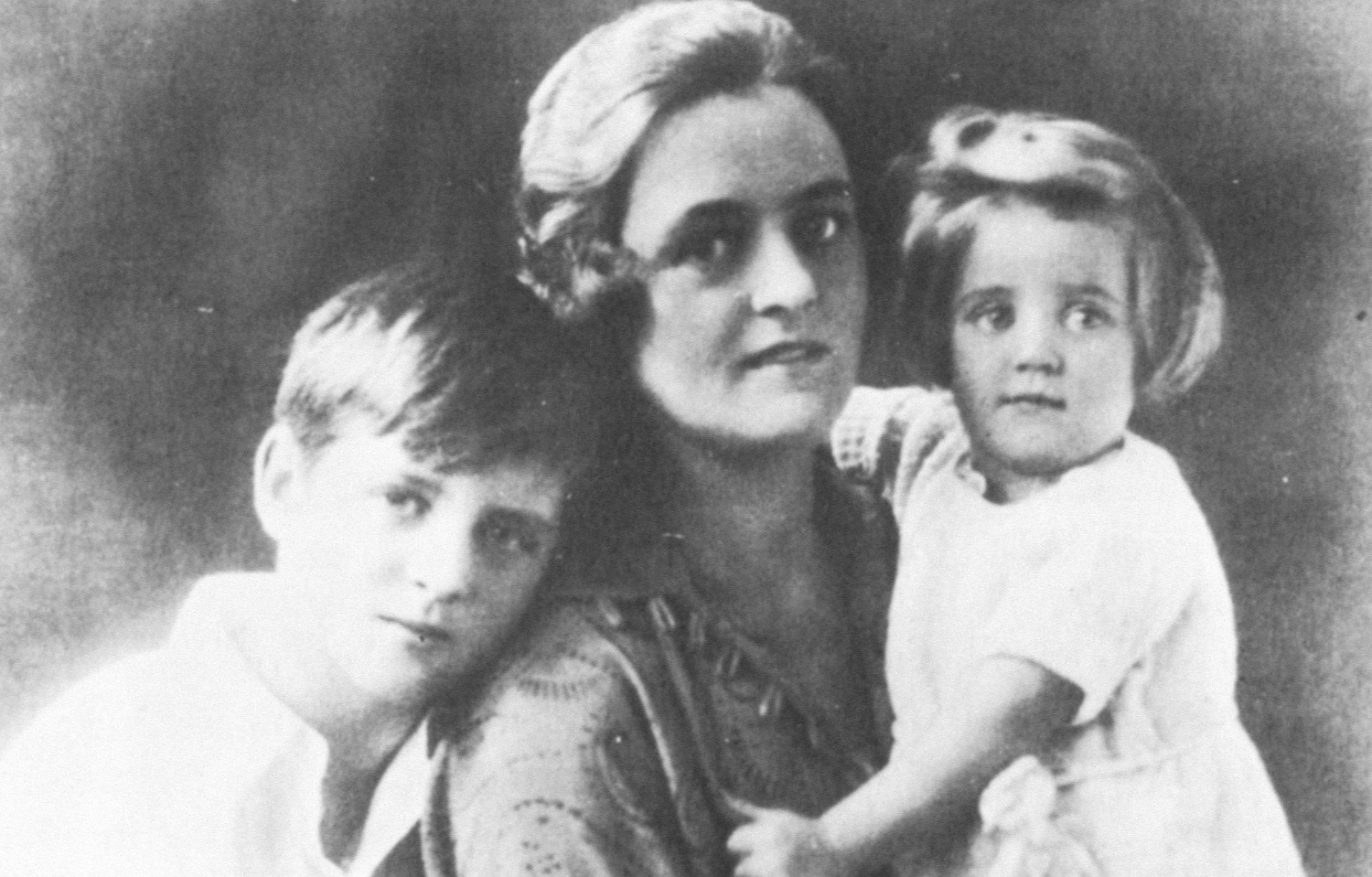
Aged 10, with mother Gwen and sister Pat
Tony Wigan, BBC United Nations Correspondent, was then chief sub-editor. He recalls:
‘He very nearly didn’t make it. His very first broadcast in the nine-thirty News was heard by the Director-General, then Sir John Reith, to us both a deeply respected and rather frightening man. The Newsroom phone rang three times, the signal that the D.G. was on the line. He enquired the name of the reporter in the News and on being told said only that he never wanted to hear him again. But Dimbleby was given another chance and matters arranged themselves.’
Arthur Phillips, a Programme Assistant with the mobile recording van, went with him on his first actuality news broadcast which came from a cowshed near Amesbury, hardly an auspicious beginning for a great broadcasting career.
‘Cherry, a champion cow, had broken the milking record and Richard Dimbleby was sent down to cover this great event. We went down together with the recording van and by the light of a hurricane lamp – and with Cherry breathing steamily over his shoulder – Richard made his first radio interview. He put up the microphone and said “Moo” – and she mooed. But this was only half the job; the recordings which were required for the ten o’clock News had to be edited and transmitted from the Bournemouth studio, a very primitive lash-up of a place over a cycle shop. Just before transmission the only gramophone turntable in the place completely gave up the ghost and nothing would make it rotate.
‘Writing of this some years later, Richard said, “As the ten o’clock News approached I was in despair. To tell the truth, I had an unpleasant feeling that if my first effort at broadcasting was a failure I might lose my nerve and never be able to do the job at all.” But his anxiety was never apparent to me as I turned the record with my finger for the duration of the broadcast. As he said later, “The whole thing went off like a dream, and no one in the world was happier than I, though the memory of it made me tremble.”
‘H.M.S. Pinafore’ at Mill Hill School, 1928
‘He tackled his news reporting with zest and tireless enthusiasm; floods in the fens, gales on the Welsh coast, an interview with William Morris, the motor magnate, a shipwreck, a stranded Cornish lighthouse keeper, were some of his early assignments, and recording engineers L. F. Lewis, Harvey Sarney and myself spent many hours in his ancient Morris Oxford being driven at breakneck speed about the countryside. We were always reluctant to sit in the front seat with Richard, for when it got dark and the engine warmed up you could see the exhaust manifold glowing white hot through a hole in the floorboards, and when you complained the answer you got was – “Nothing to be afraid of, it’s done thousands of miles like that”. It had, too.
‘Dimbleby was not yet a household word. There were inevitably times when it was either mispronounced or misspelled. Before the war he was to report on some fleet exercises off Gibraltar, and in the harbour a destroyer steamed alongside the P & O liner that had taken him out from England and a voice called over the loud hailer, “Have you a Mr Soapleby aboard?” He was Mr Soapleby for the rest of the exercise, preferring the Ward Room’s mild amusement at this rather odd name to the mirth he thought there would have been had he told them of their mistake.’
When Dimbleby returned from the Middle East in 1942 he unsuccessfully applied to he sent as a war correspondent to Russia. Even in the middle of the war the BBC was already planning its post-war news coverage of foreign affairs. The small pre-war team of news observers, now developed into a great war reporting unit, was to be supplemented by BBC correspondents in the main foreign capitals. The reliance on news agency reports was to be finally broken. An announcement on the BBC’s notice boards invited applications for possible post-war correspondents’ posts. Dimbleby suggested that in addition to the coverage of diplomatic exchanges and international affairs as such there should be two BBC general reporters in Europe, who could fly at a moment’s notice to cover straight news events, much in the way he and Charles Gardner had done in Britain before the war.
He suggested that one should be based in Berlin to cover Northern, Central and Eastern Europe, the other in Switzerland to cover the countries bordering the Mediterranean. He proposed himself for the second post. Unlike 1936, this time his proposal was turned down. The then Foreign News Editor feared that ‘it would cut the ground from under the resident BBC correspondent’s feet if Dimbleby or anyone else were given a roving commission in their territories for descriptive reporting’.
F. J. G. Dimbleby, Richard’s father, had died at the end of 1943, after a long and successful career in journalism. Richard himself was then living with his wife and two children in the little village of Cuddington on the borders of Buckinghamshire and Oxfordshire. His uncle, Percy Dimbleby, who was the Managing Director of ‘The Richmond and Twickenham Times’ and the other newspapers and the printing works, invited Richard to join the Board. The invitation remained open.
When Richard returned from the war he was not wanting further work abroad and did not join those of us who were establishing the first corps of BBC foreign correspondents. He was however hoping for interesting work in the BBC at the microphone. He later revealed, in answer to a question from Daniel Farson in ‘Frankly Speaking’ in 1961, why he resigned from the BBC at the end of the war:
Farson: You had established yourself as a most successful war correspondent. Was it ambition that led you to resign from the BBC?
Dimbleby: No, no. It was the fact that I had to become a director of the family newspapers, coupled with – let me be quite honest – coupled with something else.
The then Controller of Programmes of the BBC sent for me and said, ‘What are you proposing to do, now that the war is over?’ And I said, ‘I don’t quite know’. I had hoped – because I was reasonably well known by then, to put it pretty bluntly – I had hoped they would offer me something which was interesting. He said, ‘Well, I’m afraid we have got nothing to offer you. But we can offer you a place in the pool of home reporters’ – which was twenty-five people who were doing the three-minute pieces all around with everybody. And I just thought to hell with that, and said, ‘No, nothing doing’.
Now simultaneously with this, at the very same time, the family newspaper situation had developed and I had to go and become a director of that.
The BBC had very strong views about people being actual directors of things like newspaper companies while on the permanent staff. So it all fitted together very well. And I was able to say to him: ‘I can’t accept that. I’ll resign,’ knowing that I had the directorship to fall back on when I went out.
I remember pacing along a corridor in Broadcasting House with Richard Dimbleby in the summer of 1945. I had just returned from reporting the immediate post-war situation in Czechoslovakia and was waiting to go out to Washington. Richard was just back from Berlin. He was then earning £1,000 a year and was determined to get £1,100. The administrative people in the News Division had refused to upgrade him as a reporter. If he left the microphone and took an editorial job his ceiling could be raised. Richard was adamant that he was not leaving the microphone, and told me that with the family newspapers behind him he was going to chance his arm as a freelance. For the News Division it was shortsighted parsimony. As a part-time freelance Richard at the microphone was going to earn far more than £1,100 from the BBC every year for the rest of his life.
Under his uncle, Richard Dimbleby became the editorial director of the family newspapers. Eventually, with his mother’s co-operation, he bought out Percy Dimbleby’s interest and acquired the sole control of them. Besides the family papers, as a freelance he had the additional cushion of a three-year contract from Sir Alexander Korda to write films, though no film scripts were in fact asked for. But in the first instance his resignation from the BBC staff was a gamble. Television, closed for the duration of the war, had not yet reopened. Dimbleby’s freelance broadcasting life started modestly with some schools book programmes and a regular newsletter to North America, but very soon developed.
He was greatly sustained then, as ever, by his most fortunate marriage. Dilys Dimbleby, as a journalist herself, understood the demands of his career, and from the day of their wedding in 1937 was a constant source of professional help and advice. She was also the only critic he trusted. She took over the management of all his professional affairs. She arranged his contracts, organised his diary, and negotiated his fees. On many occasions she also accompanied him on work both in England and abroad, not only acting as a hostess for him, but sitting beside him during commentaries, organising his notes, passing him messages. In the early days of State commentaries Richard used to get letters from women viewers grumbling that his descriptions of the Queen’s clothes were hopelessly inadequate. From then on, whenever possible, Dilys was there to jot down accurately – ‘pale blue tulle’ instead of ‘a sort of light blue cotton’.
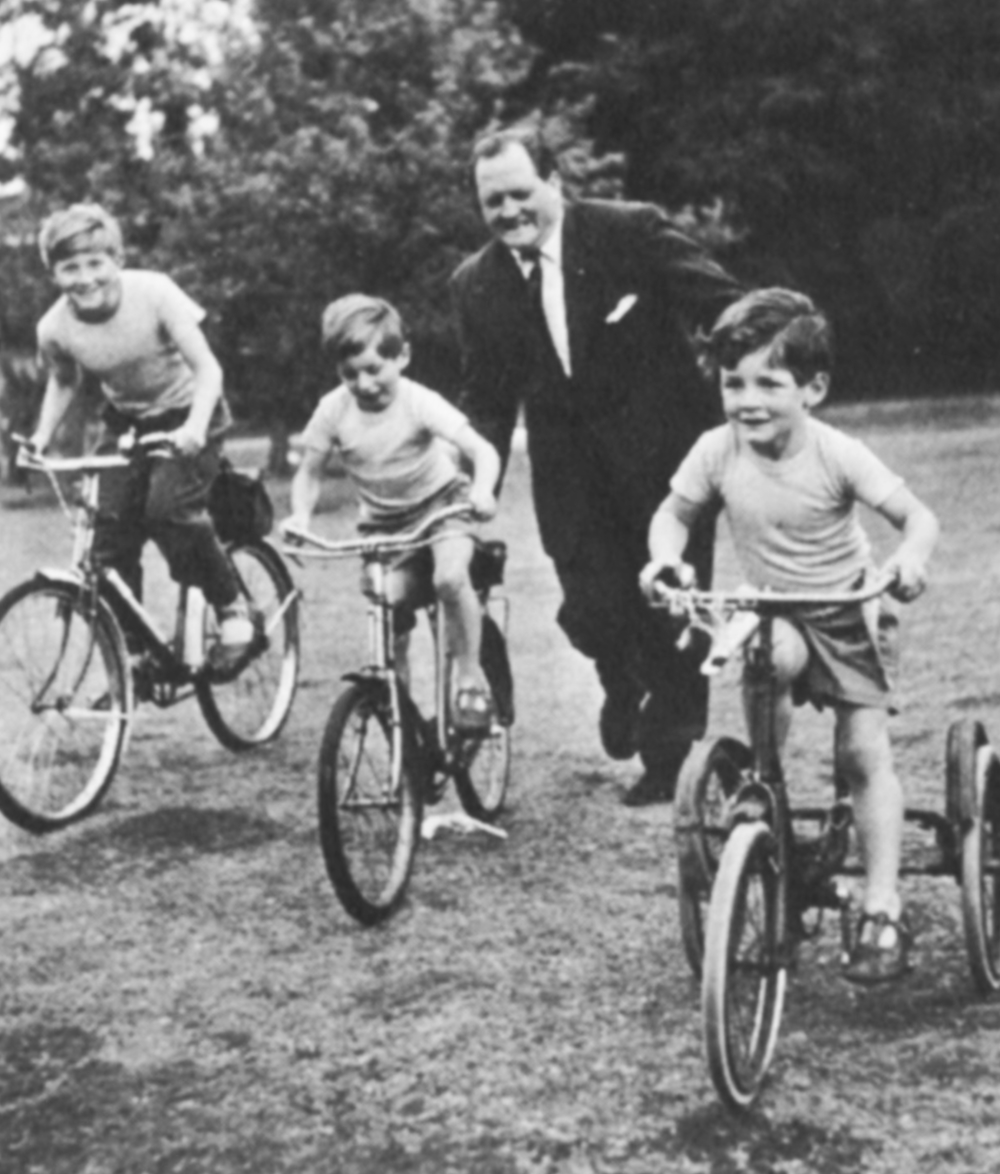
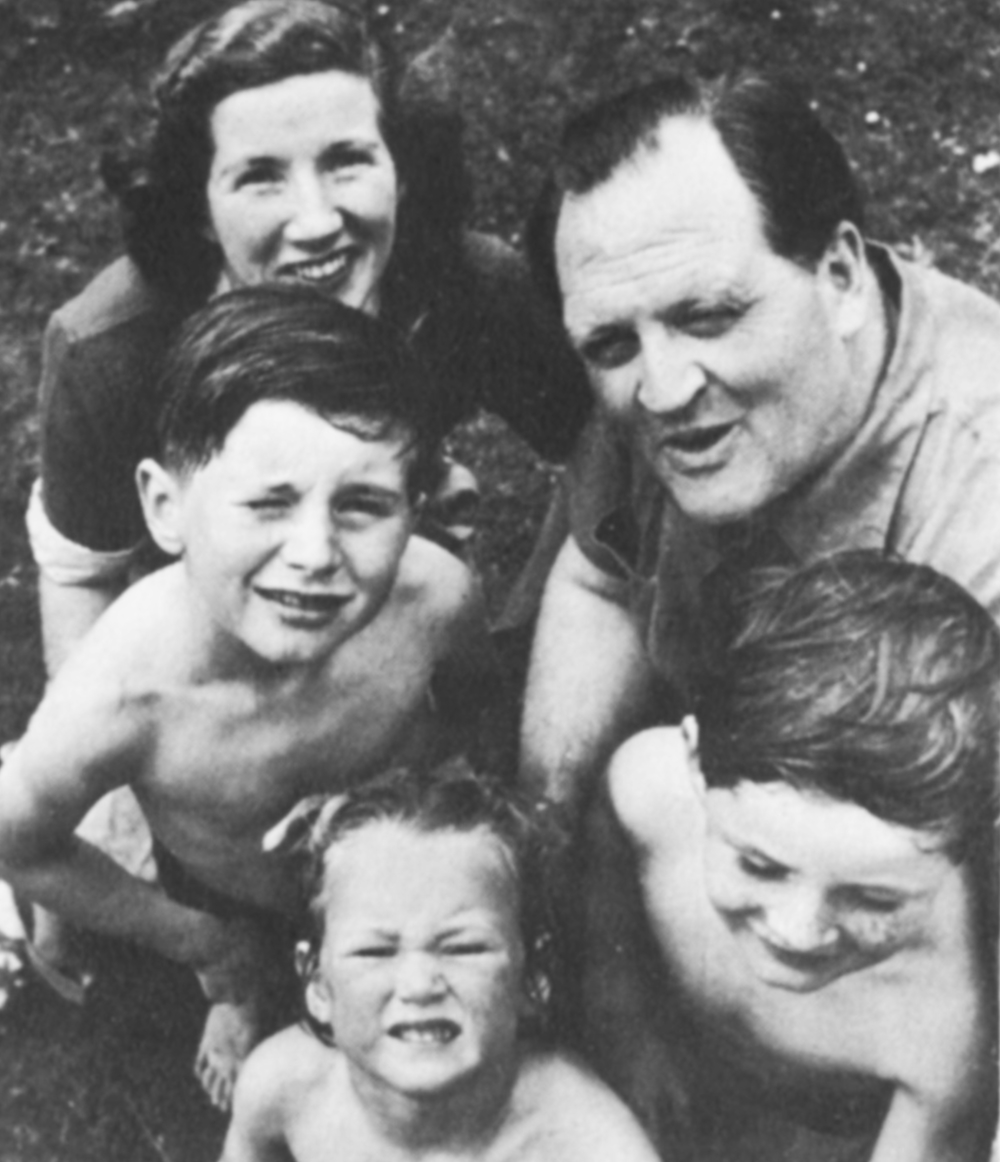
They had in all four children, David (1938), Jonathan (1944), Nicholas (1946) and Sally (1947), and their family life was singularly happy. His secretarial work was done by his sister Patricia (Mrs John Haines) who spent two days a week at his house acting as his personal assistant. As Richard prospered he added to his roles of broadcaster, writer and newspaper proprietor those of chairman of Puritan Films and Film Partnerships, chairman of the Commonwealth Group of Unit Trusts, and farmer. In all these enterprises Dilys was his active partner. She appeared with him, and the rest of the family, in films they made to demonstrate the merits of different holiday places at home and abroad, and she sometimes appeared in the television studio herself.
In July 1996 Panorama included a discussion based on the book ‘Getting Married’ published by the British Medical Association. In the studio Richard interviewed a doctor, and then an engaged couple. Finally he interviewed an anonymous witness:
Dimbleby: Now, one more opinion before we finish, that of a woman who has been happily married for nineteen years and has four children. You may perhaps some of you know her. I’d like to ask you if you’d give us your opinion now whether you think anything has been left out that should have gone in.
Married Woman: Well, I think the only thing that has been left out is something that really couldn’t go in any book, and that’s the question of the heart; I mean what is in your own heart really governs the whole of marriage, and I think that that you couldn’t put in. But I think where the book fails, and fails dismally, is that it doesn’t make a reality of marriage. It’s rather suggested that if you follow the rules laid down, and if you follow the pattern set by the writers, all will go well and everything will be blissful. I think that’s nonsense and I think it would be awfully dull if marriage was like that.
He then revealed the identity of his guest:
Dimbleby: Well, thank you very much. May I say that the last witness and I have been very happily married for nineteen years.
It was in the last five years of Richard’s life, when he was suffering from cancer, that Dilys played her noblest role. During that time she was a constant support and encouragement to him and her determination and sagacity played an immeasurable part in his insistence in carrying on his broadcasting work as though nothing had happened. Throughout those five years she alone knew of all the pain and the depression that he suffered. She bore the burden of his illness with him and shared his public cheerfulness. In the last three months of his life Dilys was constantly with him, often staying the night at the hospital and always there eighteen hours a day, helping to nurse him, encouraging him, and talking to him about plans for the future. She was a wife he deserved.
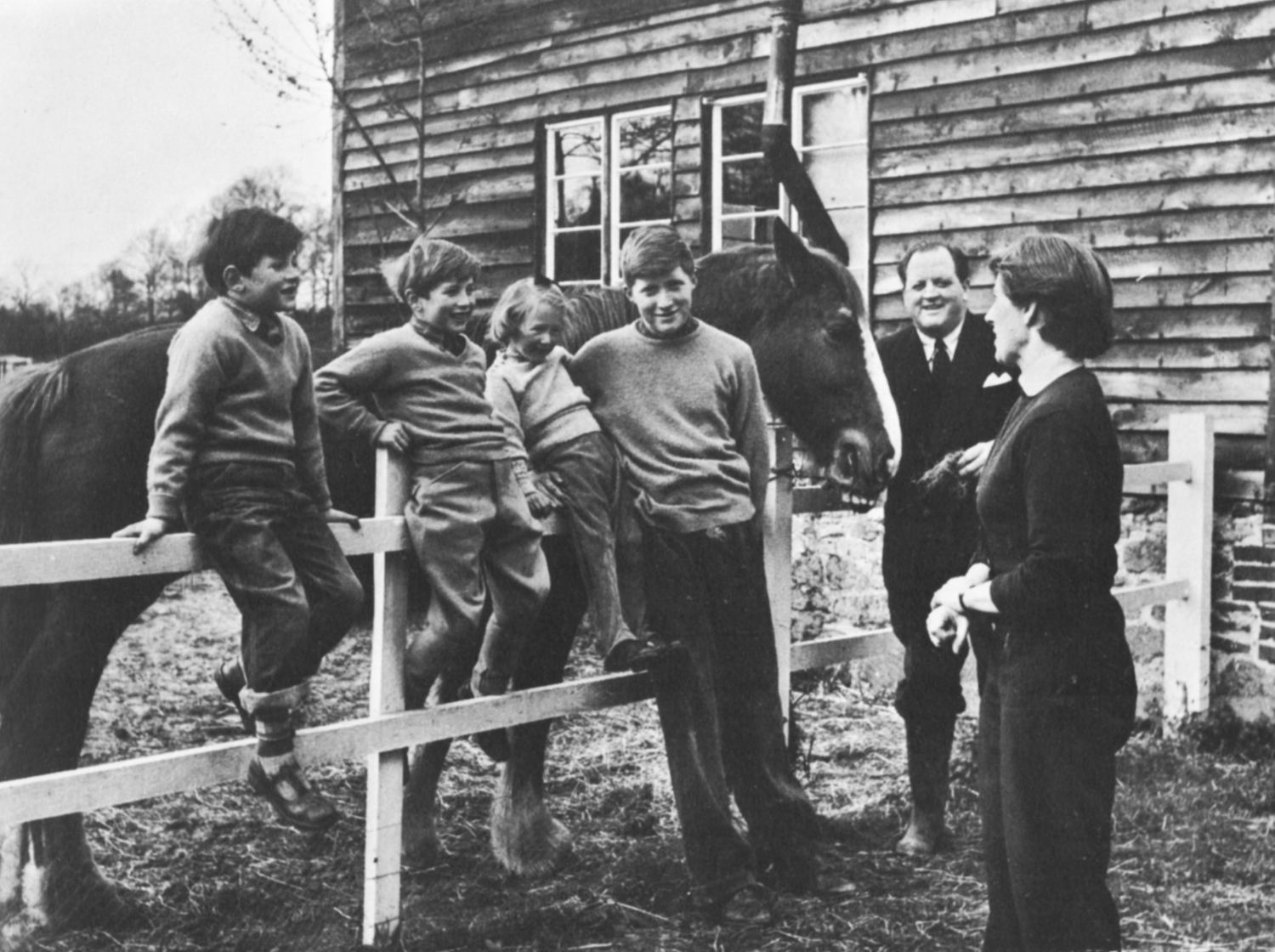
At Danley farm, Lynchmere, Surrey, with Nicholas, Jonathan, Sally, David
The BBC opened the world’s first public television service in November 1936, a few weeks after Richard Dimbleby reported for duty at Broadcasting House. He was interested in the new medium, and even before the war had sent to the first Director of Television, Gerald Cock, a plan for televising news and topical events. He had also had one experience as a television commentator. His description of Chamberlain’s return from Munich with ‘Peace in our time’ in 1938 had been carried on television as well as radio.
But the BBC’s sole television transmitter mast at Alexandra Palace would have made a perfect direction finder for enemy aircraft, and television had had to close for the duration. The staff and equipment were widely dispersed, so it was not planned to restart the service until 7 June 1946, the eve of the great Victory March through London.
As soon as Dimbleby heard the date he wrote to the genial Irishman in charge of post-war television, Maurice Gorham.
‘Have you a vacancy for a commentator on Victory Day?’ he asked. ‘My film contract and my writing leave me the master of my time. You’ll know, of course, that I’ve done a good many major commentary jobs for Sound O.B.s and I think I understand the different technique for your medium.’
In fact the job had just been promised to Freddie Grisewood, who had had much more pre-war television experience than Dimbleby. But he was happily accepted as a second string. Ian Orr-Ewing, who was then the manager of television outside broadcasts, commented: ‘I think it should be made clear to Dimbleby that Grisewood would have to be responsible for leading, and stopping any tendency of Dimbleby’s to lapse into a “sound” commentary’.
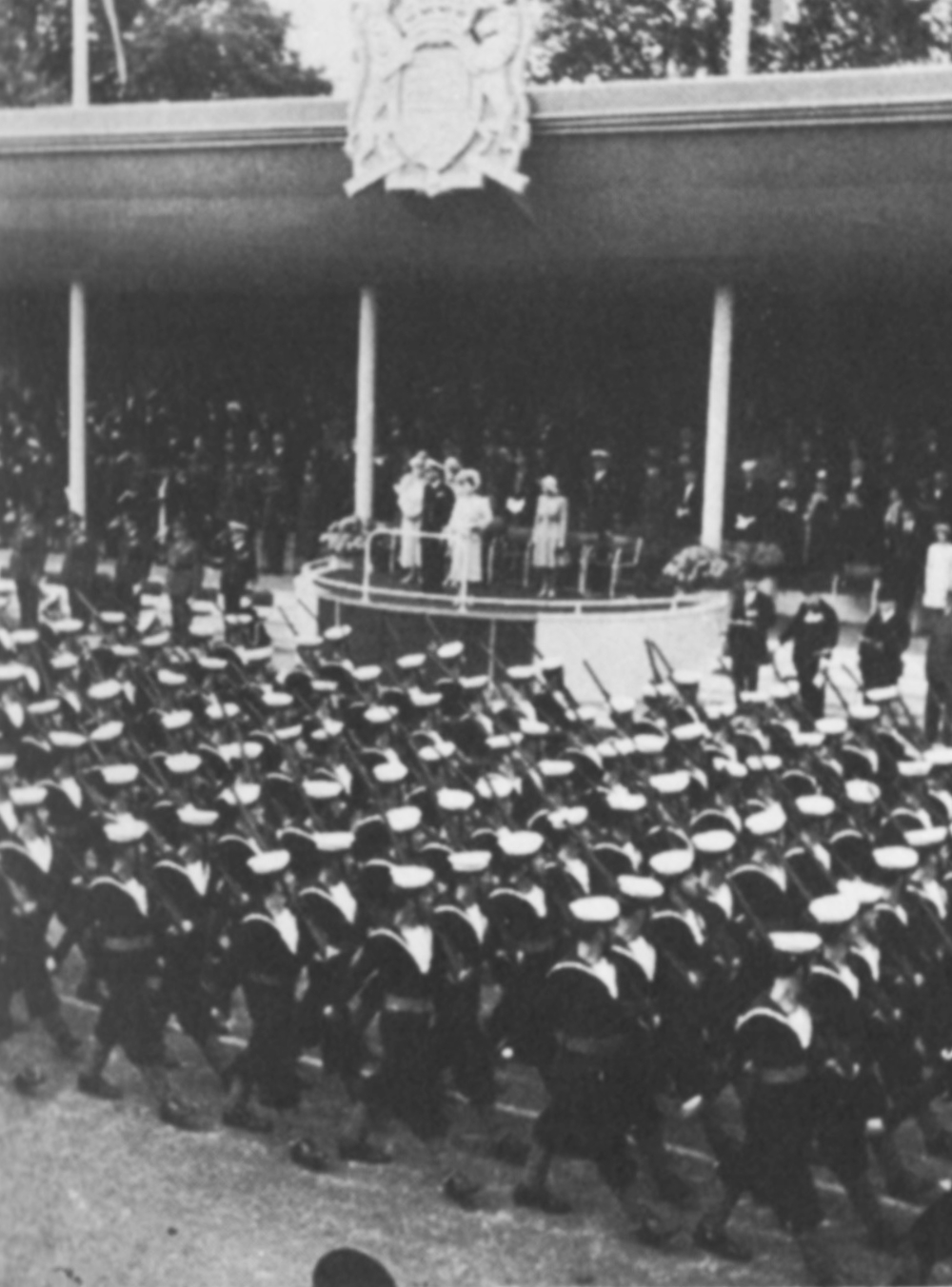
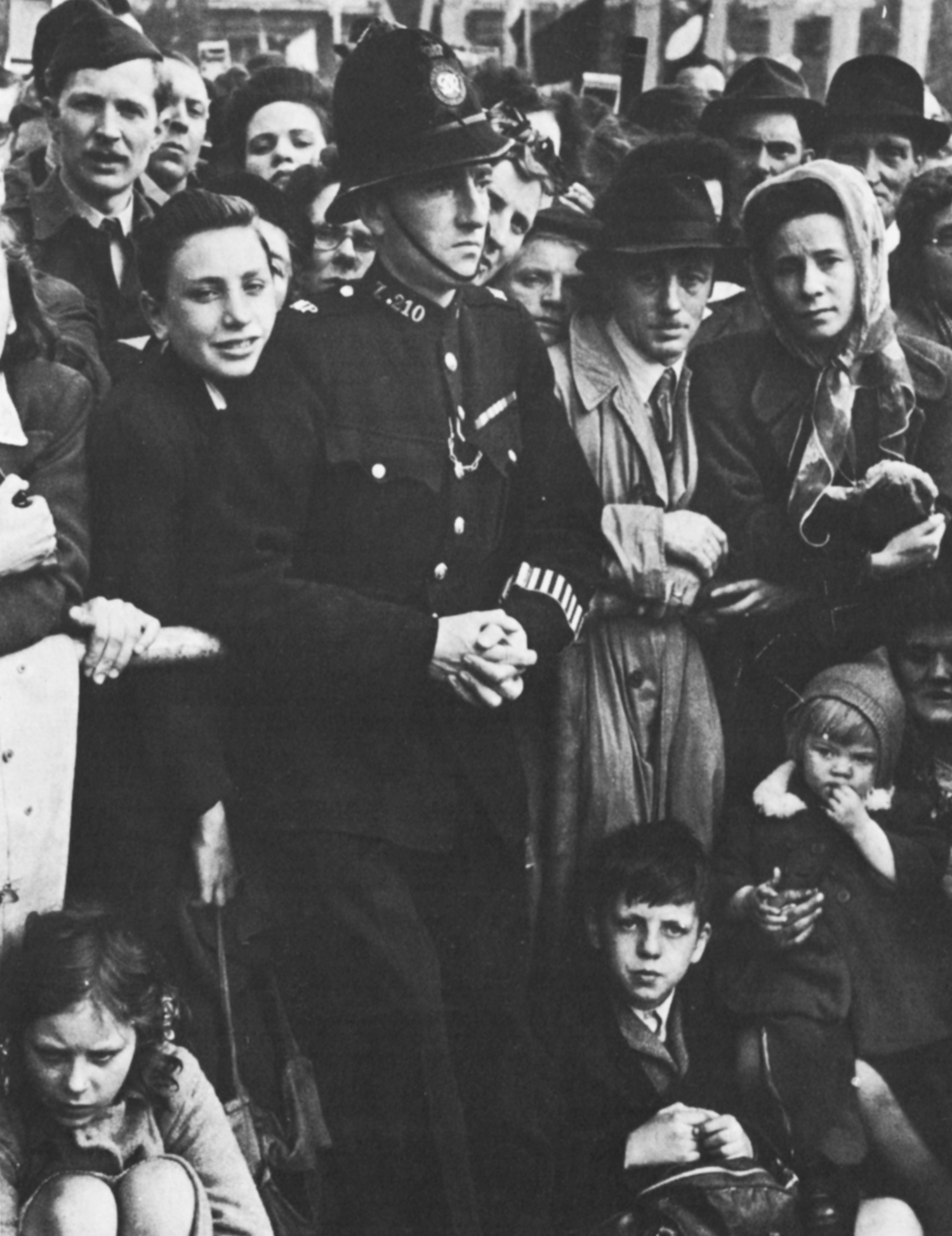
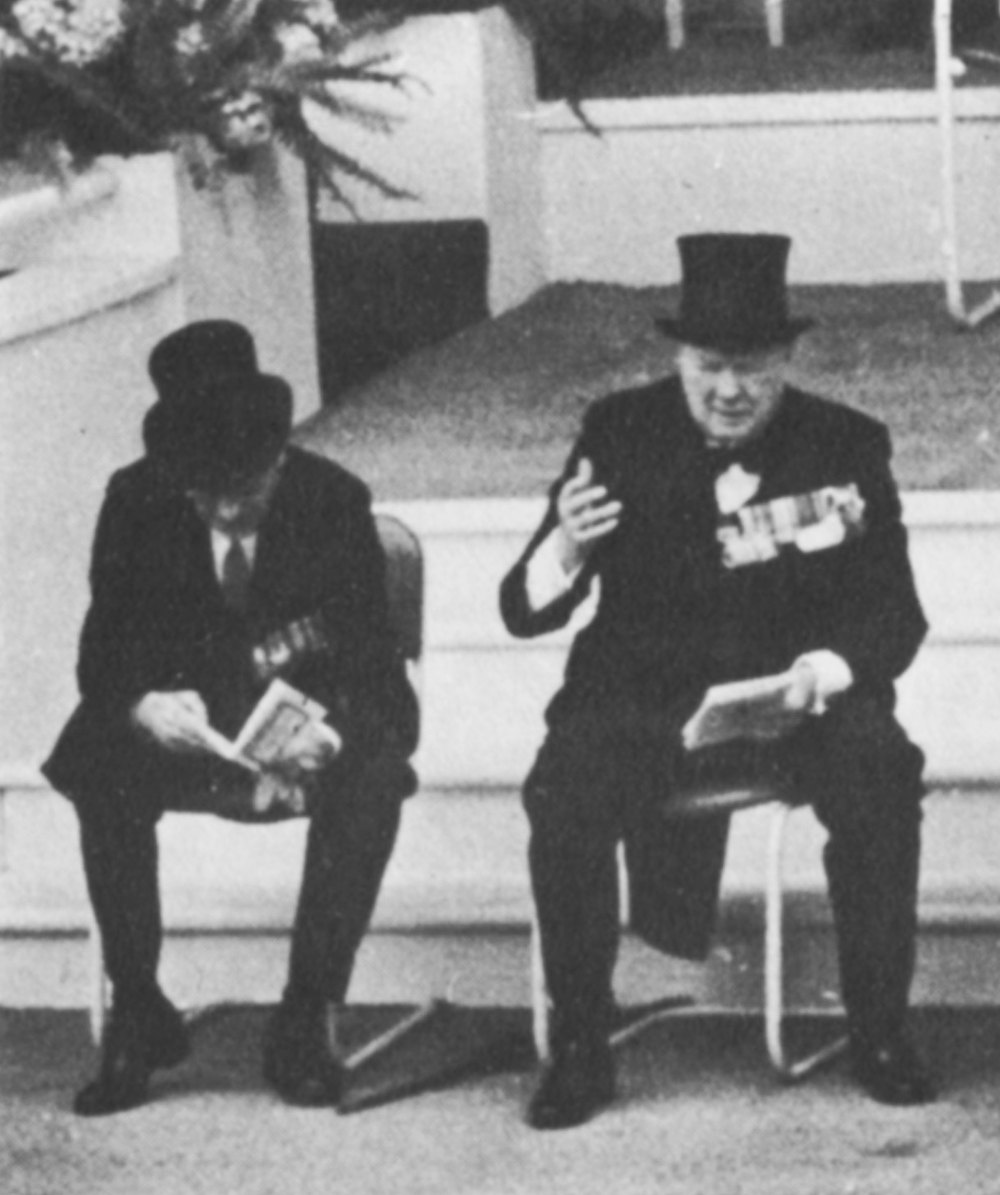
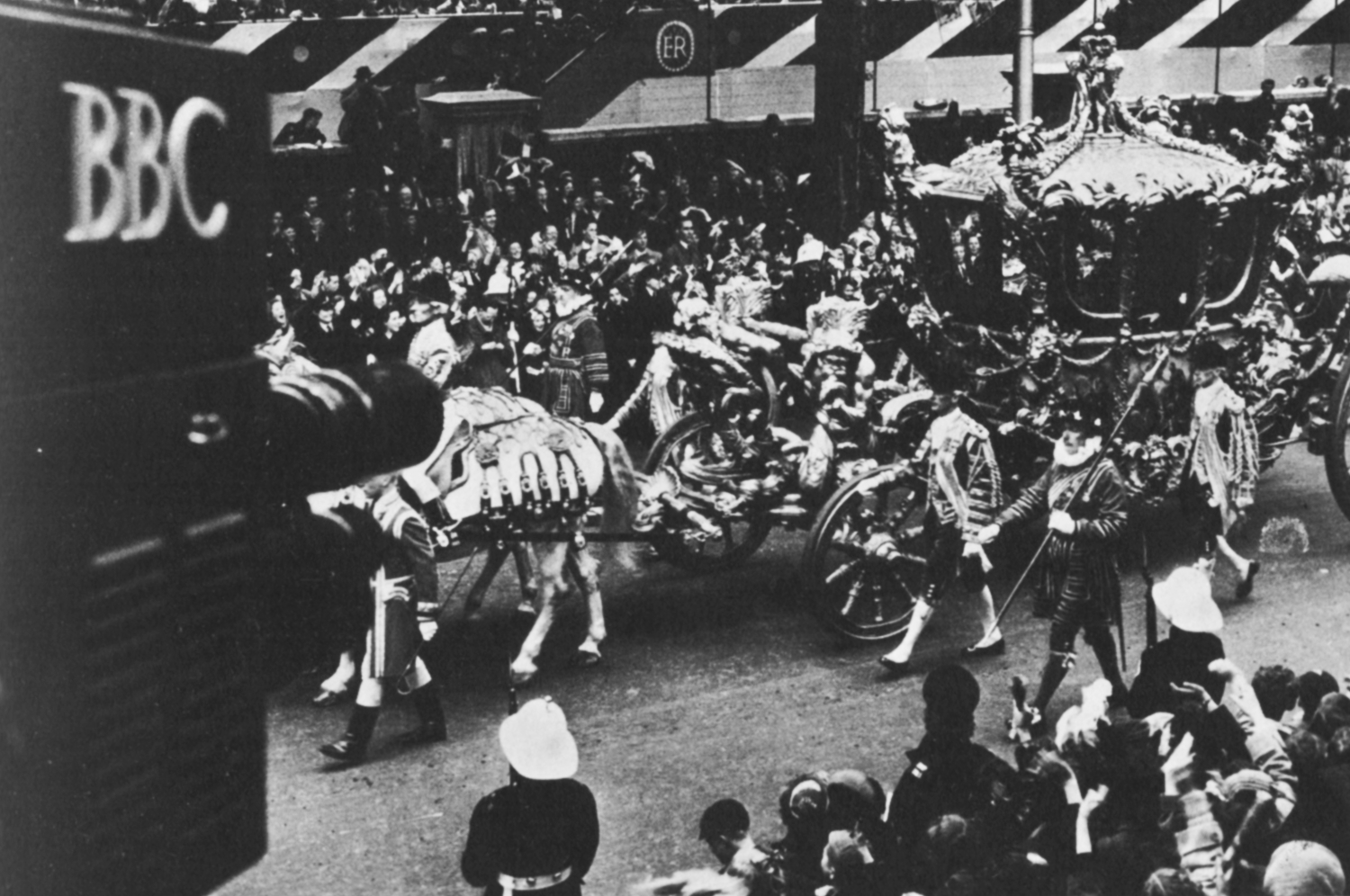
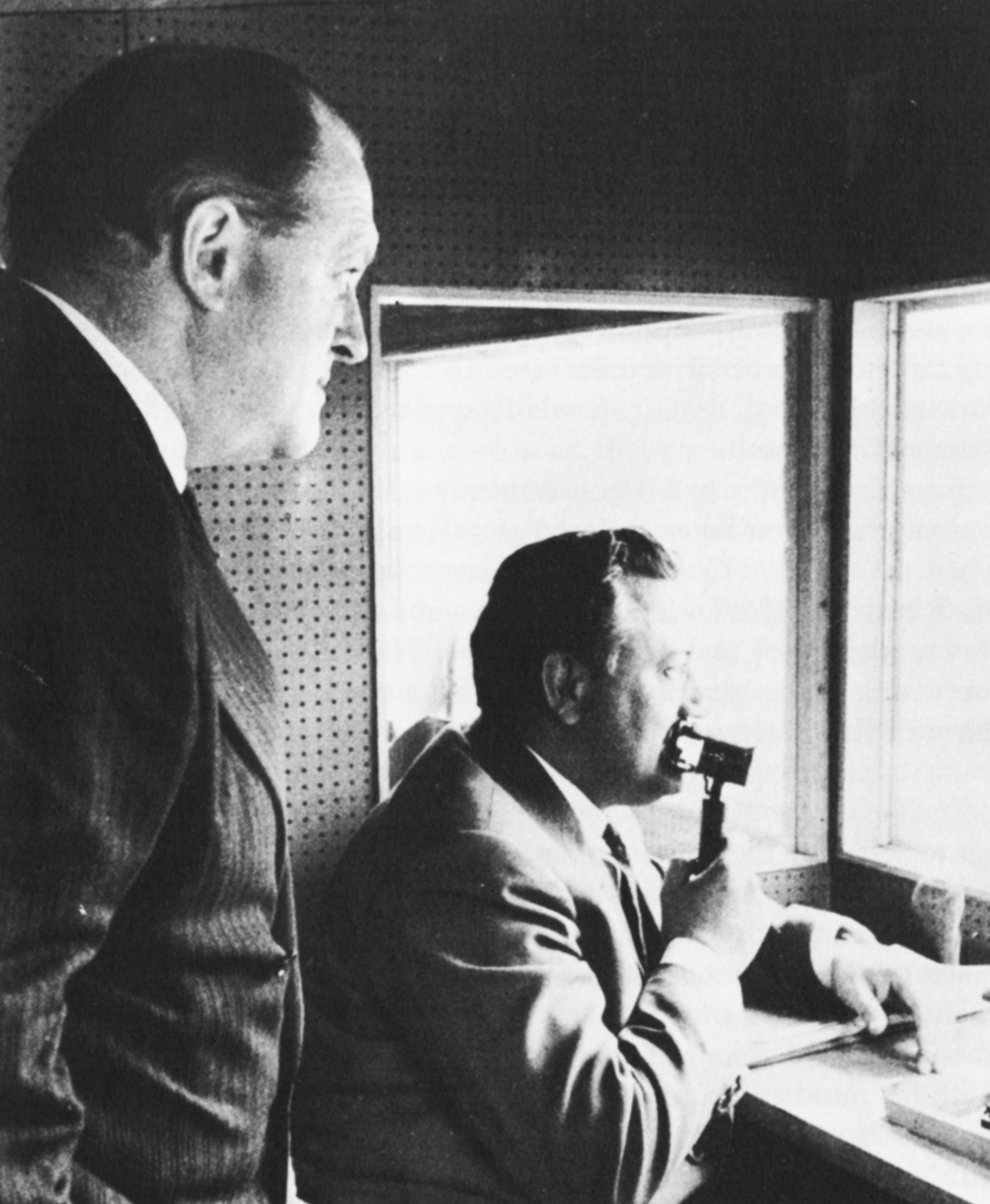
So Dimbleby got his first post-war television job as a commentator on a state occasion. Television reopened for under 100,000 viewers who still had their pre-war sets. The first and only outside broadcast unit, originally used for King George VI’s Coronation, was refurbished and brought back into action. For those interested in both history and television technicalities, Camera 1 was an ordinary Emitron camera with a 12” lens, to give a maximum view down the Mall, Camera 2 was a Super-Emitron with a 20” lens to take close-ups of the King, Mr Attlee and Mr Churchill, and Camera 3 was a second Super-Emitron with a 6″ lens which took a midshot of the columns marching past.
Gorham warned the Controller of Engineering, Harold Bishop, that the gear was still shaky, and sought his help in keeping out VIPs who might want to inspect the unit in the Mall, diagonally opposite King George VI’s reviewing stand. Bishop replied, ‘I will do my best to dissuade visitors, “very important” and otherwise, from going to see the television outside broadcast unit. But even television outside broadcasts can hardly expect to work in a vacuum and even they may have to put up with a few tiresome people like myself, if I feel it is part of my job to pay them a visit!’
Dimbleby was to get to know this problem well. The television equipment, and his own familiar ample figure, would always draw a crowd. He was invariably courteous, and drew the line only at bystanders actually interfering with operations, or demanding autographs during a meal.
Dimbleby’s first post-war outside broadcast was a success, although the picture monitor gave trouble (this was to recur many times in his career) and he complained that the commentary box was the Black Hole of Calcutta. The new television commentator at a major state event had established himself.
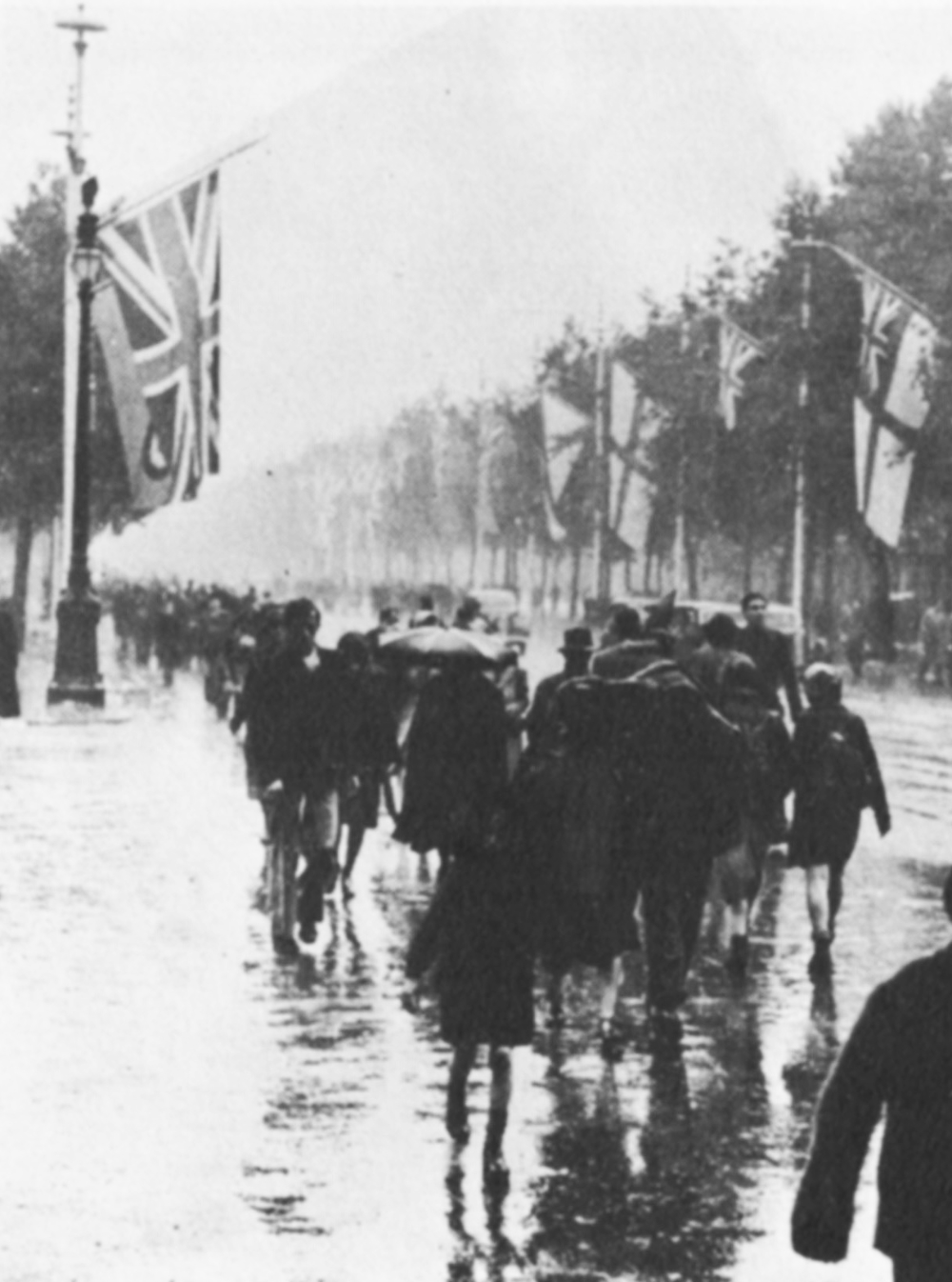
Alas, a second television programme planned for the evening of Victory Day was a total failure. Television cables had been laid in advance so that the only outside broadcast unit could leave the Mall immediately after the parade, and park in Victoria Gardens alongside the House of Commons to cover the aquatic display in the Thames.
The weather was so awful that the camera cables would no longer work, and Victoria Gardens were completely under water. Ian Orr-Ewing later to become a Conservative Minister, wrote on 14 June 1946 to the Lord Great Chamberlain’s office to apologise, saying, ‘I hope that we shall have a chance at a later date of doing a programme from the Houses of Parliament as I think they will provide most interesting television material.’
Television had to wait twelve years before it was allowed (with Richard Dimbleby as commentator) to enter the House of Lords.
The problem for a television speaker of avoiding ‘lapsing into a “sound” commentary’ was one which Dimbleby thoroughly understood. Later he put it thus:
‘To turn to television, a good radio commentator must work to a carefully prearranged plan with his producer, for he is no longer his own master, and subordinate himself to the televised picture. In short, he must become an annotator rather than a commentator.’
Dimbleby thought, and it made him angry, that the relay of his Coronation commentary from the Abbey had been interrupted on one American television magazine programme by a facetious interview with a resident chimpanzee called J. Fred Muggs.
I was the BBC’s chief correspondent in America at the time, and saw the offending programme. It was in fact the live radio commentaries of Howard Marshall and John Snagge that were interrupted, when shortwave reception faltered, for this graceless enterprise. Richard Dimbleby, on the contrary, suddenly achieved transatlantic fame and respect.
The rival American television networks were hotly competing for the best and fastest coverage of the Coronation. The first to get pictures on to the American air would scoop a huge expectant audience. This was, of course, before the development of videotape recording or live transatlantic transmission by satellite.
As soon as the Coronation date was announced the Earl Marshal was asked to estimate at what exact time the Archbishop could be expected to lower the crown on to the Queen’s head. (His forecast, made months ahead, was correct to within one minute.) The American networks made elaborate and secretive arrangements to send their own ace commentators to London and to rush the films and telerecordings up to the moment of crowning back to the United States as fast as possible.
Ed Murrow, then in charge of news for the Columbia Broadcasting System, chartered a Stratocruiser from BOAC, ripped out the seats, installed film processing and editing machines, and arranged to work in this flying laboratory and cutting room so that the film, with his own commentary, would be ready for immediate transmission.
The National Broadcasting Company made similar preparations with another airline and also arranged with the Venezuelan Air Force that on 2 June it would conveniently take delivery of a much faster Canberra bomber ordered from Britain. Of course it would have to stop in America on the way, and could drop off cans of film exclusively for NBC. (In the event that Canberra developed engine trouble after two hours and had to turn back.)
The American Broadcasting Company was at that time a poor third in the television stakes, and could not afford such outlays. It settled for booking a coaxial cable to the nearest point in Canada to pick up whatever the Canadian Broadcasting Corporation showed.
In fact the transatlantic race was won by an RAF Canberra which brought the BBC telerecording to Canada. Thus it was Richard Dimbleby’s Abbey Commentary, relayed by ABC-TV, to which avid United States viewers first switched. The American republic suddenly realised that Britain could not only stage glorious coronations. She also had outstanding television production skill, and an exceptional television commentator.
The week after the Coronation BBC television cameras were present at the Royal School of Needlework Exhibition at St James’s Palace, which the Queen Mother was to visit. Dimbleby began his commentary five minutes before Her Majesty was due to arrive, but, unexpectedly for Royalty, she was late and he had to speak for a further twenty minutes during which he treated viewers to a detailed history of the Royal School. It transpired subsequently that the Queen Mother was watching the programme at Clarence House when it started, and was so enthralled that she left her home rather later than she had planned.
Soon after she arrived at nearby St James’s Palace she saw Dimbleby and made straight for him with a word of greeting and congratulation on his Coronation commentary. The stick microphone in Dimbleby’s hand was live, and viewers heard her say, ‘Good evening…’. Quick-thinking as he bowed to the Queen Mother, Dimbleby held the microphone under the tails of his evening dress to muffle the sound and prevent her private conversation and personal congratulations to him from going out over the air.
Through the eight years I was in charge of current affairs and talks programmes on BBC Television I spent most Monday evenings at Lime Grove. That reconstructed old film studio seemed to acquire a special air of magical excitement on Panorama nights. There was always a knot of schoolboys with autograph books in the darkness outside the main door on the look-out for visitors whose names were in that day’s headlines, or would be in the morrow’s. Sometimes a senior Minister, sometimes an anonymous group would come – for instance, women who were seen knitting throughout one Panorama and then questioned on how much of the programme content they had absorbed. One day in came a box filled with ice, into which a man was locked, and he freed himself during transmission. Mrs Barbara Woodhouse offered to give away to a good home a calf named Conquest, which we watched snuggling down in a pen in the studio with her enormous and beautifully trained Great Dane Juno. The Watford telephone exchange was swamped with eager calls at the rate of 6,000 an hour.
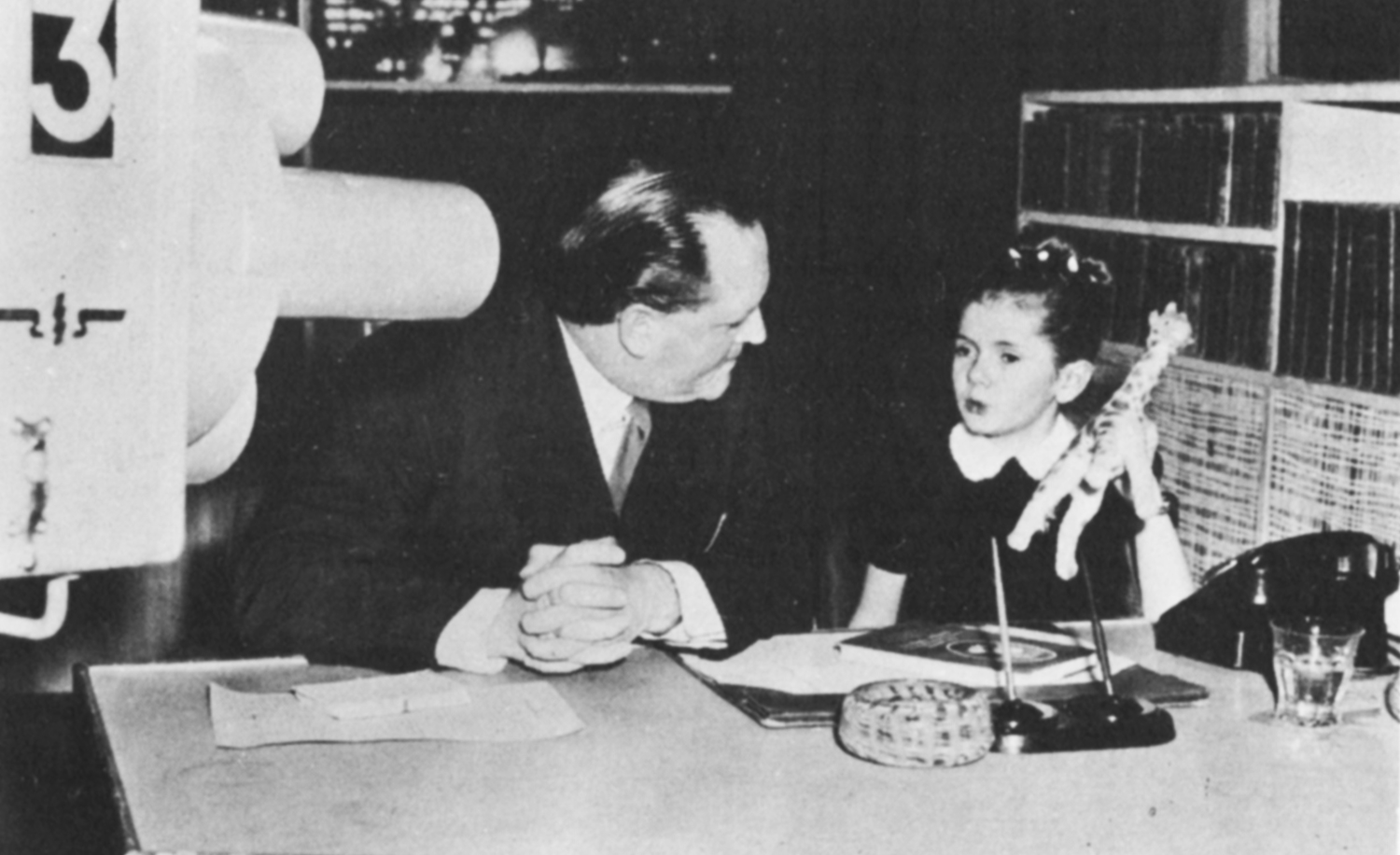
You never knew what to expect. One day it was a French girl of nine who was set the task of writing a poem on London at the beginning of the programme. She was seen writing hard for a while, got up and bounced a ball once or twice, went on writing, and Dimbleby finally put his excellent French to use by translating the charming verse Minou Drouet had composed. Another day there was a full-grown elephant in the fourth-floor studio, carrying a man gently across the floor with its trunk.
With Minou Drouet
When we decided to make Panorama a weekly programme in 1955 I asked my deputy, Grace Wyndham Goldie, to supervise its new look. She immediately set on it that stamp of quality which marked all her television enterprises. It was she who first demanded that Richard Dimbleby should be the new anchorman, and before soon moving off to energise in turn the start of Tonight and then of Monitor she had firmly settled the guiding lines for Panorama: integrity in its coverage of current affairs, showmanship in its intelligent exploitation of the television medium.
The changing team of Panorama reporters have contributed a wide selection of talents. Most have had to be ready (as Dimbleby forecast even during the war for his two roving European reporters) to fly off at a moment’s notice to where news was about to break. All have been interested in politics, some with one foot in it. Some left Panorama for the House of Commons, like Christopher Chataway and Woodrow Wyatt. Some came to Panorama after failing to be elected, like Robin Day and Ludovic Kennedy. Some combined journalism with a political past, like John Freeman and Angus Maude. There were ex-editors from Fleet Street, Malcolm Muggeridge and Francis Williams, and others whose background was essentially in broadcast journalism, Max Robertson, James Mossman, Michael Charlton, John Morgan, Michael Barratt, Ian Trethowan and Leonard Parkin. Others came and went. They were a talented and restless group, with a tendency to wish to leave after a few years, perhaps later to return again. Panorama reporters were welcomed by such world figures as President Kennedy, Pandit Nehru and the Shah of Persia. They were frequently involved themselves in controversy, for Panorama had to be involved in controversy, and they had to prise out cats which various vested interests preferred to keep in the bag.
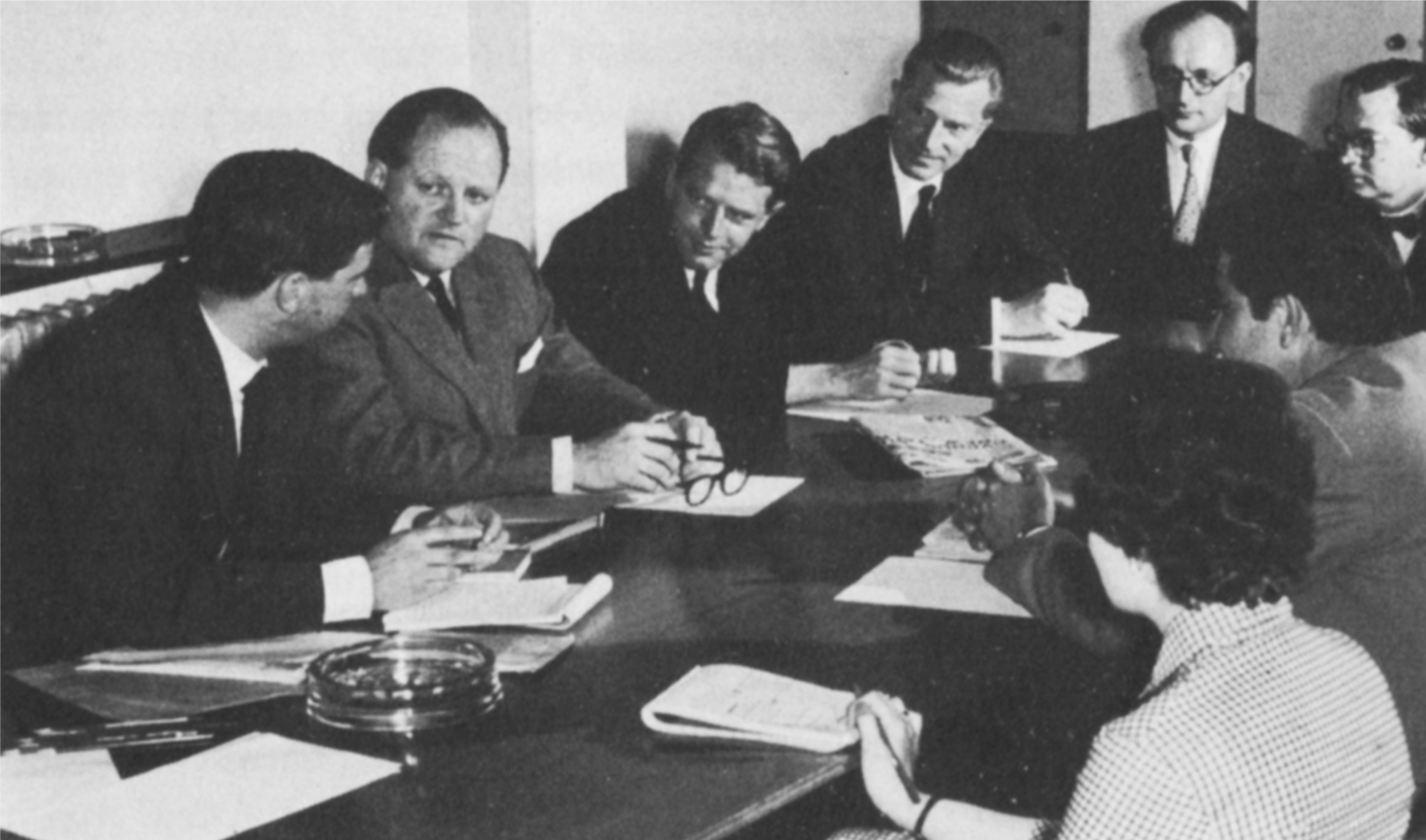
Panorama: clockwise, Rex Moorfoot (Editor), Dimbleby, Christopher Chataway, John Freeman, David Wheeler (Assistant Editor), Woodrow Wyatt, Christopher Burstall (Production Assistant), Margaret Douglas (Production Secretary)
In Panorama’s whirlpool, as Grace Wyndham Goldie has pointed out, Richard Dimbleby himself always managed to remain at the serene centre, not at the tumultuous edge. He did not want the reputation of a Robin Day or a Malcolm Muggeridge, and so, as she put it, he became on television a kind of living embodiment of stability, a reassuring symbol that somewhere at the heart of disturbance lies a basic kindliness and an enduring common sense’.
The production teams were constantly turning over, as inventive production assistants and producers, trained in the hard school of Panorama, went off to produce new programmes of their own.
Michael Peacock was the first of several editors, each of whom brought some special attribute to Panorama: Rex Moorfoot, Michael Peacock again, after a spell with Outside Broadcasts, Paul Fox, David Wheeler and now Jeremy Isaacs.
Richard Dimbleby remained the one constant factor. He would arrive on Monday mornings and go very carefully through the elaborate studio moves, which were never the same from one programme to the next. A length of film needs to run for eight seconds on a television projector (telecine) before it reaches full speed. An anchorman has to be able to cue the start of the telecine machine and then speak for exactly eight seconds. Dimbleby was impeccable. He would finger his spectacles, indicating the start of the eight seconds, and finish his sentence invariably just as the first frame came up – or if it was late in coming he would spin out his words until out of the corner of his eye he saw the picture arrive on his monitor. He enjoyed demonstrating maps and summarising complicated situations. ‘Let me see if I can simplify it’ he would say, and one felt he was a teacher manqué as well as a surgeon manqué.
His long apprenticeship in radio had made him a master at reading a prepared commentary to a film sequence, and he could get through a last-minute session in the Lime Grove dubbing theatre much faster than most, for his readings were always right first time.
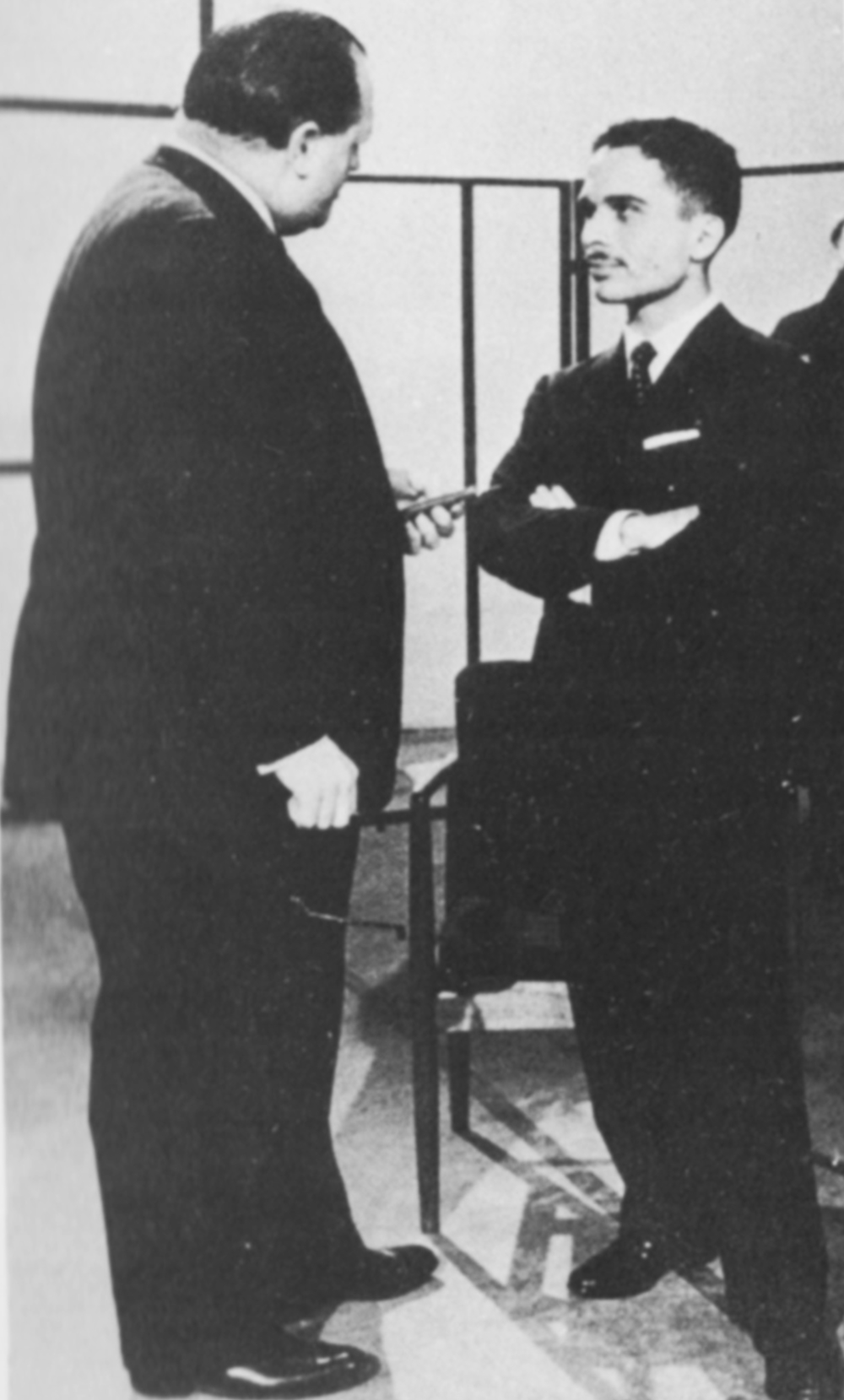
With King Hussein of Jordan
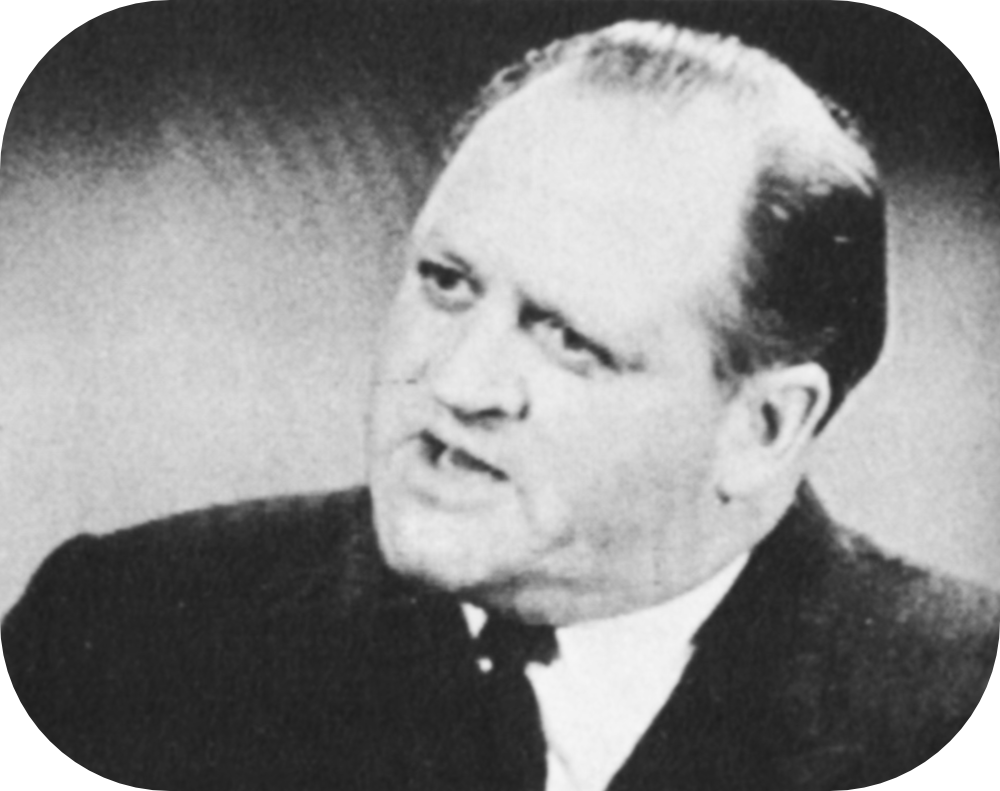
After a day of very careful preparation he changed his clothes and ate a light supper. He would then greet, and set at ease, the important, and the unimportant, and the often temperamental protagonists we had invited to the studio. Dimbleby was invariably an excellent host, and Panorama’s guests were always anxious to meet him. So too were many distinguished visitors to London such as King Hussein of Jordan, who dined with us one night because he wished to see television in action. We took him on a tour of the studios, and finally ended up in Panorama, where a memorable interview took place with the King and Dimbleby, like Johnson and Boswell, each calling the other ‘Sir’ in every sentence.
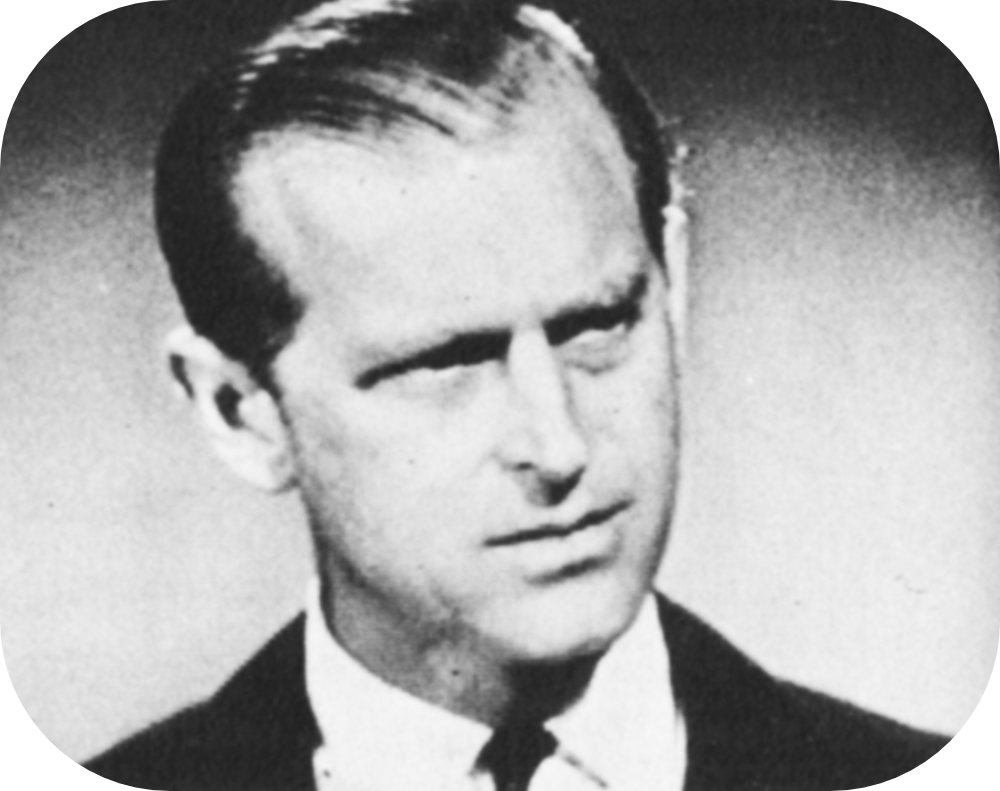
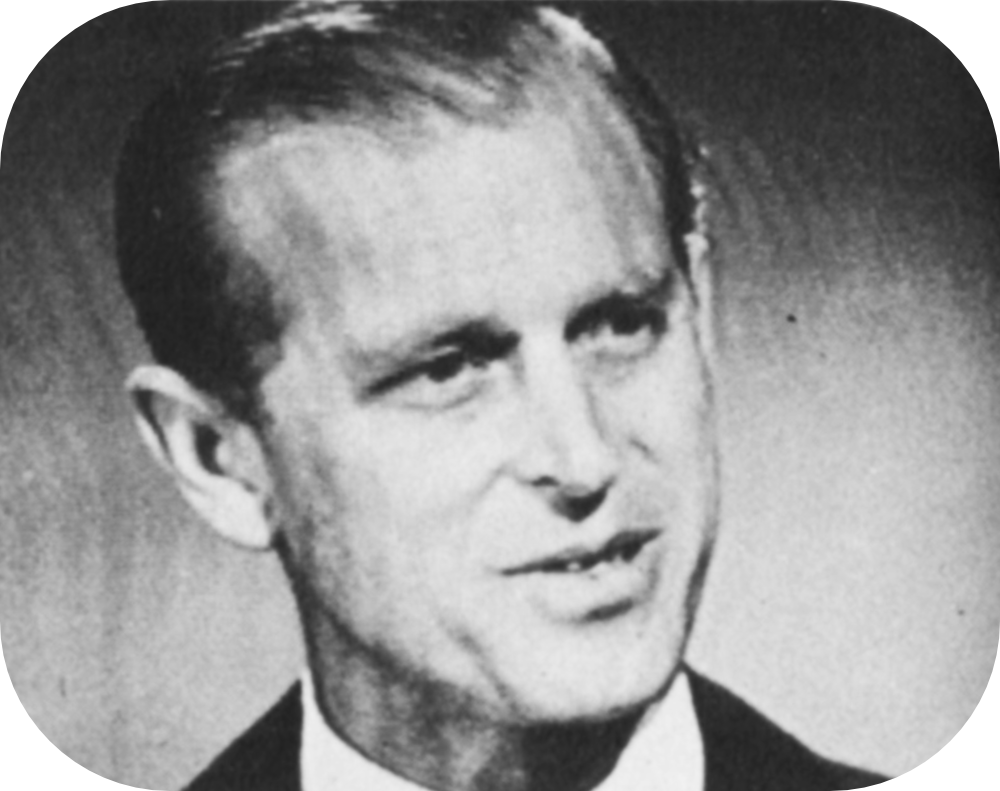
H.R.H. the Duke of Edinburgh had introduced the International Geophysical Year on television, and reported on his travels in a children’s programme. The first time that he, or any other of the Queen’s immediate family, decided to allow himself to be questioned on a regular current affairs programme was at the hands of Richard Dimbleby.
There were occasions when Dimbleby almost acted as a national Ombudsman, or a restorer of national confidence. When the world was on the brink of nuclear war over Cuba, and Panorama was mounting a special programme, a woman telephoned to say she would send her children to school only if Richard Dimbleby said it was safe. He made a point of saying to an authority in the studio, ‘I am aware that a great many people today are extremely worried and frightened by what has happened, and have some awful feeling that something dreadful may happen quite quickly, suddenly. Do you think there is reason at all for short-term immediate nerves on this?’
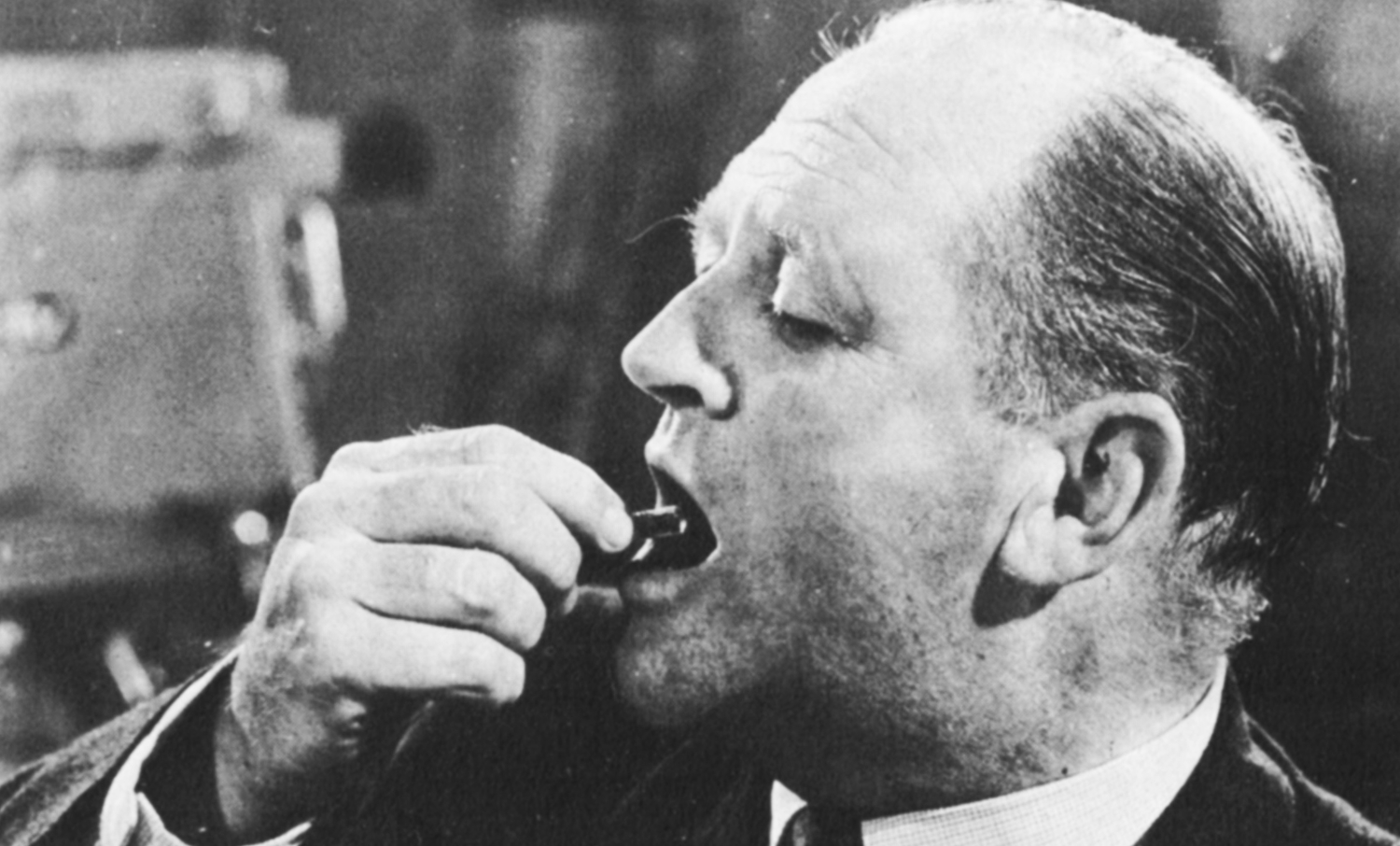
There were several occasions when he was game to subject himself to any kind of treatment in the studio, be it an ice-cream tasting contest with Francis Williams to guess which was made with real cream, or being flung around the studio in an aircraft seat on wheels to test the shock of sudden braking, or swallowing a tiny transmitter and picking up the signals from inside his massive frame, or being spun round in a space simulator at the RAF Medical Centre. For the last programme before Panorama’s much needed annual summer break in 1959, he demonstrated the new American craze for balloon jumping from an airfield at Weston-on-the-Green. It was fascinating to watch his considerable mass reduced to nothing as his weight was counterbalanced by a balloon on his shoulders, and Dimbleby leapt ten to fifteen feet in the air and covered the same distance between strides along the ground.
He had his little vanities. One was getting the make-up assistant to black the balding patch on the back of his head, until it could no longer be disguised. In the studio there was always fun with the technical crew. During a programme which demonstrated the gimmicks of the 1964 American Election campaign, Dimbleby opened a bottle of Barry Goldwater Cologne for Men. An electrician chargehand next to him commented on the pungent aroma, and asked if it was coming from him. Dimbleby put the neck of the bottle against the chargehand’s arm meaning to ‘spot’ him, but accidentally poured a large quantity on to him. The electrician washed it off but the smell remained strong. After the programme he declared that when he got home his wife would ask searching questions as to the origin of the perfume. Dimbleby immediately wrote a note on a page of his script:
‘Dear Jackie,
This is to certify that I, Richard Dimbleby, have soaked your husband in Barry Goldwater Cologne. He is concerned in case you suspect him of wrong doings.
Personally I think it improves the brute.
Regards,
RICHARD.’
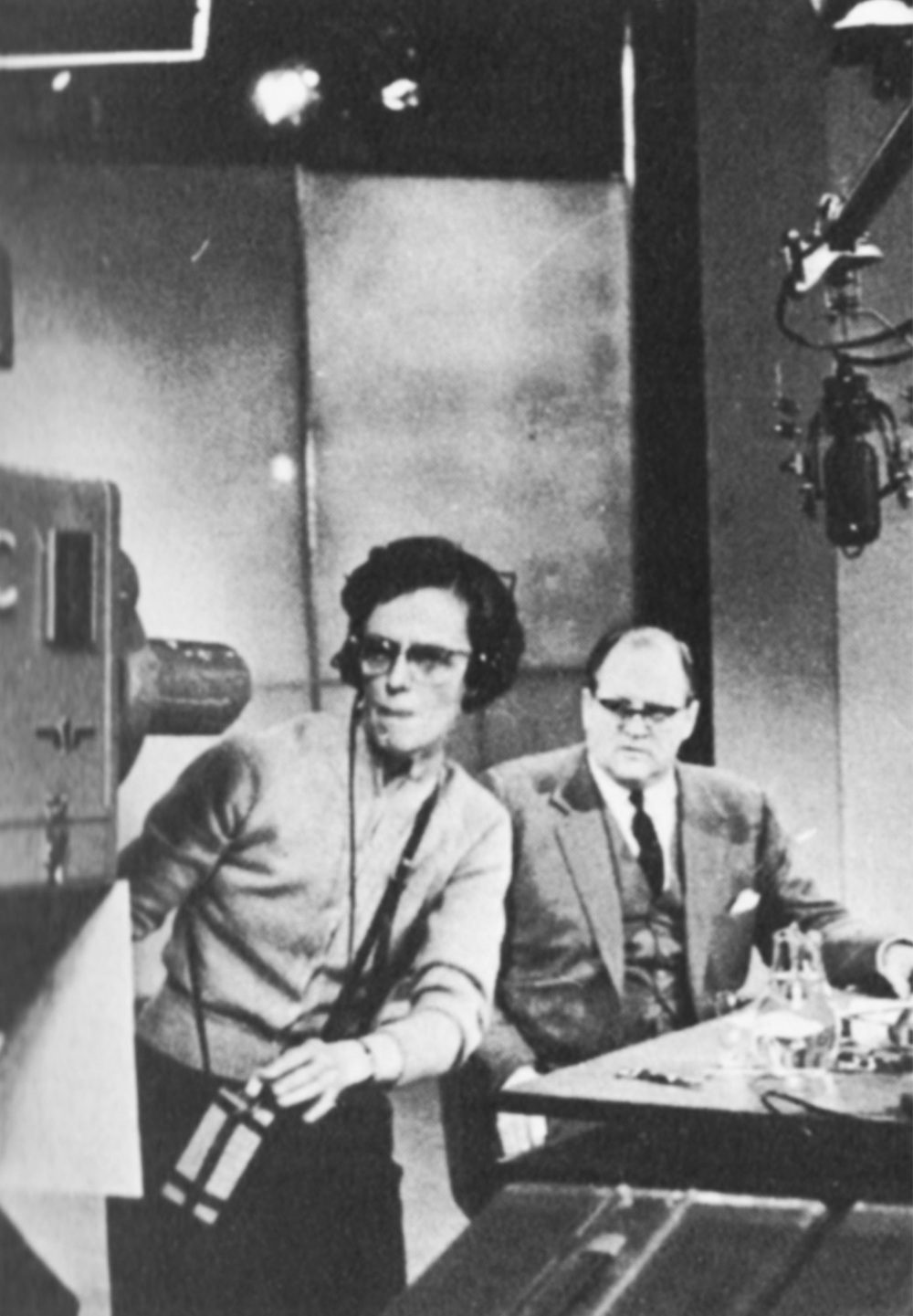
Dimbleby used to keep the studio crews in fits of laughter with earthy stories, mostly unprintable. There was wonderful teamwork, and constant banter, between him and Joan Marsden, Panorama’s regular floor manager. The floor manager wears a receiver on the belt with headphones to pick up the director’s instructions and pass them on to the studio performers. During an edition of Panorama from Sotheby’s sale room which was beamed to America by Early Bird, Joan raised her finger to give Richard the customary ‘one minute’ cue. As soon as he had finished that particular link and a piece of film was running he beckoned her over and said, ‘For Heaven’s sake don’t do that or you will find yourself having bought a picture for £10,000 – “Sold to the lady with the double deaf aid!”.’
She is one of many people for whom Monday nights at Lime Grove have lost something of their magic.
Inaugural programme, Early Bird, with Joan Marsden
Until the death of Stalin in 1953 the cold war numbed broadcasting relations between the Soviet Union and Great Britain. British camera teams were not allowed to enter Russia. Correspondents were denied visas. Broadcasts in the BBC’s European Service were systematically jammed. There were none of the normal interchanges of musical programmes or sporting events between broadcasting organisations.
In 1956 a slight thaw began. The Russians sent an engineer to observe the BBC’s experimental colour television demonstrations at Alexandra Palace. When Khrushchev and Bulganin came to visit Sir Anthony Eden in April of that year the idea of cultural exchanges was mooted. As a first step they invited an official delegation from the BBC to come and inspect radio and television in Moscow, Leningrad and Kiev.
By the end of April, even before Bulganin and Khrushchev had sailed back to Russia, seven of us representing BBC Sound and Television, Engineering and Programmes, External Services and News, had flown to Moscow, just in time to see the famous May Day parade through Red Square. Anatol Goldberg, the Programme Organiser of the BBC’s Russian section, was able to interpret for us. The Russians also provided as a guide and interpreter Boris Belitzky, who was one of the regular broadcasters in Moscow Radio’s English service. Belitzky had lived in New York as a boy and spoke excellent English. He left us on May Day to give the English language radio commentary on the parade. The Russian television service was also developing, and the parade was televised for the first time that year, with two outside broadcast units on opposite sides of Red Square. The broadcast was technically impressive, though the cameras were badly placed.
We had many discussions with the Russians, seeking ways of opening up broadcasting relationships without the sacrifice of principle on matters such as censorship, and without involving either of us in carrying the other’s propaganda. The discussions tended to founder when we brought up the question of jamming. Russians love metaphors and elaborate figures of speech, and so at one of their many hospitable occasions the Director of External Services, J. B. Clark, made a glowing speech about the beautiful garden which lay ahead, ‘but the gates of the garden have their hinges and locks corroded by jamming’. The Soviet Deputy Minister of Communications quickly replied, ‘The gates must be open, but the key to the gates must be in the pocket of the master of the garden’.
Nevertheless Frank Gillard, who was representing Sound Programmes, and I, representing Television, did return with one positive achievement. We had got the names of two broadcasters speaking excellent English who would be prepared to take part (in sound only) in hook-up discussions of current affairs, subject to official permission. One was Yuri Fokin, soon to become Head of News of Moscow Radio. The other was Boris Belitzky. This represented substantial progress, for the Russians at that time had no tradition of unscripted discussion at all. Moreover we returned with their telephone numbers, and had learned that the telephone appeared to pierce the Iron Curtain fairly easily. We also broached the question of a possible television hook-up as soon as the links across Europe could be established. At that time the Russians had not yet even linked Moscow with Leningrad.
Belitzky had welcomed the idea of contributing in sound only to Panorama. He knew Dimbleby well by voice and reputation. As soon as the Russians launched their first Sputnik I telephoned Moscow and in the next Panorama Belitzky’s voice took part in the studio discussion of the possibility of the space age.
Brussels International Exhibition, 1958, with Boris Belitzky, Sir John Balfour, U.K. Commissioner-General, Model Sputnik III. Soviet cameras, a Flemish outside broadcast, the Eurovision link, standards conversion and photographed off the television screen.
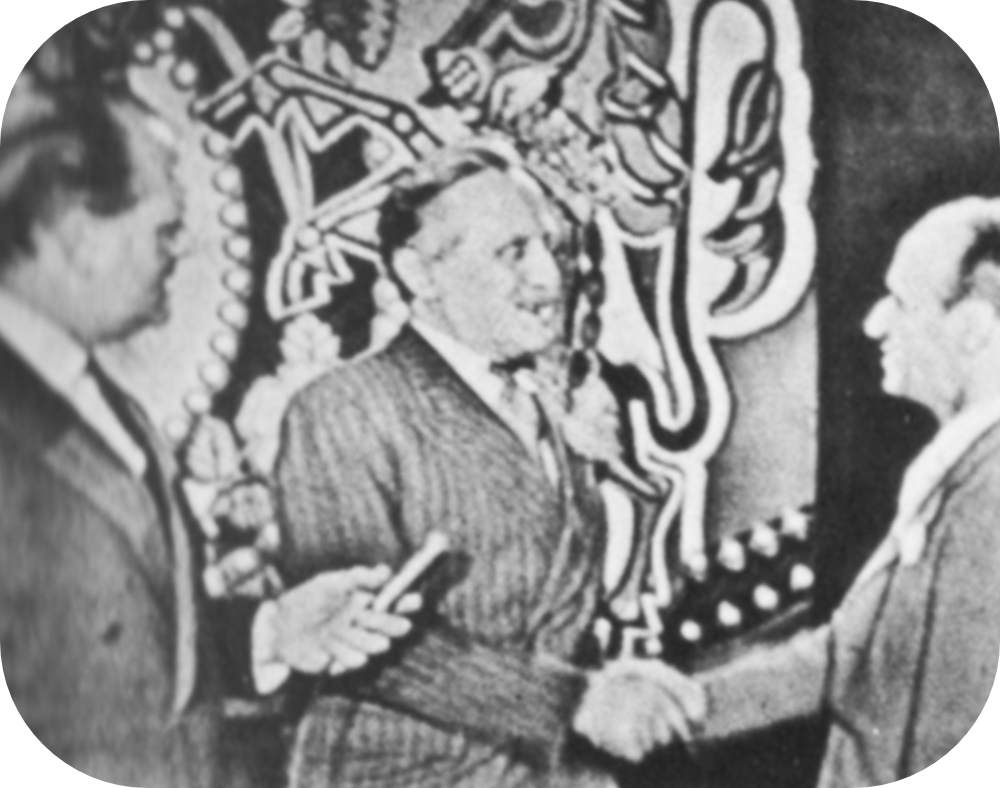
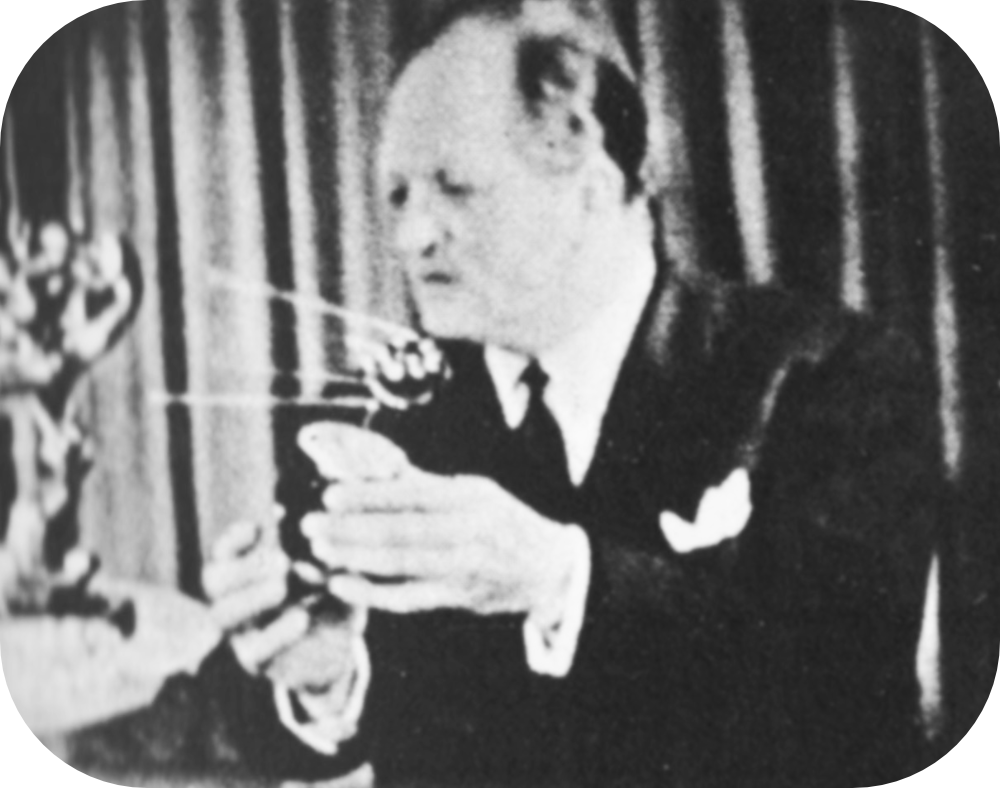
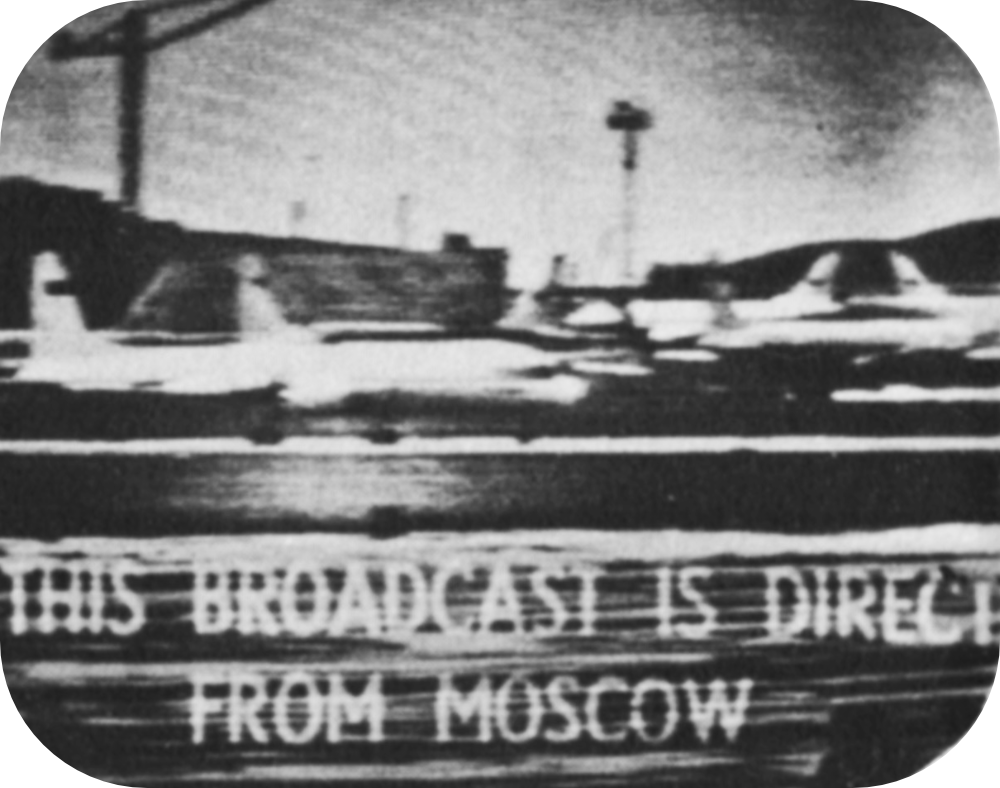
In 1958 the television hook-up with Moscow moved one stage closer. At the International Exhibition at Brussels the Soviet Pavilion was equipped with closed circuit television. With the aid of a Flemish outside broadcast unit and the Eurovision link Dimbleby was able to introduce a BBC programme with the words ‘I am speaking to you direct from a studio of Radio Moscow’. He liked dramatic openings and this was literally true, for Radio Moscow had provided the television studio and cameras in the Soviet Pavilion.
Richard Dimbleby and Boris Belitzky, meeting face to face for the first time, then toured the Soviet Pavilion and talked to an attractive interpreter, Maya Malisheva, who displayed fur coats and Russian food delicacies, including one item that intrigued Dimbleby – porridge for dessert. It was a highly complicated programme for the BBC producer, Derek Burrell-Davis, for he was dealing with a Russian outside broadcast unit, a Flemish outside broadcast unit, and a Russian telecine machine, and the technical crews had no common language.
British viewers and television critics were fascinated by their first live view of Soviet activity. The ‘Guardian’ television critic commented: ‘A complicated broadcast which was well handled by Derek Burrell-Davis, the British producer, and by Richard Dimbleby, who had abandoned his baronial manner very successfully under the shadow of Lenin, and who did not forget to remind us, as the camera passed finally from sucking pig, salmon, chickens, sturgeons, mutton chops and porridge-for-dessert to a last glimpse of Sputnik III, that “there is always something like that looking down on you”.’
I was interested to note the next evening in Brussels that Flemish television repeated exactly the same programme for Belgian viewers, with one of their own commentators taking Dimbleby’s place, and a Flemish-speaking Russian instead of Belitzky. But they stuck entirely to the shape of the programme carefully prepared by Dimbleby and Burrell-Davis and did not even bother to issue another camera script to the technical crew. The Dimbleby moves and the Dimbleby questions could not be improved upon.
Peter Dimmock wrote to the Russian authorities warmly thanking them for their co-operation and hoping for further opportunities for the outside broadcast units of the two countries to work together in the future.
Other BBC visitors travelled to Moscow. Aubrey Singer went in search of scientific programme material, Peter Dimmock to arrange film of the USA/USSR athletics match. Dimmock reported that the Russians were hoping to create a television link with Prague via Warsaw in order to be able to receive the 1960 Olympic Games live from Rome. We continued to work for a live hook-up from Moscow. At the same time discussions went on from time to time to try to abolish jamming. Dimmock reported that the Russians were beginning to favour ITV on the film coverage of sport, because, as ITV did not broadcast to Russia, there were no complications over jamming.
In February 1960 the Soviet Union ceased its jamming of the BBC’s European programmes, and this obstacle seemed out of the way. Early the next year ATV proudly announced that they were going to achieve the first television link-up from Moscow to Britain, by live coverage of the British Trade Exhibition, due to open in Moscow on 17 May 1961, and even took advertising space in British newspapers and periodicals to publish the announcement in Russian.
After all the BBC’s pioneering work on Eurovision, and its long negotiations with the Russians, this was too clear a challenge to be ignored. The BBC countered with an offer to relay the morning May Day parade from Moscow that year and, because 1 May fell on a Monday, to broadcast that evening a special edition of Panorama from Moscow. Richard Dimbleby would do both programmes. The Russian authorities agreed. Peter Dimmock and Tony Bridgewater, then the senior engineer on the outside broadcasting side, went to Moscow, and with generous help from the Russians and the Finns worked out a method of getting the Moscow pictures across the Baltic from Tallin to Helsinki, and so down the Eurovision link through Scandinavia to Britain. Paul Fox flew to Moscow to prepare the Panorama programme, Noble Wilson to arrange the relay of the May Day Parade. Paul Fox recalls:
Filled with doubts, I arrived in Moscow to arrange the Panorama side of things. Already installed in the National Hotel was Noble Wilson. And as we looked at our plans for this first-timer from Russia, something far bigger overtook us. A friend – an American correspondent – phoned us with the news that something was on: he couldn’t tell what. And even as we puzzled it out, the loudspeakers blared into action: ‘The Soviet Union has today launched the first man into space’.
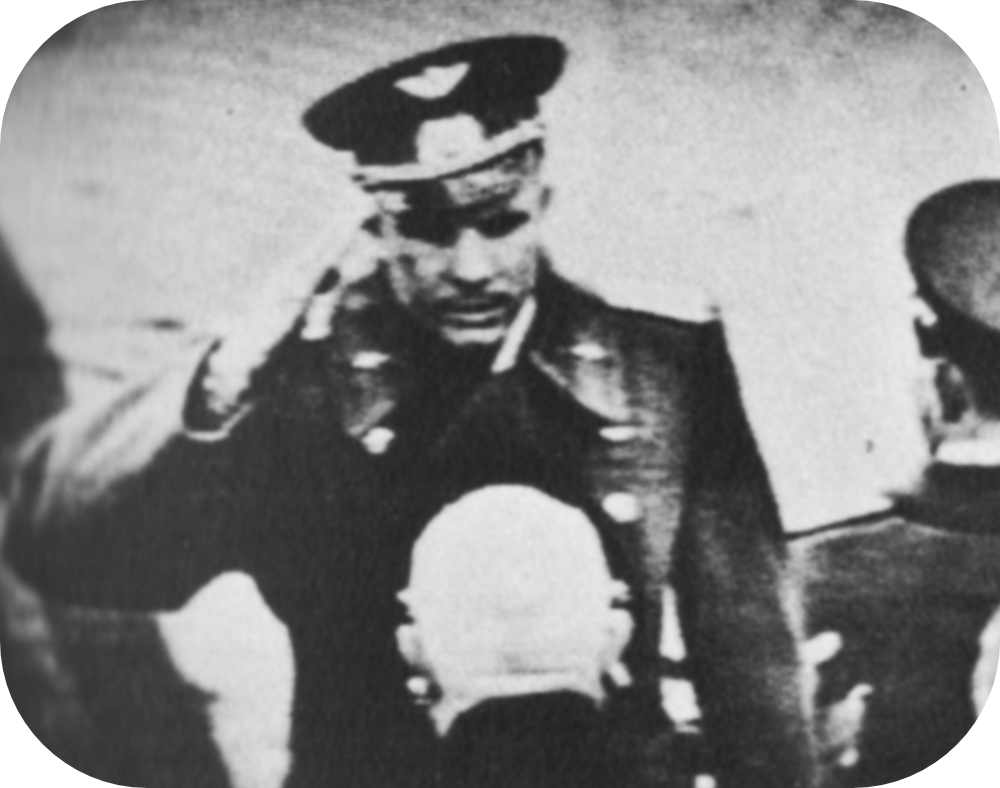
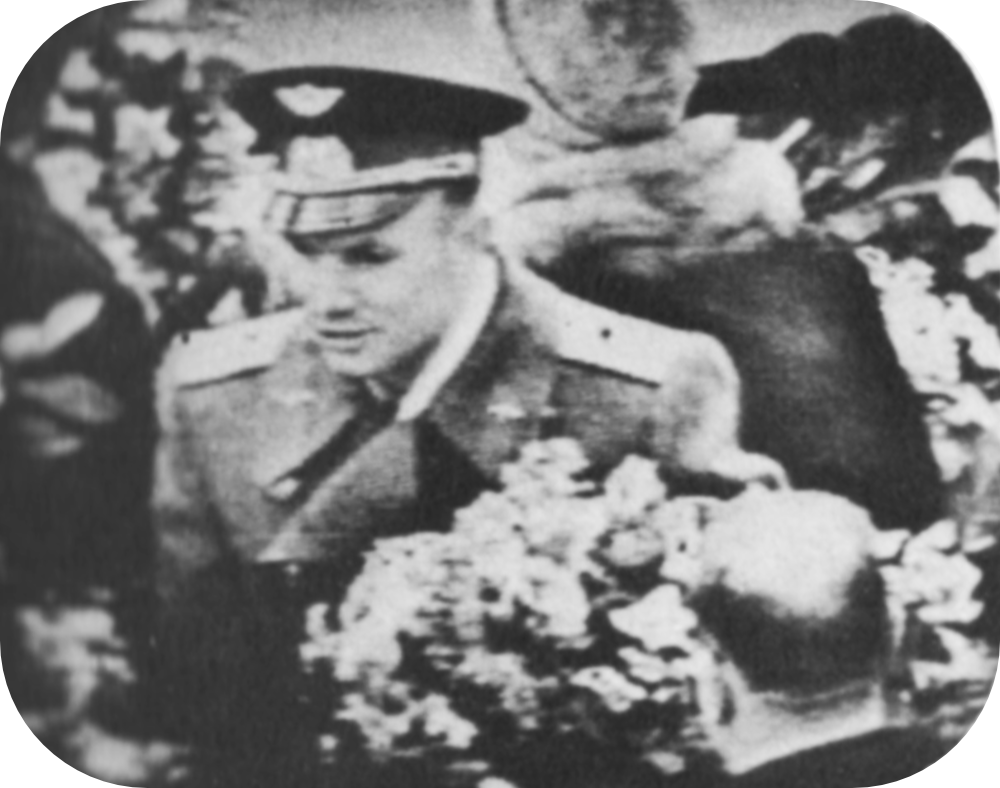
Major Yuri Gagarin was circling the globe. And soon afterwards came the news that he was safely back – with Moscow getting ready for the hero’s welcome of all time.
Here we were, two television producers, sitting in on the most spectacular story for many a year, with not a hope of televising a second of it to the rest of Europe. What an anticlimax the May Day parade would be – we thought – when the Gagarin home-coming and parade was what everyone wanted to see. But was it really hopeless? Could not the much planned television link-up for May Day be brought forward by seventeen days? It might be and it was.
I was in my Lime Grove office on the evening of 19 April when Paul Fox came through on the telephone from Moscow to say he thought he had managed to get the programme through to Helsinki in time for the broadcast of Gagarin’s return to Moscow Airport the very next morning. I immediately announced to the press, and we began trailing heavily on both sound and television the news that we hoped to cover the Gagarin reception – the first man to travel in space, and the first live television pictures from Moscow. It could only be a hope, for official Soviet approval had not yet been given, and we had had no chance to test reception conditions.
I quickly telephoned Dimbleby, who dropped his other commitments to come in the next morning. I also corralled Anatol Goldberg from the BBC’s Russian Service, and at 10.30 a.m. on Friday 14 April we opened transmission.
Dimbleby explained, as he enjoyed explaining technicalities in layman’s language, the complications of getting pictures along the route from Moscow to London. We showed what little news film had come in from Russia, and Dimbleby and Goldberg talked in the studio for a quarter of an hour as we anxiously waited for pictures on the studio monitor. At 10.46 a.m. they miraculously came through, and television was now stretching from Moscow to Londonderry.
The pictures were remarkably good, but the sound was confused. Sometimes we heard a man in Helsinki, sometimes Boris Belitsky. Dimbleby thrived on confusions of that kind, and Gagarin’s walk across the apron of Moscow Airport to receive the bearhug embrace of Khrushchev needed no words of commentary.
Dimbleby had been there to open yet another chapter in television’s unfolding story. A few days later he flew off to broadcast in quick succession the May Day parade, Panorama’s special edition from Moscow, and the Queen’s State visit to Italy.
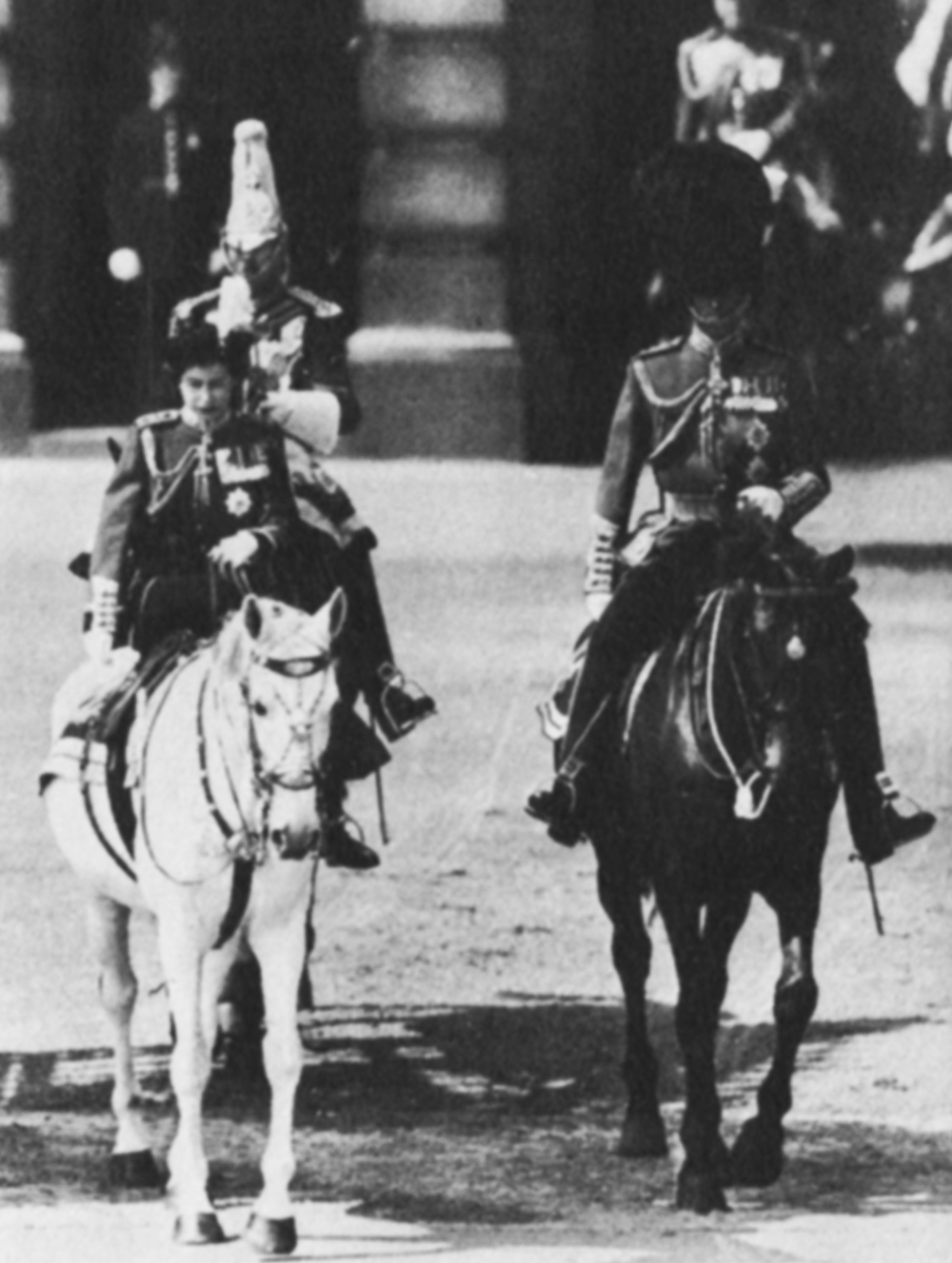
As a reciprocal gesture the Russians agreed to relay the Trooping the Colour, and Yuri Fokin came to London to speak the Russian commentary, following on headphones what Richard Dimbleby was saying. Dimbleby always briefed the European commentators carefully before any major event, and greatly eased their tasks for them. A month later Major Gagarin unexpectedly came to Britain to appear at the Soviet Exhibition at Earl’s Court.
On Tuesday 11 July 1961, Dimbleby was at London Airport to describe his arrival. Gagarin was met by the Soviet Ambassador, the Deputy Chief of the Air Staff, and a civil servant, the secretary to the Minister of Science, Lord Hailsham. Dimbleby was also the commentator later that day at a televised press conference from the Earl’s Court Exhibition, a curious affair at which much of the questioning was puerile, and some speakers from Eastern Europe insisted on reading out poems to the cosmonaut. Belitzky was again doing the translating, and Dimbleby complained on the air that he thought the arrangements at London Airport for greeting the first man to travel in space had been inadequate. A member of the Government and not a civil servant should have been there.
Yuri Fokin describing the Trooping the Colour
There was in fact a lively debate in Britain on the degree of welcome which should be extended to Gagarin, for this was a period of some political tension in Anglo-Soviet affairs. It was soon resolved by the Queen inviting Gagarin to one of her informal luncheon parties on the Friday of that week.
Meanwhile some newspapers charged that the BBC was departing from its charter by taking sides in a current controversy, and I told our press office to point out that Richard was expressing his own view, which he was perfectly entitled to do. The BBC as such was not, as alleged, taking an editorial line. The ‘Daily Herald’ and some others made out that the BBC was annoyed with Dimbleby and was publicly repudiating him. This in turn made the new Director-General, Hugh Carleton Greene, angry, and he took the trouble to telephone Dimbleby to assure him personally that the papers had got it all wrong. Dimbleby, who had at that time not met the new Director-General, much appreciated the telephone call.
Meanwhile we were trying to arrange a proper television interview at which Gagarin could be questioned. Paul Fox was handling the negotiations with Rogov of the Soviet Embassy. After several conversations on Thursday 13 July, the Russians agreed, provided that Yuri Fokin could be part of the panel, and that the general areas of questioning, though not specific questions, should be submitted in writing as soon as possible. This was accepted and we prepared announcements to say that a special programme ‘Meet Major Gagarin’ would be recorded at the Soviet Exhibition the next day and transmitted later that evening in place of a Burns and Allen programme. Richard Dimbleby would be the chairman, Tom Margerison, Science Editor of the ‘Sunday Times’ would be on the panel with Yuri Fokin, and Boris Belitzky would be the interpreter.
Meanwhile the British Government had changed its official attitude towards Gagarin. On that Thursday I went to a hastily arranged reception for him at the Hyde Park Hotel. The Prime Minister, Mr Macmillan, the Foreign Secretary, Lord Home, and the Minister of Science, Lord Hailsham, were all there.
Later that evening Lord Hailsham came to Lime Grove to appear on Gallery. While we were talking with him and Lady Hailsham after the programme Paul Fox phoned. He said that, despite the earlier agreement, Rogov had just been instructed to insist that unless every single question to be put to Gagarin was submitted in writing by 9.30 the next morning the programme was off. I told Fox that in that case the programme would have to be off. Distinguished broadcasters like Margerison and Dimbleby could never agree to submit all their questions in advance. Nor could the BBC. But I also told him to warn the Soviet Embassy that we would have to announce why the broadcast was cancelled. I also asked Fox to go round to the Soviet Embassy the next morning to try to get them to return to the earlier agreement.
Fox telephoned the next morning to say all was well. The Embassy had withdrawn its demand for written questions in advance. Gagarin with Belitzky as interpreter went to lunch at Buckingham Palace, and came straight on to the room in the Earl’s Court Exhibition where we had set up our cameras.
Gagarin entered accompanied by the Soviet Ambassador, who was in a bad temper, and General Kaminin, the Russian in charge of space experiments. There was also a large collection of very tough-looking security men. Dimbleby greeted them all courteously.
The discussion went very well. Gagarin had great charm and answered easily. At the end, just as Dimbleby had been given a ‘Three minutes more’ sign by the floor manager, Fokin stepped in with a very long and heavily polemical statement only just in the form of a question. Gagarin gave an equally long political reply. Dimbleby wasn’t going to end on that note, so he quickly asked Gagarin what presents he was proposing to take back to Moscow. There was a hurried consultation with Belitzky, who replied, ‘Major Gagarin is going to take back toys for his children, souvenirs of London, and something for his wife which he will not disclose, in order that it may remain a secret.’ It was in fact a fur coat. After the interview the Ambassador, General Kaminin and the strong arm men had a long huddle with Gagarin before he was filmed for an ITN interview. Rogov said to Fox, ‘Ah well, we all have to compromise!’ Fox replied sharply, ‘What do you mean! We didn’t.’
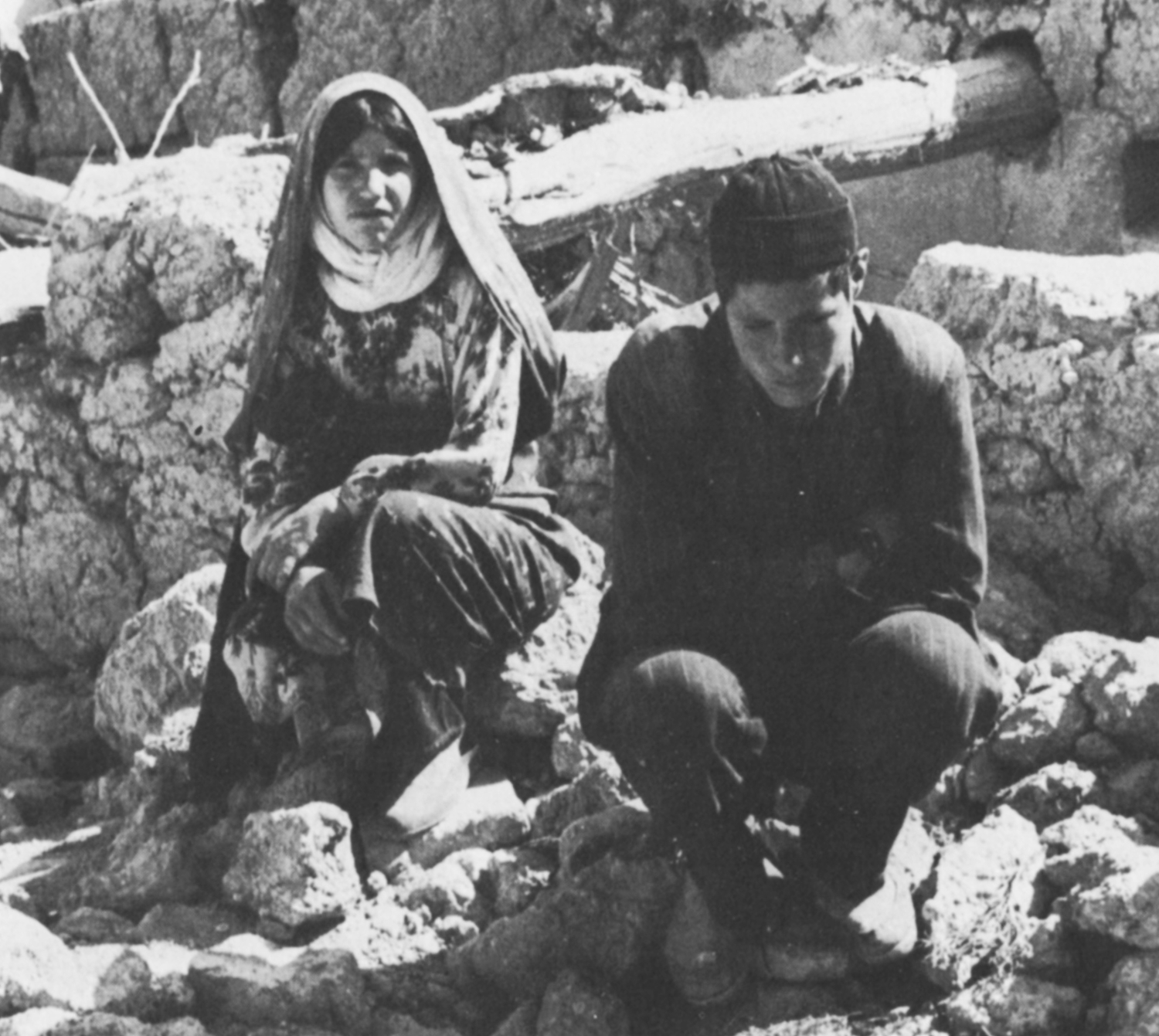
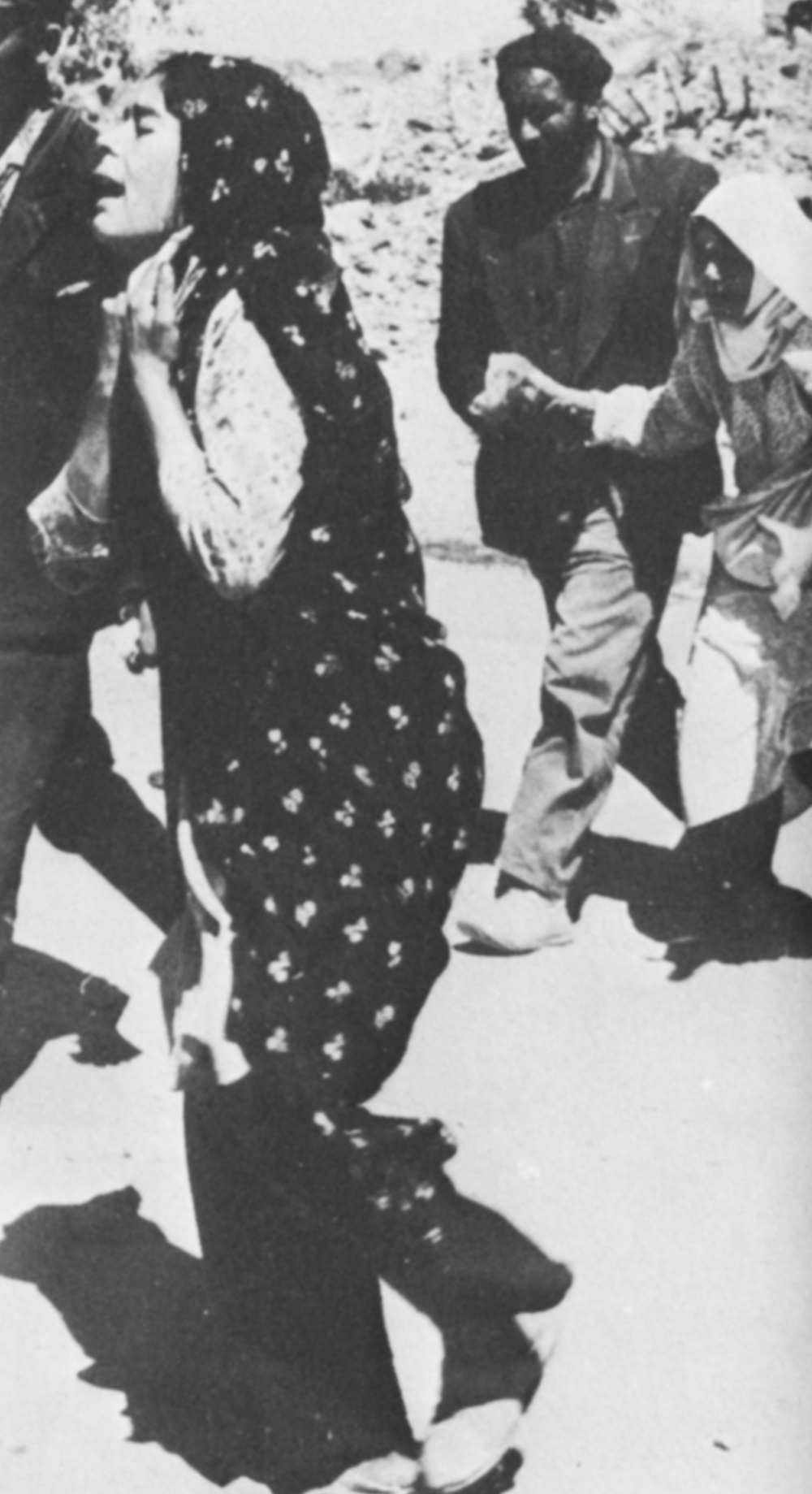
Richard Dimbleby always gave generously of his time and skill to broadcast appeals on behalf of causes near to his heart. Altogether he raised nearly £1 million. He was particularly concerned, and particularly effective, when the object of the appeal was relief of human suffering from some sudden emergency. One of these was the earthquake disaster in Western Persia in the late summer of 1962. Dimbleby appeared on the screen at the end of the news on Wednesday 5 September and showed pictures of the appalling damage done by the biggest natural disaster that had happened in any country for years. He said, ‘The need is enormous and the need is terribly urgent. It’s got to be something in the next forty-eight hours to be really effective. Not only for the drugs, the splints for shattered legs, for the blood plasma, for all the other necessities, but for something like this’ and at that point he held up what the Red Cross call a ‘Disaster Bag’ and showed that it had things like a toothbrush and towel, a handkerchief, a mug, a ball of string, pins, a spoon, a pencil and something else. ‘Because children, thank goodness, are the quickest people to disassociate themselves from the horrors around them, if they have got something to do, however simple it is, every one of these Disaster Bags has in it a ball – an ordinary ball that a child can play with and which will take its mind off things.’ He ended, ‘I believe that you will want to help. This is the quickest, best and most effective way to do it. I have never asked for anything more seriously than I am for this, at this moment.’
Dimbleby’s viewers did respond and respond quickly. £407,000 came in.
A year later there was again an appalling earthquake tragedy, this time at Skopje, the capital of Yugoslav Macedonia. Again Dimbleby was asked to make an emergency television appeal. He agreed to do so the same night, but then refused to go on the air until the Foreign Office were prepared to announce that in addition to the help the British Government was giving to Yugoslavia they would provide aircraft to deliver the goods that might be purchased out of private donations. Richard spoke movingly about the desperate need for shelter and the material for prefabricated houses. He said on 1 August 1963, ‘The Foreign Office have agreed to find the planes if we can find the money, and I am wondering if among the 10 million or so of you who are watching, we can find this amount of money now. The planes are due to leave on August 2nd or 3rd in time to assemble these buildings and provide shelter for these 100,000 homeless.’ He ended: ‘I do hope, as you did for the Persian earthquake last year, that you will respond in helping these desperately unhappy and stricken people.’
Leaving New York Richard again had an unlucky flight. His aircraft could not get beyond Shannon. He sat on a bench at the airport until well after dawn, uncomplaining, but unusually quiet. He introduced two more Panoramas. But the New York illness and temperature persisted. It was thought that he had picked up gastro-enteritis in New York, or had reacted to a TAB injection, or perhaps there had been a resurgence of his 1937 paratyphoid. His doctors suspected a gall bladder infection and told him so. Richard said philosophically, ‘You’d have thought it enough to have cancer. Now I have to have a gall bladder as well.’
It was announced that he had entered St Thomas’s Hospital for observation of suspected gall bladder infection, and this is what both he and his doctors then genuinely believed was keeping him from his Panorama place.
But after an operation it was discovered that a secondary and widespread growth of cancer had given him the symptoms of a gall bladder infection. On 5 November Richard with characteristic courage and common sense told his son David to explain clearly why he was in hospital:
‘My father first contracted cancer over five years ago and has been undergoing treatment at various times since then. He asked me to explain this because he is very strongly opposed to the idea of cancer being an unmentionable disease. The reason he has not mentioned it is that in the last five years he has not lost a single day’s work because of it, but as he expects to be away for a few weeks he thought that people should know why.’
The news of Richard’s illness and the manner of its telling gave his friends, known and unknown, both sadness and enhanced respect. Over 7,000 wrote to him in the hospital. They included many ordinary people who suspected they had cancer and now were given the courage to consult their doctors. His announcement dramatically lifted a taboo. Large numbers of people found they could use a word they had always avoided before. The ‘Nursing Mirror’ was to write:
‘Any public figure has special opportunity for service denied to the man in the street, but does not always recognise it, or use it. In Mr Dimbleby’s case, the opportunity was seen, seized with both hands, and utilised to create an impact on this country which will surely never be forgotten, and which promises to be the forerunner of a change in attitude which will affect the lives of millions of people in the future.’
One day a uniformed guardsman arrived bearing champagne from the Queen. Other members of the Royal Family also asked to be kept informed of his progress. Both Lord Fisher of Lambeth and Cardinal Heenan sought to visit him, but few except his immediate family were allowed to his bedside. Dilys Dimbleby never left him.
On Sunday 19 December, Paul Fox went to the hospital:
‘He brushed aside all questions about himself. His interests even then centred on the people at Lime Grove; on the programmes; on the audiences. The past he had enshrined did not matter to him. His thoughts, as ever, were on the future.’
The next night, as Panorama ended, James Mossman spoke to camera:
‘There are many kinds of courage and it’s appropriate for me to refer to a particular example of it tonight. Richard Dimbleby, who has always been here to give an end-of-term flourish to the last Panorama of the year, is, as everyone knows, ill in hospital, and as everyone also knows, he was a very sick man long before he took time for hospital treatment, though he never during that time gave any intimation to colleagues, or viewers, of the strain he must have been feeling. That is what is known as professionalism, as well as courage. And what I would like to say, to Richard, because I hope he is watching, is that all of us here in Panorama, both on the screen and behind it, send you our very best wishes. I know all of you do also, judging from the seven thousand letters he has received. Yesterday he told a colleague of mine who visited him that he particularly wanted us to pass on his thanks tonight, and to wish all of you a Happy Christmas from him.’
Richard did see, and appreciated, that part of the programme. Two days later, on Wednesday 22 December 1965, he fell into a coma. Shortly after 9 p.m., with Dilys, David and Jonathan at his bedside, he died. He was 52.