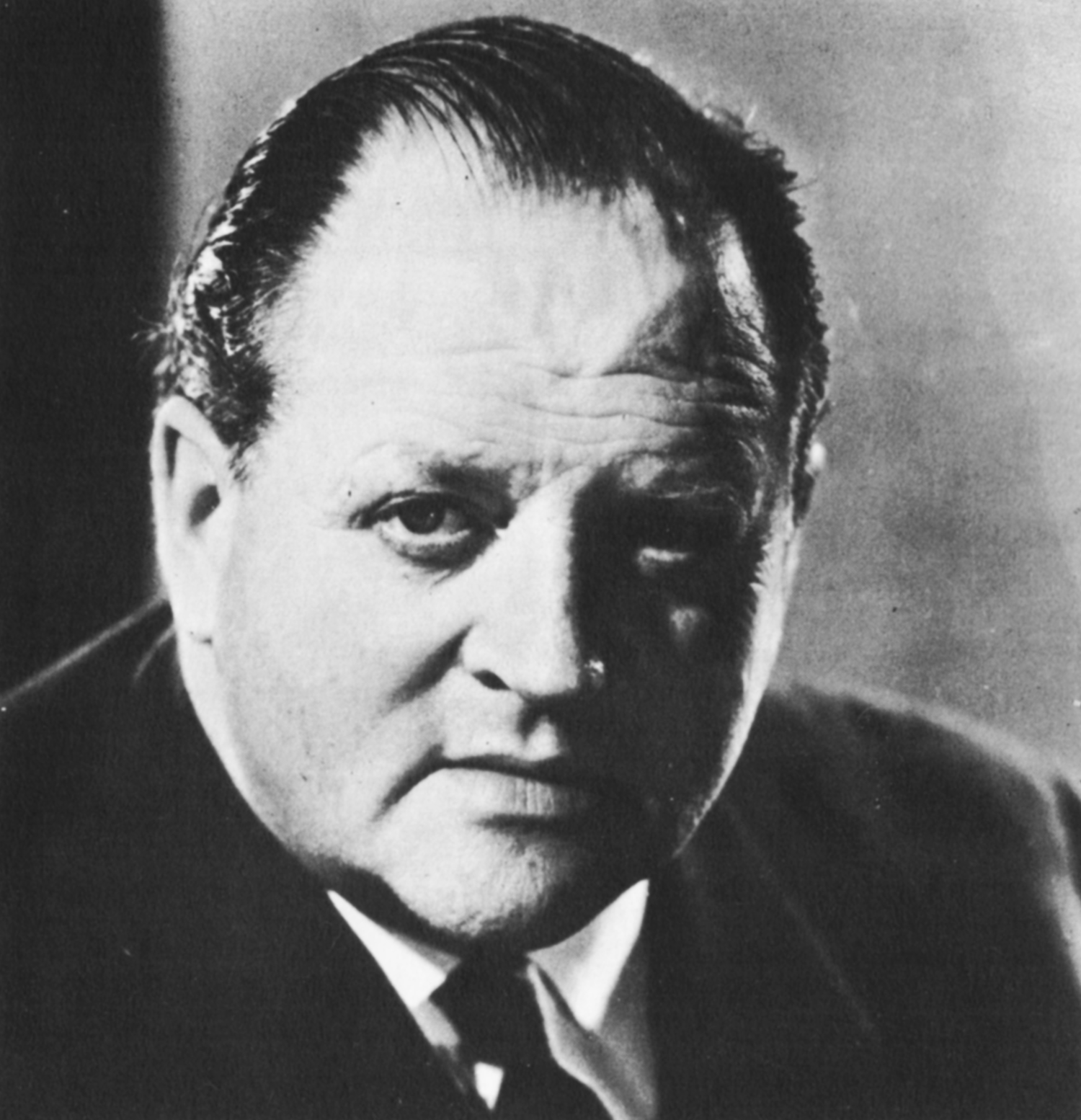
Monday Nights at Lime Grove

Through the eight years I was in charge of current affairs and talks programmes on BBC Television I spent most Monday evenings at Lime Grove. That reconstructed old film studio seemed to acquire a special air of magical excitement on Panorama nights. There was always a knot of schoolboys with autograph books in the darkness outside the main door on the look-out for visitors whose names were in that day’s headlines, or would be in the morrow’s. Sometimes a senior Minister, sometimes an anonymous group would come – for instance, women who were seen knitting throughout one Panorama and then questioned on how much of the programme content they had absorbed. One day in came a box filled with ice, into which a man was locked, and he freed himself during transmission. Mrs Barbara Woodhouse offered to give away to a good home a calf named Conquest, which we watched snuggling down in a pen in the studio with her enormous and beautifully trained Great Dane Juno. The Watford telephone exchange was swamped with eager calls at the rate of 6,000 an hour.
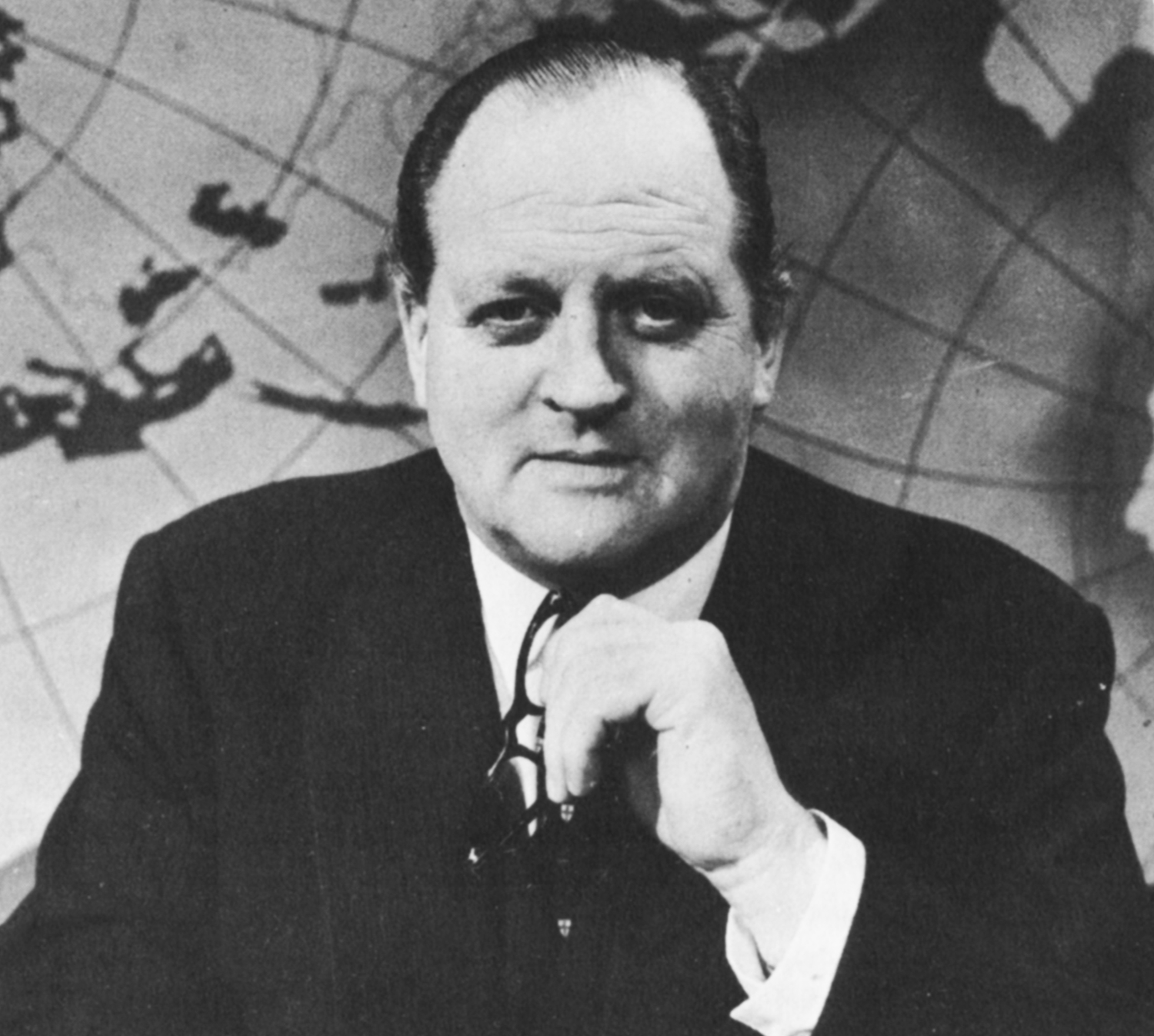
Dimbleby with a stylised map of the world behind him

You never knew what to expect. One day it was a French girl of nine who was set the task of writing a poem on London at the beginning of the programme. She was seen writing hard for a while, got up and bounced a ball once or twice, went on writing, and Dimbleby finally put his excellent French to use by translating the charming verse Minou Drouet had composed. Another day there was a full-grown elephant in the fourth-floor studio, carrying a man gently across the floor with its trunk.
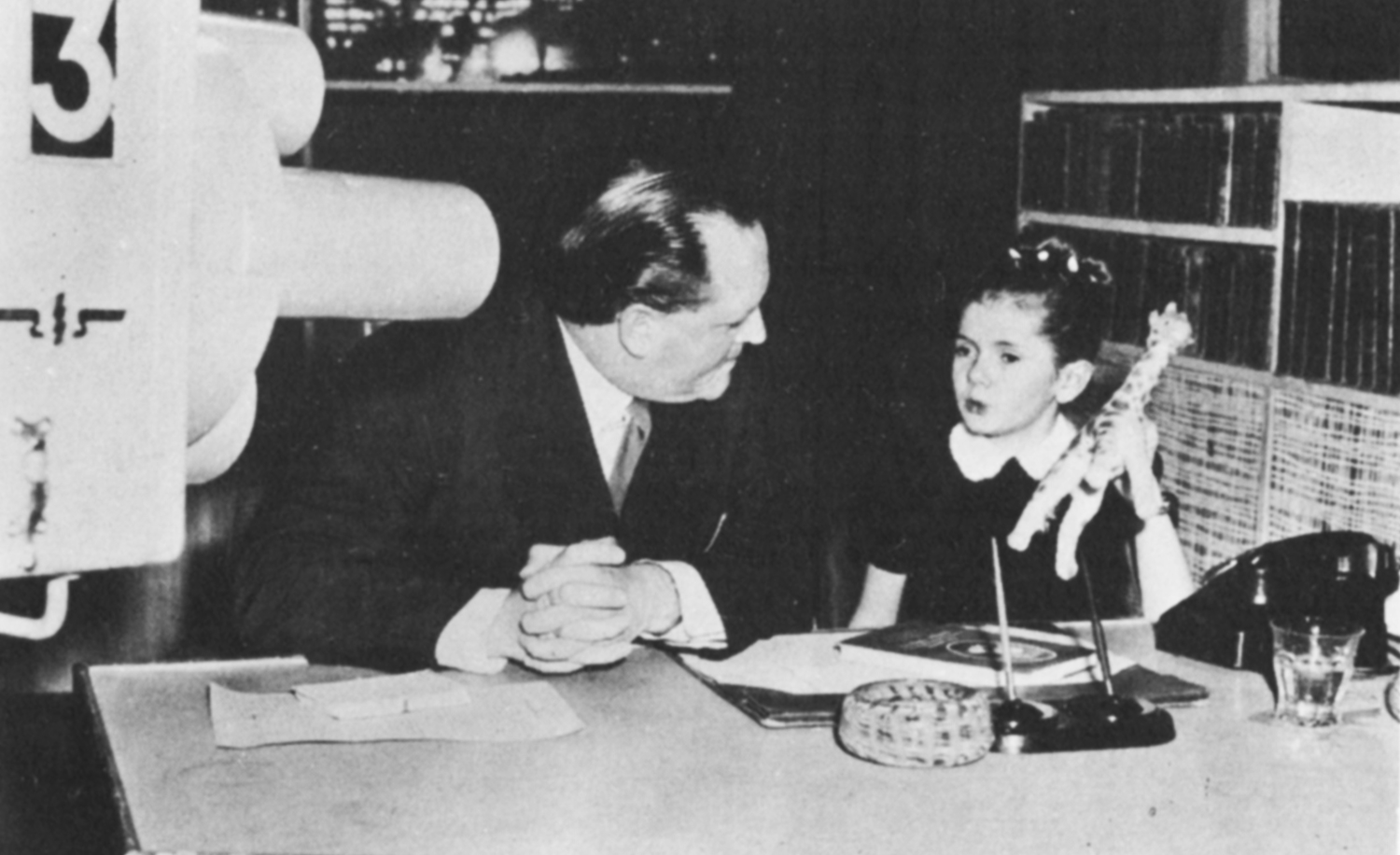
Dimbleby talks to a girl who is holding a toy giraffe
With Minou Drouet

When we decided to make Panorama a weekly programme in 1955 I asked my deputy, Grace Wyndham Goldie, to supervise its new look. She immediately set on it that stamp of quality which marked all her television enterprises. It was she who first demanded that Richard Dimbleby should be the new anchorman, and before soon moving off to energise in turn the start of Tonight and then of Monitor she had firmly settled the guiding lines for Panorama: integrity in its coverage of current affairs, showmanship in its intelligent exploitation of the television medium.

The changing team of Panorama reporters have contributed a wide selection of talents. Most have had to be ready (as Dimbleby forecast even during the war for his two roving European reporters) to fly off at a moment’s notice to where news was about to break. All have been interested in politics, some with one foot in it. Some left Panorama for the House of Commons, like Christopher Chataway and Woodrow Wyatt. Some came to Panorama after failing to be elected, like Robin Day and Ludovic Kennedy. Some combined journalism with a political past, like John Freeman and Angus Maude. There were ex-editors from Fleet Street, Malcolm Muggeridge and Francis Williams, and others whose background was essentially in broadcast journalism, Max Robertson, James Mossman, Michael Charlton, John Morgan, Michael Barratt, Ian Trethowan and Leonard Parkin. Others came and went. They were a talented and restless group, with a tendency to wish to leave after a few years, perhaps later to return again. Panorama reporters were welcomed by such world figures as President Kennedy, Pandit Nehru and the Shah of Persia. They were frequently involved themselves in controversy, for Panorama had to be involved in controversy, and they had to prise out cats which various vested interests preferred to keep in the bag.
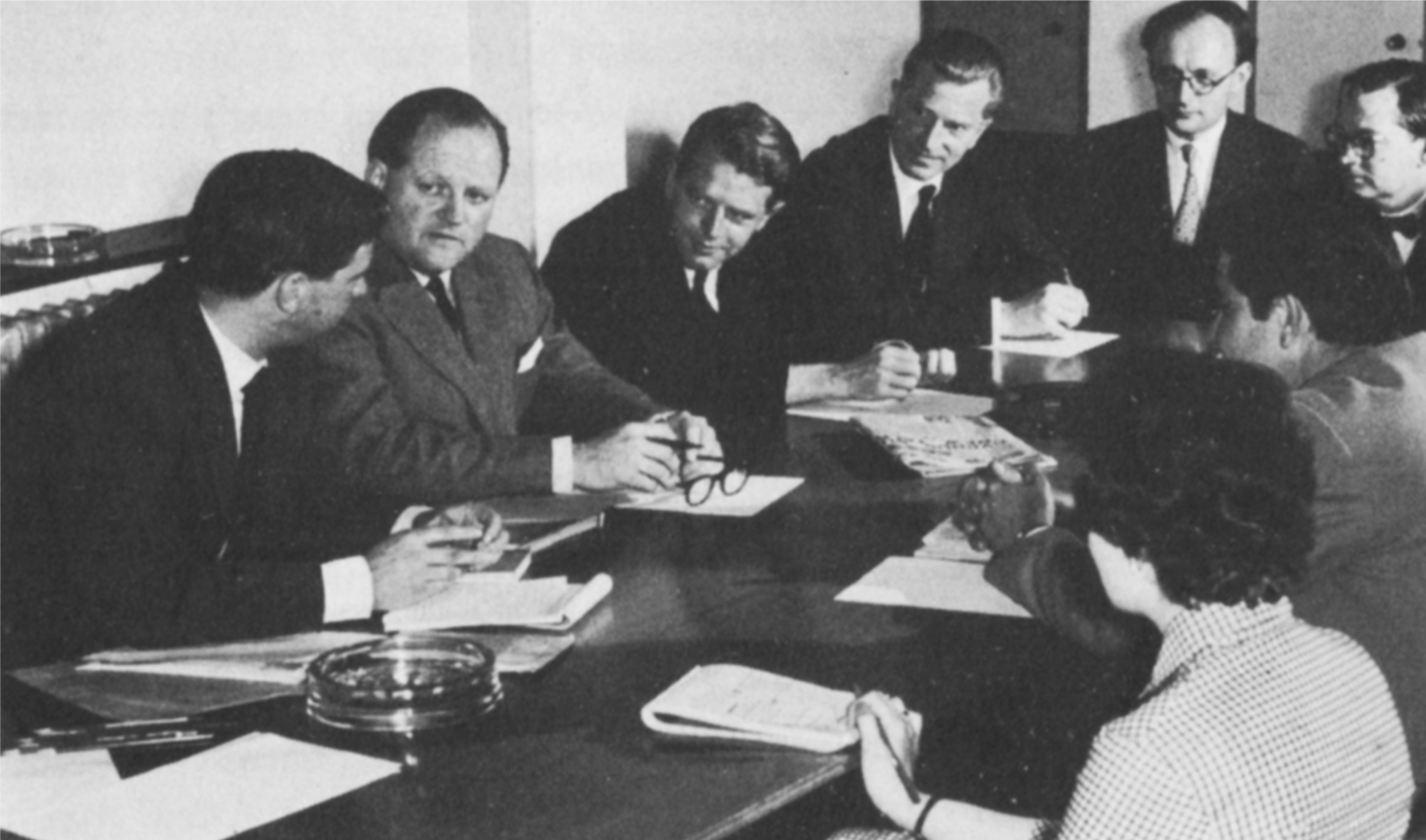
A production team meeting around a table
Panorama: clockwise, Rex Moorfoot (Editor), Dimbleby, Christopher Chataway, John Freeman, David Wheeler (Assistant Editor), Woodrow Wyatt, Christopher Burstall (Production Assistant), Margaret Douglas (Production Secretary)

In Panorama’s whirlpool, as Grace Wyndham Goldie has pointed out, Richard Dimbleby himself always managed to remain at the serene centre, not at the tumultuous edge. He did not want the reputation of a Robin Day or a Malcolm Muggeridge, and so, as she put it, he became on television a kind of living embodiment of stability, a reassuring symbol that somewhere at the heart of disturbance lies a basic kindliness and an enduring common sense’.

The production teams were constantly turning over, as inventive production assistants and producers, trained in the hard school of Panorama, went off to produce new programmes of their own.

Michael Peacock was the first of several editors, each of whom brought some special attribute to Panorama: Rex Moorfoot, Michael Peacock again, after a spell with Outside Broadcasts, Paul Fox, David Wheeler and now Jeremy Isaacs.

Richard Dimbleby remained the one constant factor. He would arrive on Monday mornings and go very carefully through the elaborate studio moves, which were never the same from one programme to the next. A length of film needs to run for eight seconds on a television projector (telecine) before it reaches full speed. An anchorman has to be able to cue the start of the telecine machine and then speak for exactly eight seconds. Dimbleby was impeccable. He would finger his spectacles, indicating the start of the eight seconds, and finish his sentence invariably just as the first frame came up – or if it was late in coming he would spin out his words until out of the corner of his eye he saw the picture arrive on his monitor. He enjoyed demonstrating maps and summarising complicated situations. ‘Let me see if I can simplify it’ he would say, and one felt he was a teacher manqué as well as a surgeon manqué.

His long apprenticeship in radio had made him a master at reading a prepared commentary to a film sequence, and he could get through a last-minute session in the Lime Grove dubbing theatre much faster than most, for his readings were always right first time.
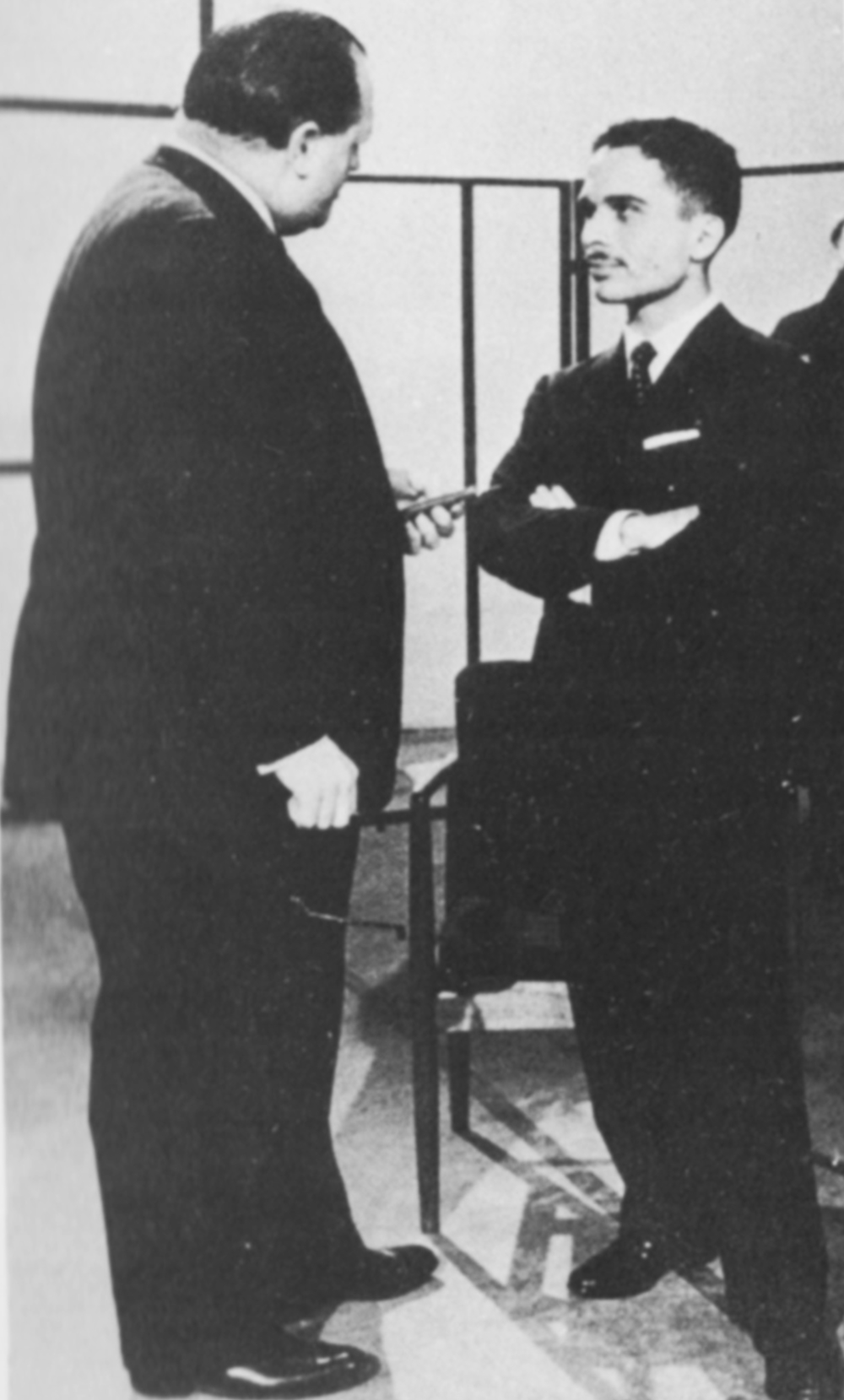
Dimbleby towers over the King of Jordan
With King Hussein of Jordan

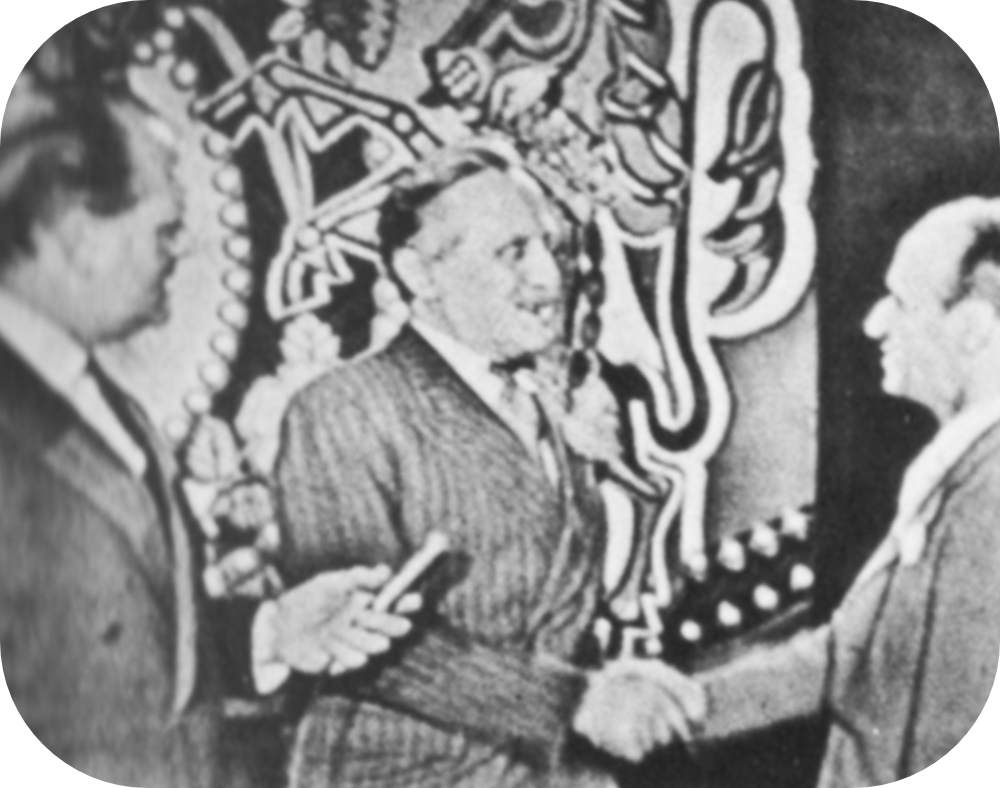
After a day of very careful preparation he changed his clothes and ate a light supper. He would then greet, and set at ease, the important, and the unimportant, and the often temperamental protagonists we had invited to the studio. Dimbleby was invariably an excellent host, and Panorama’s guests were always anxious to meet him. So too were many distinguished visitors to London such as King Hussein of Jordan, who dined with us one night because he wished to see television in action. We took him on a tour of the studios, and finally ended up in Panorama, where a memorable interview took place with the King and Dimbleby, like Johnson and Boswell, each calling the other ‘Sir’ in every sentence.

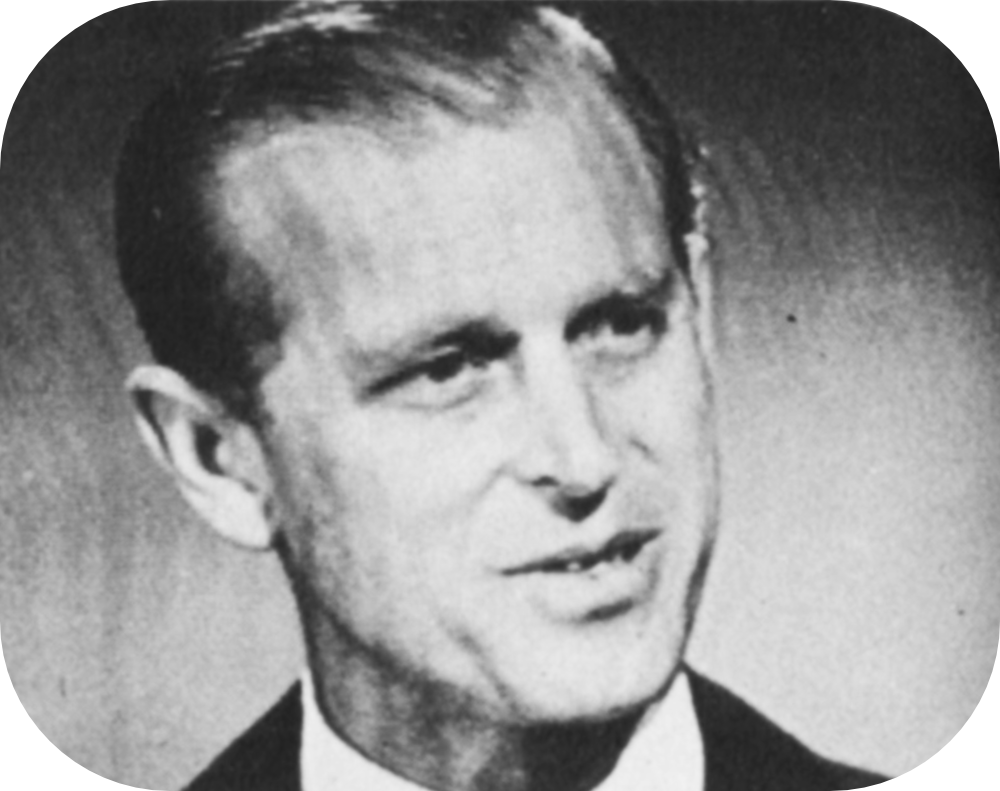
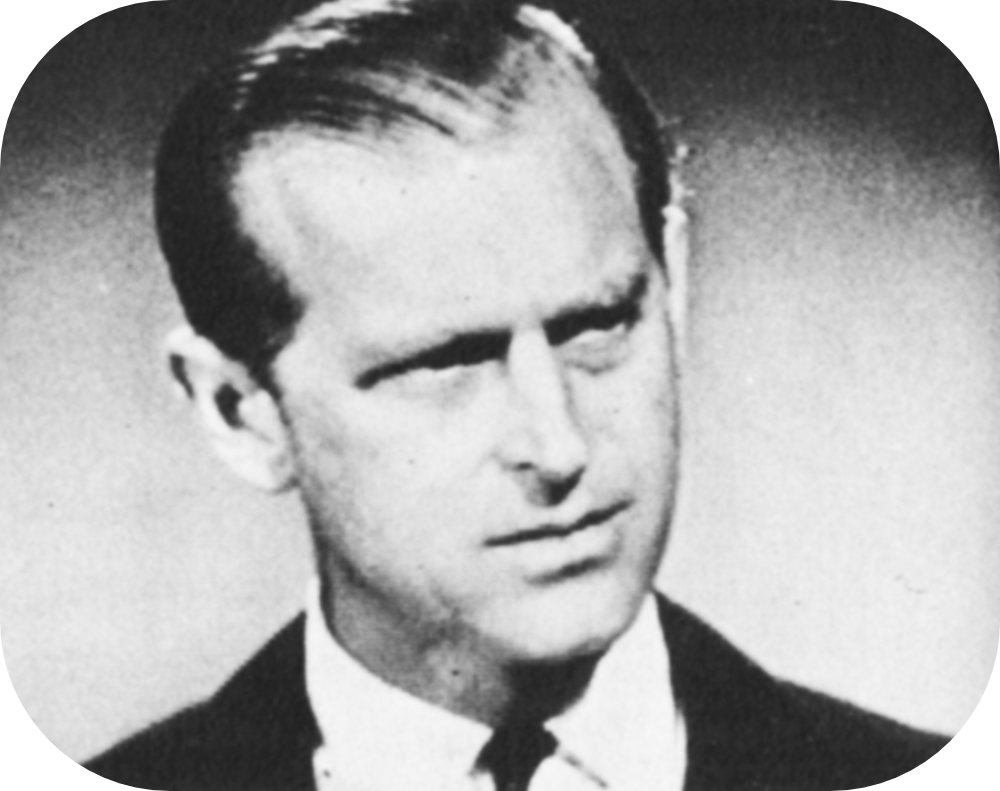
H.R.H. the Duke of Edinburgh had introduced the International Geophysical Year on television, and reported on his travels in a children’s programme. The first time that he, or any other of the Queen’s immediate family, decided to allow himself to be questioned on a regular current affairs programme was at the hands of Richard Dimbleby.
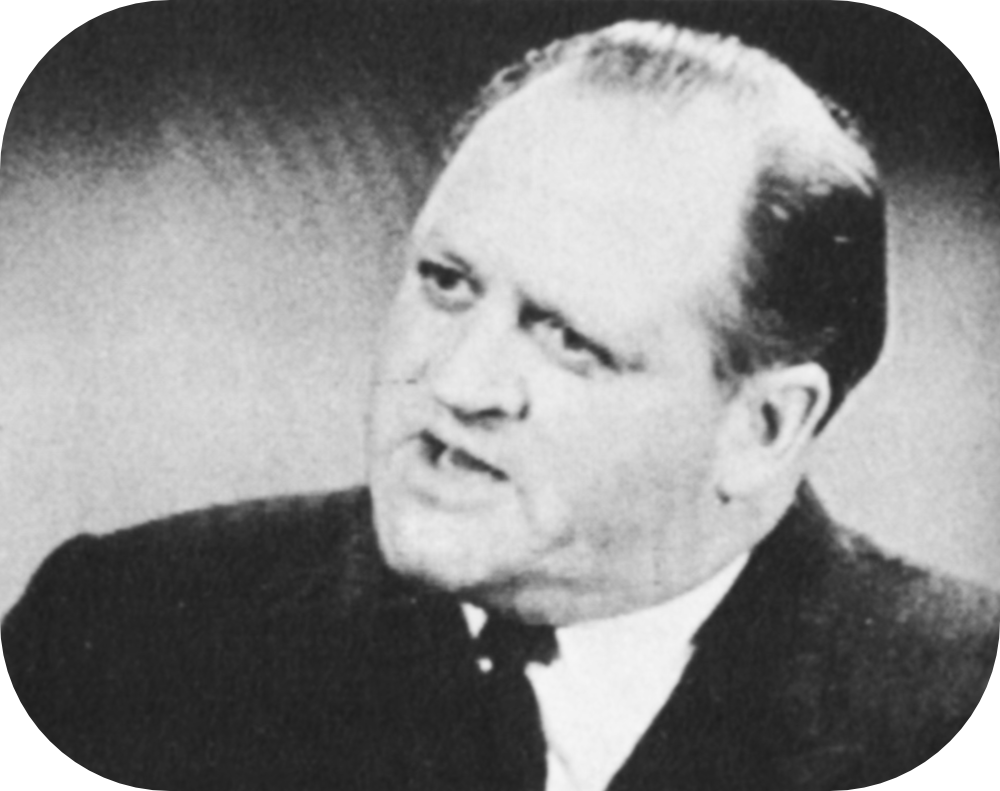
 

There were occasions when Dimbleby almost acted as a national Ombudsman, or a restorer of national confidence. When the world was on the brink of nuclear war over Cuba, and Panorama was mounting a special programme, a woman telephoned to say she would send her children to school only if Richard Dimbleby said it was safe. He made a point of saying to an authority in the studio, ‘I am aware that a great many people today are extremely worried and frightened by what has happened, and have some awful feeling that something dreadful may happen quite quickly, suddenly. Do you think there is reason at all for short-term immediate nerves on this?’
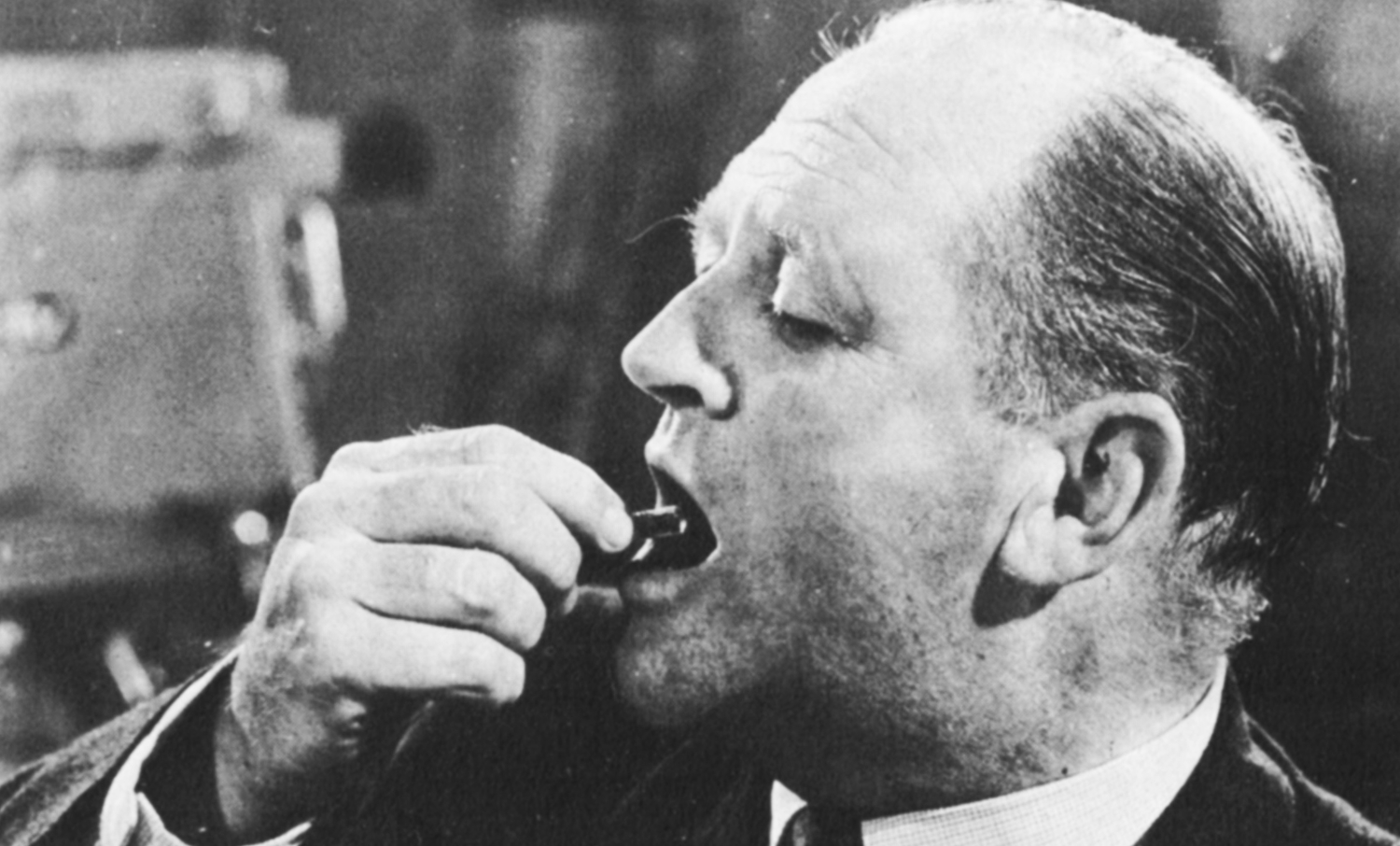
Dimbleby swallowing a tiny camera

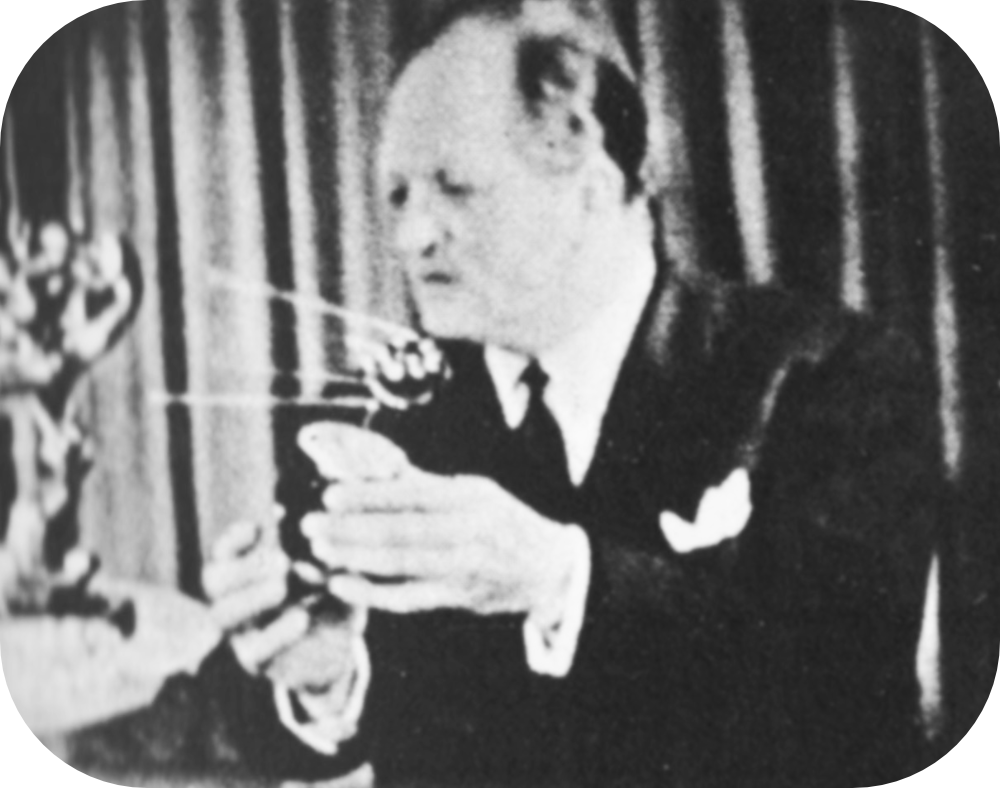
There were several occasions when he was game to subject himself to any kind of treatment in the studio, be it an ice-cream tasting contest with Francis Williams to guess which was made with real cream, or being flung around the studio in an aircraft seat on wheels to test the shock of sudden braking, or swallowing a tiny transmitter and picking up the signals from inside his massive frame, or being spun round in a space simulator at the RAF Medical Centre. For the last programme before Panorama’s much needed annual summer break in 1959, he demonstrated the new American craze for balloon jumping from an airfield at Weston-on-the-Green. It was fascinating to watch his considerable mass reduced to nothing as his weight was counterbalanced by a balloon on his shoulders, and Dimbleby leapt ten to fifteen feet in the air and covered the same distance between strides along the ground.
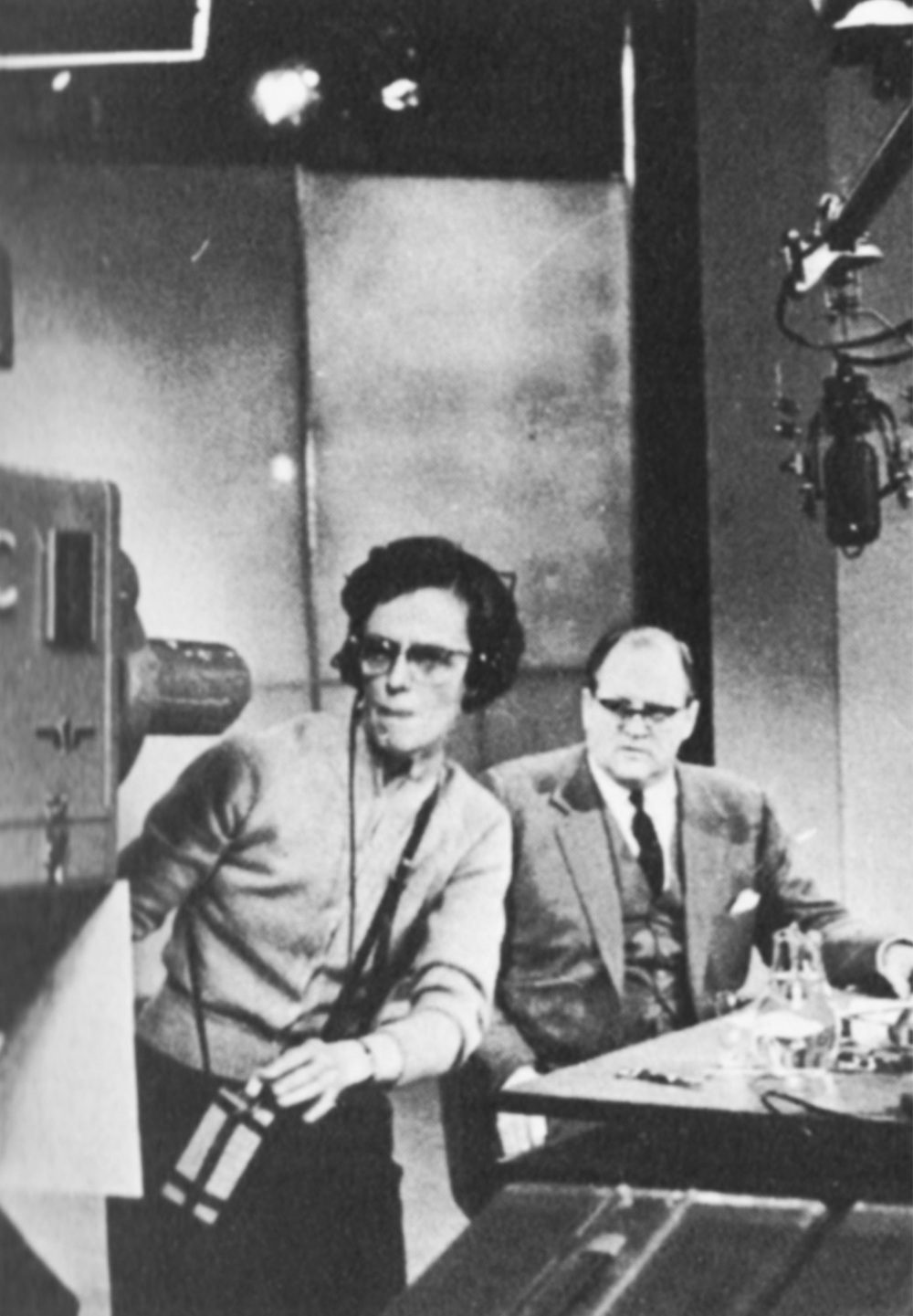
Dimbleby behind a desk, Joan Marsden checking a camera position

He had his little vanities. One was getting the make-up assistant to black the balding patch on the back of his head, until it could no longer be disguised. In the studio there was always fun with the technical crew. During a programme which demonstrated the gimmicks of the 1964 American Election campaign, Dimbleby opened a bottle of Barry Goldwater Cologne for Men. An electrician chargehand next to him commented on the pungent aroma, and asked if it was coming from him. Dimbleby put the neck of the bottle against the chargehand’s arm meaning to ‘spot’ him, but accidentally poured a large quantity on to him. The electrician washed it off but the smell remained strong. After the programme he declared that when he got home his wife would ask searching questions as to the origin of the perfume. Dimbleby immediately wrote a note on a page of his script:

‘Dear Jackie,

This is to certify that I, Richard Dimbleby, have soaked your husband in Barry Goldwater Cologne. He is concerned in case you suspect him of wrong doings.

Personally I think it improves the brute.

Regards,

RICHARD.’

Dimbleby used to keep the studio crews in fits of laughter with earthy stories, mostly unprintable. There was wonderful teamwork, and constant banter, between him and Joan Marsden, Panorama’s regular floor manager. The floor manager wears a receiver on the belt with headphones to pick up the director’s instructions and pass them on to the studio performers. During an edition of Panorama from Sotheby’s sale room which was beamed to America by Early Bird, Joan raised her finger to give Richard the customary ‘one minute’ cue. As soon as he had finished that particular link and a piece of film was running he beckoned her over and said, ‘For Heaven’s sake don’t do that or you will find yourself having bought a picture for £10,000 – “Sold to the lady with the double deaf aid!”.’

She is one of many people for whom Monday nights at Lime Grove have lost something of their magic.
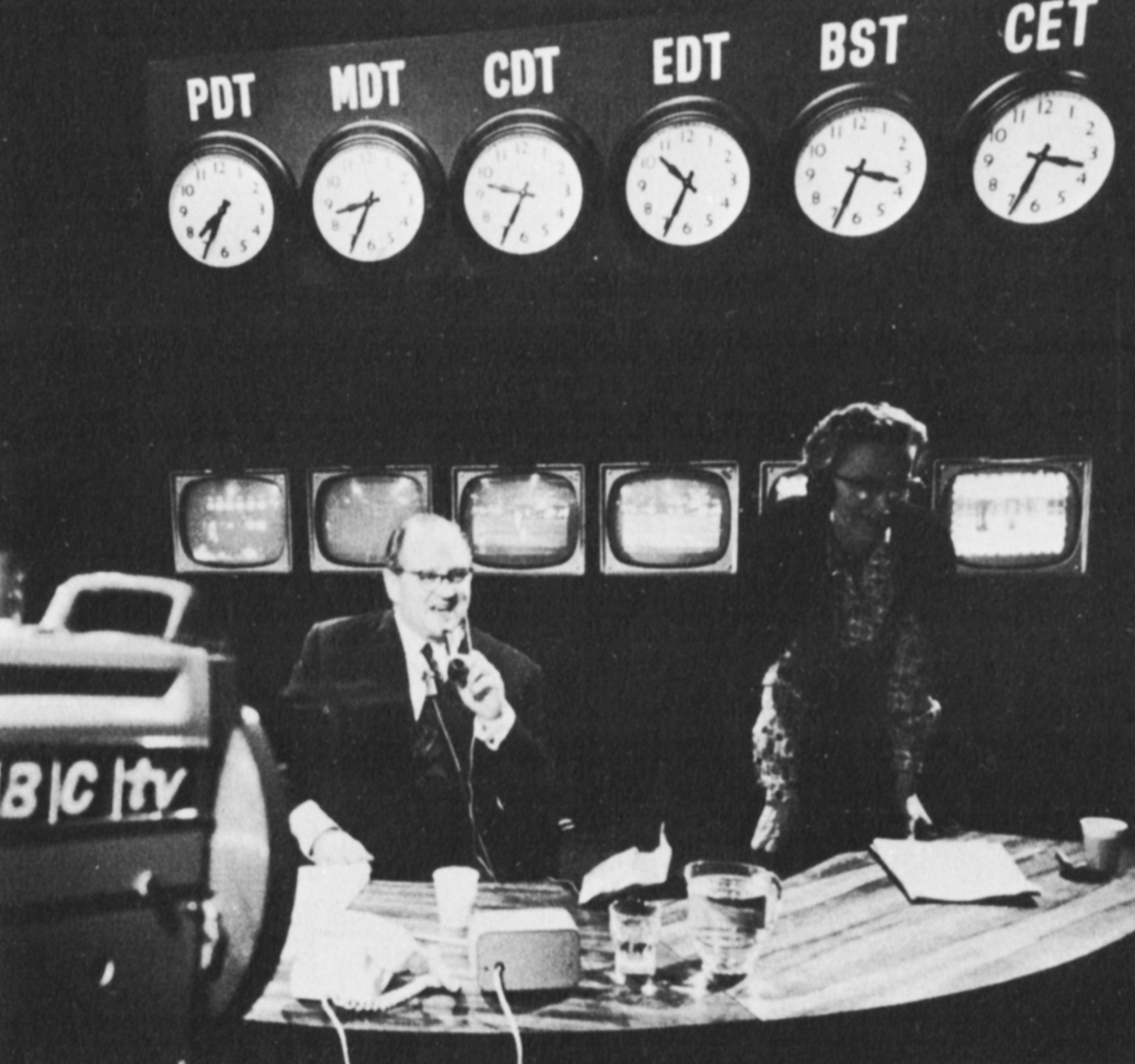
A camera points at Dimbleby and Marsden. Behind them are a row of television monitors and a row of clocks showing times in Pacific, Mountain, Central, and Eastern daylight savings time, BST and Central European time (the same times)
Inaugural programme, Early Bird, with Joan Marsden

From Russia with Dimbleby

Until the death of Stalin in 1953 the cold war numbed broadcasting relations between the Soviet Union and Great Britain. British camera teams were not allowed to enter Russia. Correspondents were denied visas. Broadcasts in the BBC’s European Service were systematically jammed. There were none of the normal interchanges of musical programmes or sporting events between broadcasting organisations.

In 1956 a slight thaw began. The Russians sent an engineer to observe the BBC’s experimental colour television demonstrations at Alexandra Palace. When Khrushchev and Bulganin came to visit Sir Anthony Eden in April of that year the idea of cultural exchanges was mooted. As a first step they invited an official delegation from the BBC to come and inspect radio and television in Moscow, Leningrad and Kiev.

By the end of April, even before Bulganin and Khrushchev had sailed back to Russia, seven of us representing BBC Sound and Television, Engineering and Programmes, External Services and News, had flown to Moscow, just in time to see the famous May Day parade through Red Square. Anatol Goldberg, the Programme Organiser of the BBC’s Russian section, was able to interpret for us. The Russians also provided as a guide and interpreter Boris Belitzky, who was one of the regular broadcasters in Moscow Radio’s English service. Belitzky had lived in New York as a boy and spoke excellent English. He left us on May Day to give the English language radio commentary on the parade. The Russian television service was also developing, and the parade was televised for the first time that year, with two outside broadcast units on opposite sides of Red Square. The broadcast was technically impressive, though the cameras were badly placed.

We had many discussions with the Russians, seeking ways of opening up broadcasting relationships without the sacrifice of principle on matters such as censorship, and without involving either of us in carrying the other’s propaganda. The discussions tended to founder when we brought up the question of jamming. Russians love metaphors and elaborate figures of speech, and so at one of their many hospitable occasions the Director of External Services, J. B. Clark, made a glowing speech about the beautiful garden which lay ahead, ‘but the gates of the garden have their hinges and locks corroded by jamming’. The Soviet Deputy Minister of Communications quickly replied, ‘The gates must be open, but the key to the gates must be in the pocket of the master of the garden’.

Nevertheless Frank Gillard, who was representing Sound Programmes, and I, representing Television, did return with one positive achievement. We had got the names of two broadcasters speaking excellent English who would be prepared to take part (in sound only) in hook-up discussions of current affairs, subject to official permission. One was Yuri Fokin, soon to become Head of News of Moscow Radio. The other was Boris Belitzky. This represented substantial progress, for the Russians at that time had no tradition of unscripted discussion at all. Moreover we returned with their telephone numbers, and had learned that the telephone appeared to pierce the Iron Curtain fairly easily. We also broached the question of a possible television hook-up as soon as the links across Europe could be established. At that time the Russians had not yet even linked Moscow with Leningrad.

Belitzky had welcomed the idea of contributing in sound only to Panorama. He knew Dimbleby well by voice and reputation. As soon as the Russians launched their first Sputnik I telephoned Moscow and in the next Panorama Belitzky’s voice took part in the studio discussion of the possibility of the space age.

Brussels International Exhibition, 1958, with Boris Belitzky, Sir John Balfour, U.K. Commissioner-General, Model Sputnik III. Soviet cameras, a Flemish outside broadcast, the Eurovision link, standards conversion and photographed off the television screen.

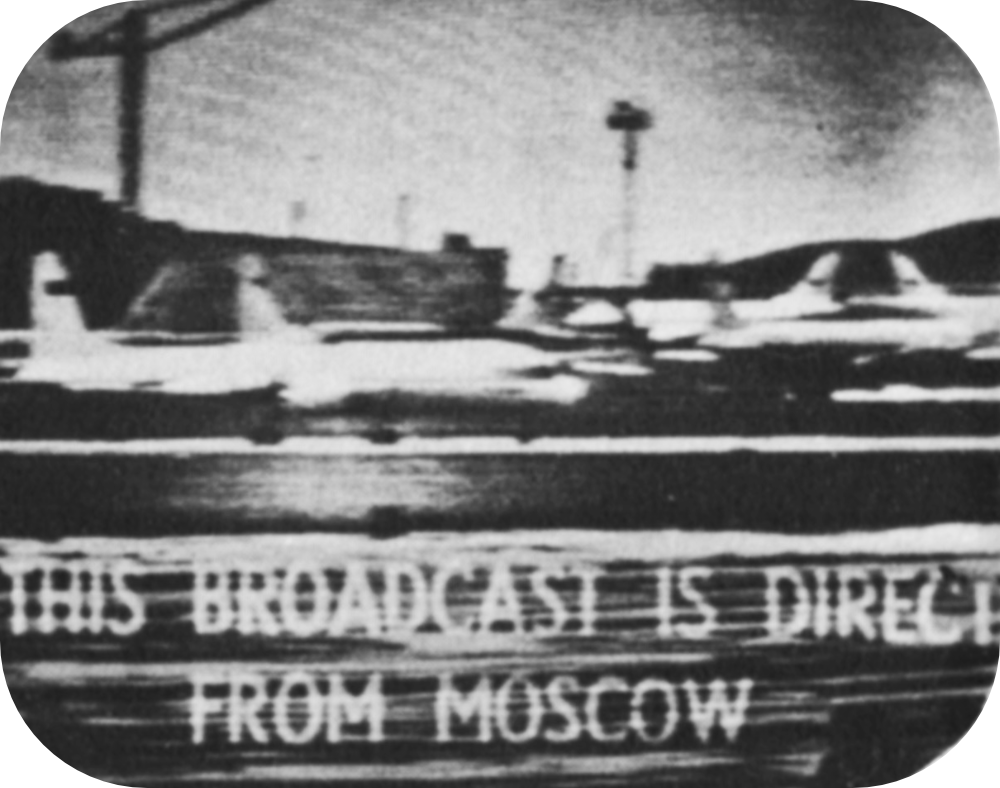
In 1958 the television hook-up with Moscow moved one stage closer. At the International Exhibition at Brussels the Soviet Pavilion was equipped with closed circuit television. With the aid of a Flemish outside broadcast unit and the Eurovision link Dimbleby was able to introduce a BBC programme with the words ‘I am speaking to you direct from a studio of Radio Moscow’. He liked dramatic openings and this was literally true, for Radio Moscow had provided the television studio and cameras in the Soviet Pavilion.

Richard Dimbleby and Boris Belitzky, meeting face to face for the first time, then toured the Soviet Pavilion and talked to an attractive interpreter, Maya Malisheva, who displayed fur coats and Russian food delicacies, including one item that intrigued Dimbleby – porridge for dessert. It was a highly complicated programme for the BBC producer, Derek Burrell-Davis, for he was dealing with a Russian outside broadcast unit, a Flemish outside broadcast unit, and a Russian telecine machine, and the technical crews had no common language.

British viewers and television critics were fascinated by their first live view of Soviet activity. The ‘Guardian’ television critic commented: ‘A complicated broadcast which was well handled by Derek Burrell-Davis, the British producer, and by Richard Dimbleby, who had abandoned his baronial manner very successfully under the shadow of Lenin, and who did not forget to remind us, as the camera passed finally from sucking pig, salmon, chickens, sturgeons, mutton chops and porridge-for-dessert to a last glimpse of Sputnik III, that “there is always something like that looking down on you”.’

I was interested to note the next evening in Brussels that Flemish television repeated exactly the same programme for Belgian viewers, with one of their own commentators taking Dimbleby’s place, and a Flemish-speaking Russian instead of Belitzky. But they stuck entirely to the shape of the programme carefully prepared by Dimbleby and Burrell-Davis and did not even bother to issue another camera script to the technical crew. The Dimbleby moves and the Dimbleby questions could not be improved upon.

Peter Dimmock wrote to the Russian authorities warmly thanking them for their co-operation and hoping for further opportunities for the outside broadcast units of the two countries to work together in the future.

Other BBC visitors travelled to Moscow. Aubrey Singer went in search of scientific programme material, Peter Dimmock to arrange film of the USA/USSR athletics match. Dimmock reported that the Russians were hoping to create a television link with Prague via Warsaw in order to be able to receive the 1960 Olympic Games live from Rome. We continued to work for a live hook-up from Moscow. At the same time discussions went on from time to time to try to abolish jamming. Dimmock reported that the Russians were beginning to favour ITV on the film coverage of sport, because, as ITV did not broadcast to Russia, there were no complications over jamming.

In February 1960 the Soviet Union ceased its jamming of the BBC’s European programmes, and this obstacle seemed out of the way. Early the next year ATV proudly announced that they were going to achieve the first television link-up from Moscow to Britain, by live coverage of the British Trade Exhibition, due to open in Moscow on 17 May 1961, and even took advertising space in British newspapers and periodicals to publish the announcement in Russian.


After all the BBC’s pioneering work on Eurovision, and its long negotiations with the Russians, this was too clear a challenge to be ignored. The BBC countered with an offer to relay the morning May Day parade from Moscow that year and, because 1 May fell on a Monday, to broadcast that evening a special edition of Panorama from Moscow. Richard Dimbleby would do both programmes. The Russian authorities agreed. Peter Dimmock and Tony Bridgewater, then the senior engineer on the outside broadcasting side, went to Moscow, and with generous help from the Russians and the Finns worked out a method of getting the Moscow pictures across the Baltic from Tallin to Helsinki, and so down the Eurovision link through Scandinavia to Britain. Paul Fox flew to Moscow to prepare the Panorama programme, Noble Wilson to arrange the relay of the May Day Parade. Paul Fox recalls:

Filled with doubts, I arrived in Moscow to arrange the Panorama side of things. Already installed in the National Hotel was Noble Wilson. And as we looked at our plans for this first-timer from Russia, something far bigger overtook us. A friend – an American correspondent – phoned us with the news that something was on: he couldn’t tell what. And even as we puzzled it out, the loudspeakers blared into action: ‘The Soviet Union has today launched the first man into space’.

Major Yuri Gagarin was circling the globe. And soon afterwards came the news that he was safely back – with Moscow getting ready for the hero’s welcome of all time.

Here we were, two television producers, sitting in on the most spectacular story for many a year, with not a hope of televising a second of it to the rest of Europe. What an anticlimax the May Day parade would be – we thought – when the Gagarin home-coming and parade was what everyone wanted to see. But was it really hopeless? Could not the much planned television link-up for May Day be brought forward by seventeen days? It might be and it was.

I was in my Lime Grove office on the evening of 19 April when Paul Fox came through on the telephone from Moscow to say he thought he had managed to get the programme through to Helsinki in time for the broadcast of Gagarin’s return to Moscow Airport the very next morning. I immediately announced to the press, and we began trailing heavily on both sound and television the news that we hoped to cover the Gagarin reception – the first man to travel in space, and the first live television pictures from Moscow. It could only be a hope, for official Soviet approval had not yet been given, and we had had no chance to test reception conditions.

I quickly telephoned Dimbleby, who dropped his other commitments to come in the next morning. I also corralled Anatol Goldberg from the BBC’s Russian Service, and at 10.30 a.m. on Friday 14 April we opened transmission.

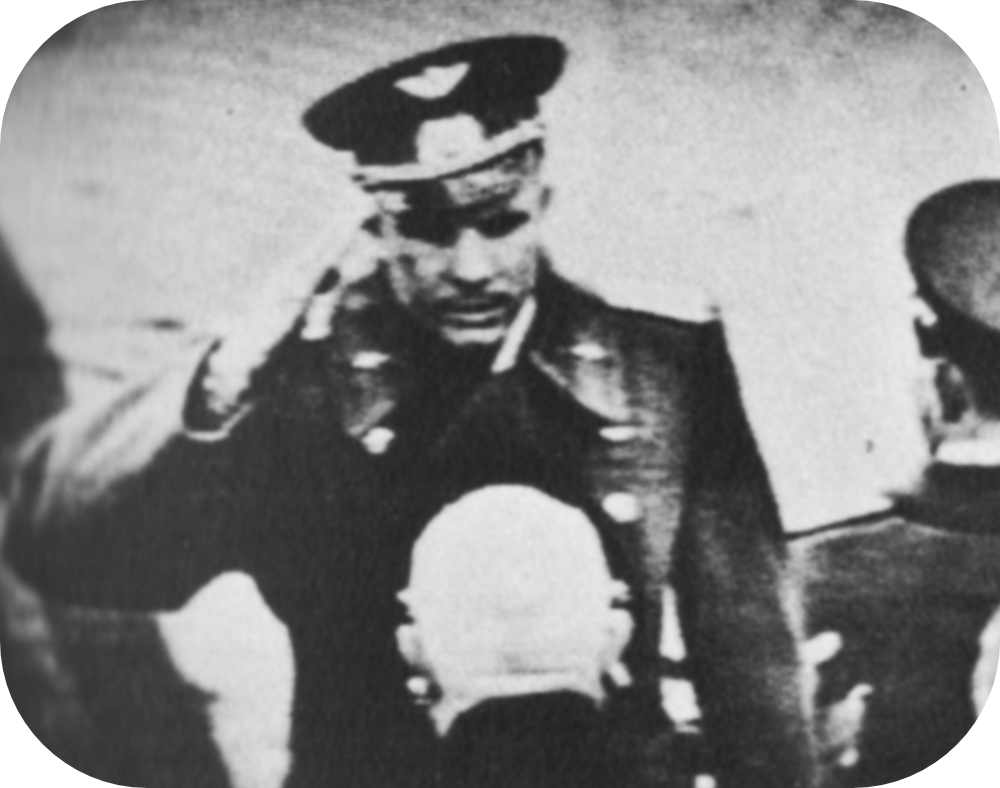
Dimbleby explained, as he enjoyed explaining technicalities in layman’s language, the complications of getting pictures along the route from Moscow to London. We showed what little news film had come in from Russia, and Dimbleby and Goldberg talked in the studio for a quarter of an hour as we anxiously waited for pictures on the studio monitor. At 10.46 a.m. they miraculously came through, and television was now stretching from Moscow to Londonderry.

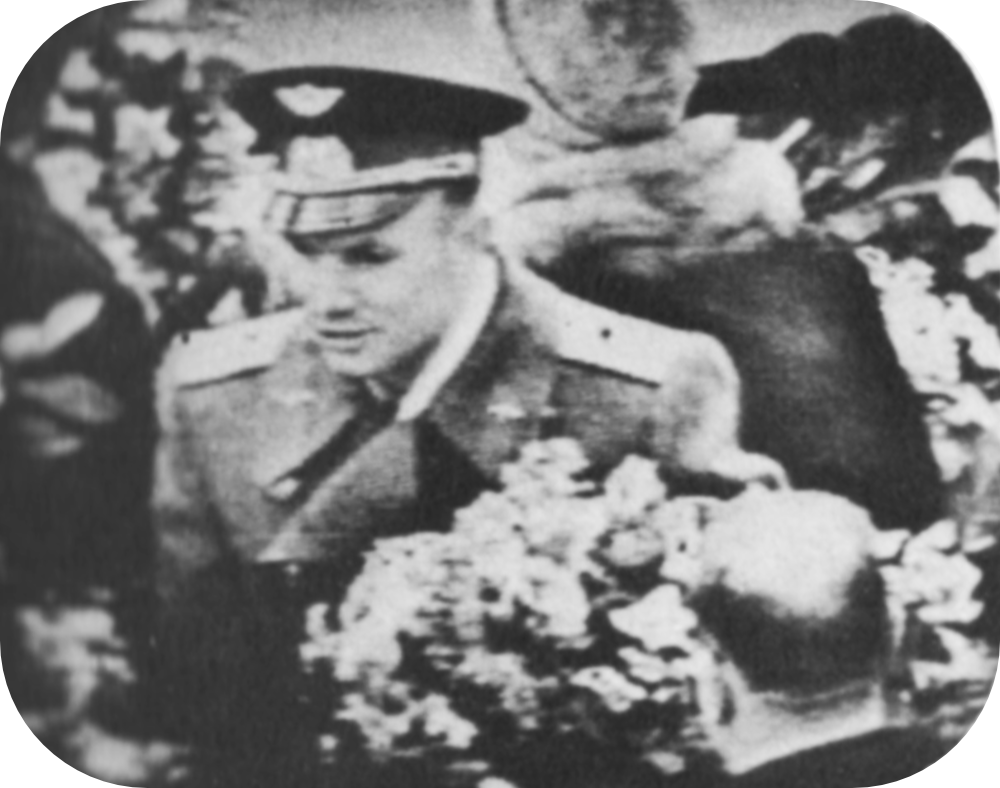
The pictures were remarkably good, but the sound was confused. Sometimes we heard a man in Helsinki, sometimes Boris Belitsky. Dimbleby thrived on confusions of that kind, and Gagarin’s walk across the apron of Moscow Airport to receive the bearhug embrace of Khrushchev needed no words of commentary.

Dimbleby had been there to open yet another chapter in television’s unfolding story. A few days later he flew off to broadcast in quick succession the May Day parade, Panorama’s special edition from Moscow, and the Queen’s State visit to Italy.

Meet Major Gagarin

As a reciprocal gesture the Russians agreed to relay the Trooping the Colour, and Yuri Fokin came to London to speak the Russian commentary, following on headphones what Richard Dimbleby was saying. Dimbleby always briefed the European commentators carefully before any major event, and greatly eased their tasks for them. A month later Major Gagarin unexpectedly came to Britain to appear at the Soviet Exhibition at Earl’s Court.

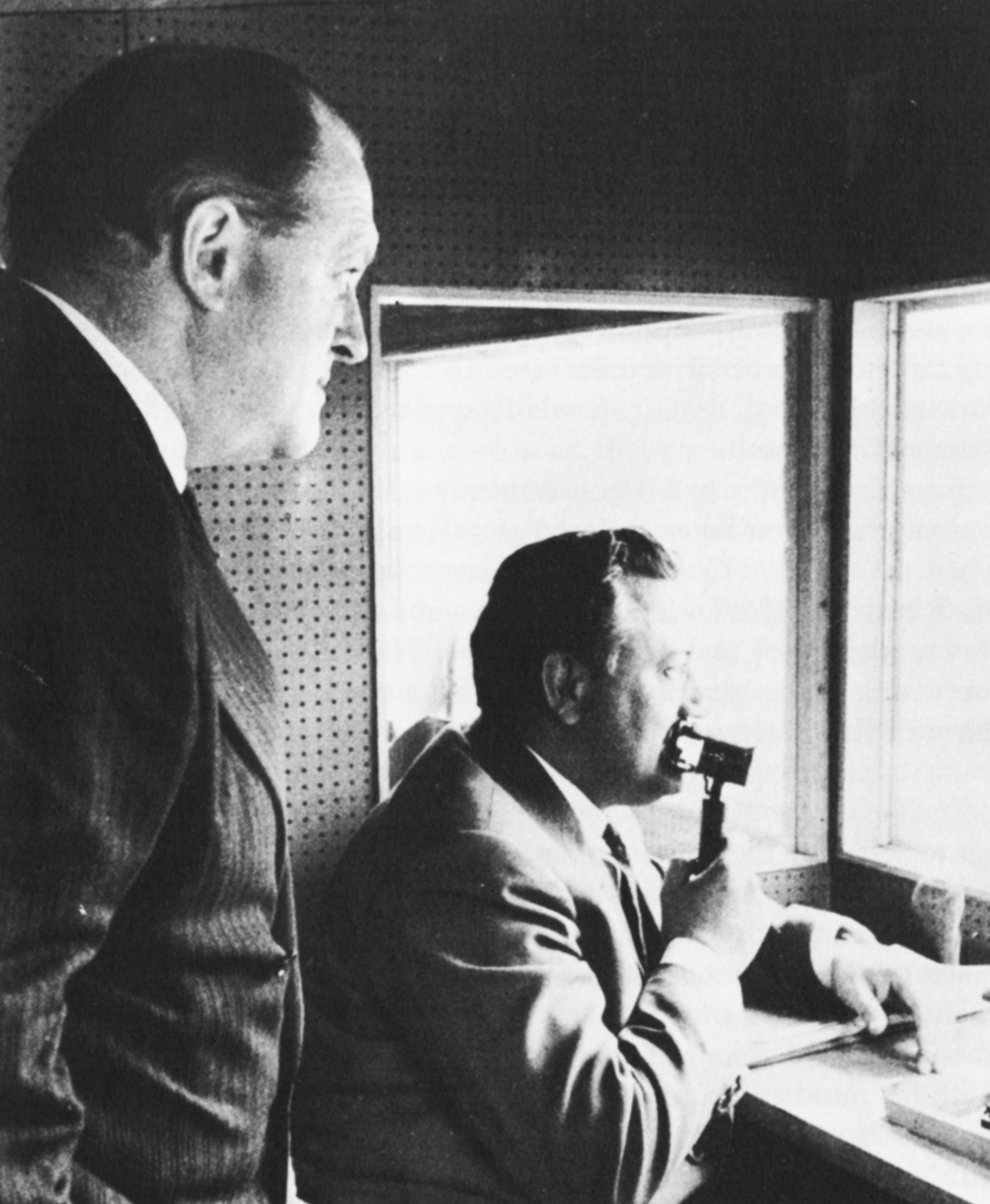
On Tuesday 11 July 1961, Dimbleby was at London Airport to describe his arrival. Gagarin was met by the Soviet Ambassador, the Deputy Chief of the Air Staff, and a civil servant, the secretary to the Minister of Science, Lord Hailsham. Dimbleby was also the commentator later that day at a televised press conference from the Earl’s Court Exhibition, a curious affair at which much of the questioning was puerile, and some speakers from Eastern Europe insisted on reading out poems to the cosmonaut. Belitzky was again doing the translating, and Dimbleby complained on the air that he thought the arrangements at London Airport for greeting the first man to travel in space had been inadequate. A member of the Government and not a civil servant should have been there.

Dimbleby stands over Yuri Fokin who is wearing headphones and speaking into a lip mic
Yuri Fokin describing the Trooping the Colour

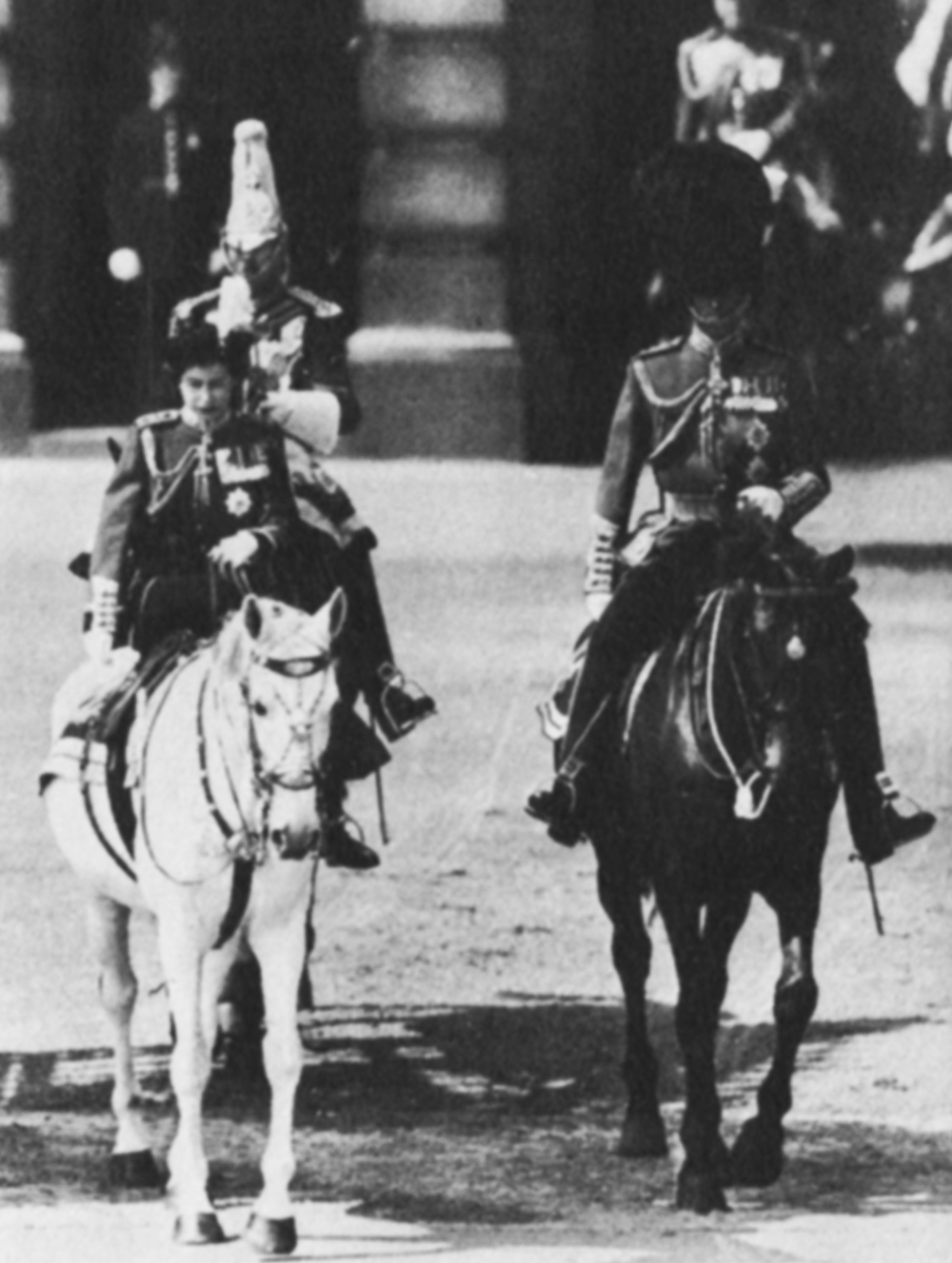
The Queen in uniform on horseback

There was in fact a lively debate in Britain on the degree of welcome which should be extended to Gagarin, for this was a period of some political tension in Anglo-Soviet affairs. It was soon resolved by the Queen inviting Gagarin to one of her informal luncheon parties on the Friday of that week.

Meanwhile some newspapers charged that the BBC was departing from its charter by taking sides in a current controversy, and I told our press office to point out that Richard was expressing his own view, which he was perfectly entitled to do. The BBC as such was not, as alleged, taking an editorial line. The ‘Daily Herald’ and some others made out that the BBC was annoyed with Dimbleby and was publicly repudiating him. This in turn made the new Director-General, Hugh Carleton Greene, angry, and he took the trouble to telephone Dimbleby to assure him personally that the papers had got it all wrong. Dimbleby, who had at that time not met the new Director-General, much appreciated the telephone call.

Meanwhile we were trying to arrange a proper television interview at which Gagarin could be questioned. Paul Fox was handling the negotiations with Rogov of the Soviet Embassy. After several conversations on Thursday 13 July, the Russians agreed, provided that Yuri Fokin could be part of the panel, and that the general areas of questioning, though not specific questions, should be submitted in writing as soon as possible. This was accepted and we prepared announcements to say that a special programme ‘Meet Major Gagarin’ would be recorded at the Soviet Exhibition the next day and transmitted later that evening in place of a Burns and Allen programme. Richard Dimbleby would be the chairman, Tom Margerison, Science Editor of the ‘Sunday Times’ would be on the panel with Yuri Fokin, and Boris Belitzky would be the interpreter.

Meanwhile the British Government had changed its official attitude towards Gagarin. On that Thursday I went to a hastily arranged reception for him at the Hyde Park Hotel. The Prime Minister, Mr Macmillan, the Foreign Secretary, Lord Home, and the Minister of Science, Lord Hailsham, were all there.

Later that evening Lord Hailsham came to Lime Grove to appear on Gallery. While we were talking with him and Lady Hailsham after the programme Paul Fox phoned. He said that, despite the earlier agreement, Rogov had just been instructed to insist that unless every single question to be put to Gagarin was submitted in writing by 9.30 the next morning the programme was off. I told Fox that in that case the programme would have to be off. Distinguished broadcasters like Margerison and Dimbleby could never agree to submit all their questions in advance. Nor could the BBC. But I also told him to warn the Soviet Embassy that we would have to announce why the broadcast was cancelled. I also asked Fox to go round to the Soviet Embassy the next morning to try to get them to return to the earlier agreement.

Fox telephoned the next morning to say all was well. The Embassy had withdrawn its demand for written questions in advance. Gagarin with Belitzky as interpreter went to lunch at Buckingham Palace, and came straight on to the room in the Earl’s Court Exhibition where we had set up our cameras.

Gagarin entered accompanied by the Soviet Ambassador, who was in a bad temper, and General Kaminin, the Russian in charge of space experiments. There was also a large collection of very tough-looking security men. Dimbleby greeted them all courteously.

The discussion went very well. Gagarin had great charm and answered easily. At the end, just as Dimbleby had been given a ‘Three minutes more’ sign by the floor manager, Fokin stepped in with a very long and heavily polemical statement only just in the form of a question. Gagarin gave an equally long political reply. Dimbleby wasn’t going to end on that note, so he quickly asked Gagarin what presents he was proposing to take back to Moscow. There was a hurried consultation with Belitzky, who replied, ‘Major Gagarin is going to take back toys for his children, souvenirs of London, and something for his wife which he will not disclose, in order that it may remain a secret.’ It was in fact a fur coat. After the interview the Ambassador, General Kaminin and the strong arm men had a long huddle with Gagarin before he was filmed for an ITN interview. Rogov said to Fox, ‘Ah well, we all have to compromise!’ Fox replied sharply, ‘What do you mean! We didn’t.’

Via Telstar and Return

New York’s International Airport was its usual bustling self. As the lines of passengers shuffled past the shirtsleeved customs officers, one of the red-capped porters ambled across: ‘Aren’t you Mr Dimbleby?’

In London that question, usually preceded by a slow stare, would have been familiar enough. In Berlin, in Rome, even in Paris, it would not have been out of the ordinary. But this was New York – and when Richard Dimbleby arrived there one July evening in 1962, even Americans turned to stare.

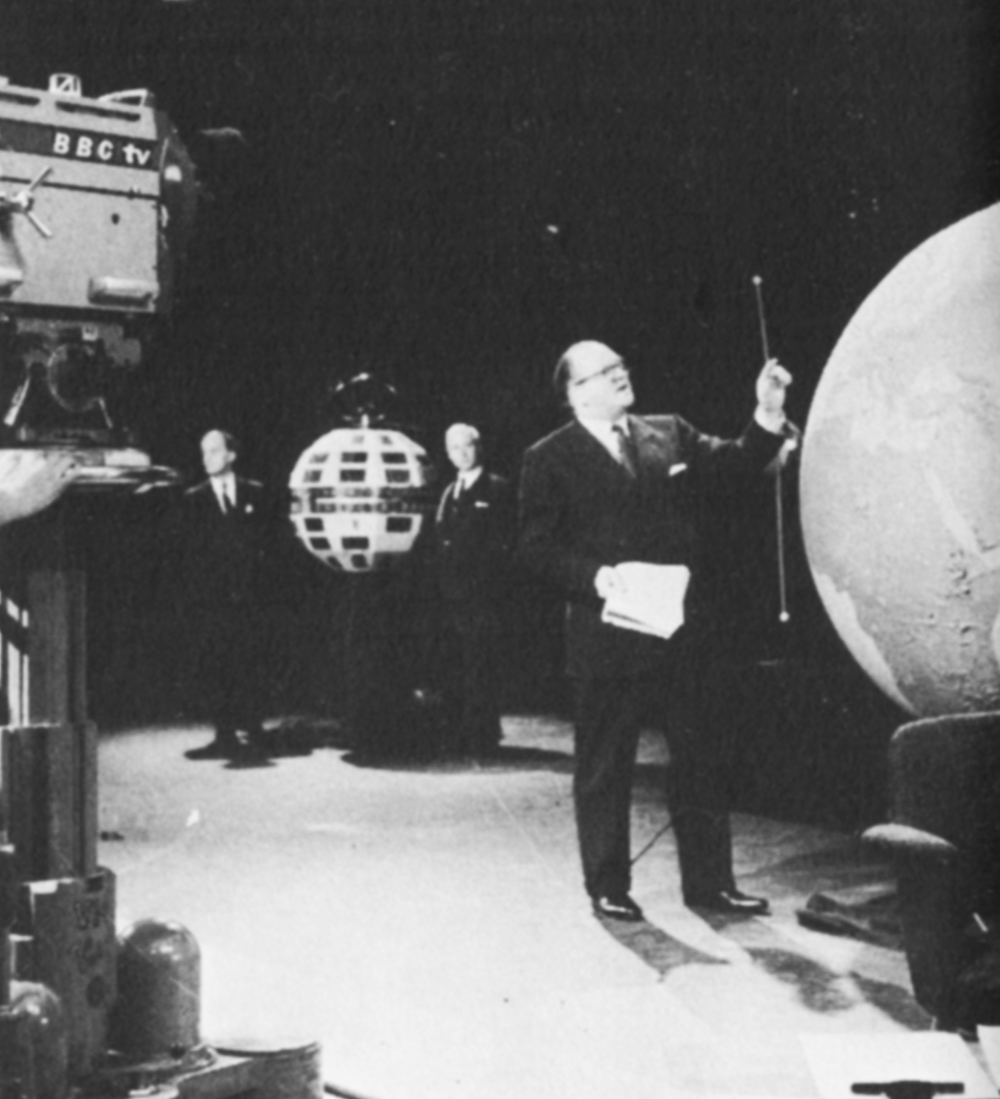
Dimbleby demonstrates the principles with out-of-scale models
Telstar, London

The reason for their new-found familiarity with the face known to all in Britain lay in a ball-shaped piece of metal hurtling through the sky: Telstar, the first communication satellite to provide a live television link between Europe and North America. The night before his arrival in New York, Richard had notched up another first: the first man to have televised live from Europe to America.

On 23 July 1962 Richard-spoke from Brussels on behalf of sixteen countries when he welcomed American audiences to their first live television view of Europe across 3,000 miles of Atlantic Ocean. Now he was back for the return half – and another first: the first Englishman to televise live from America to Britain. And to make him feel at home, the New York Times said of him on the morning of his arrival: ‘He dominates Britain’s television in a way that has no equivalent in the United States.’

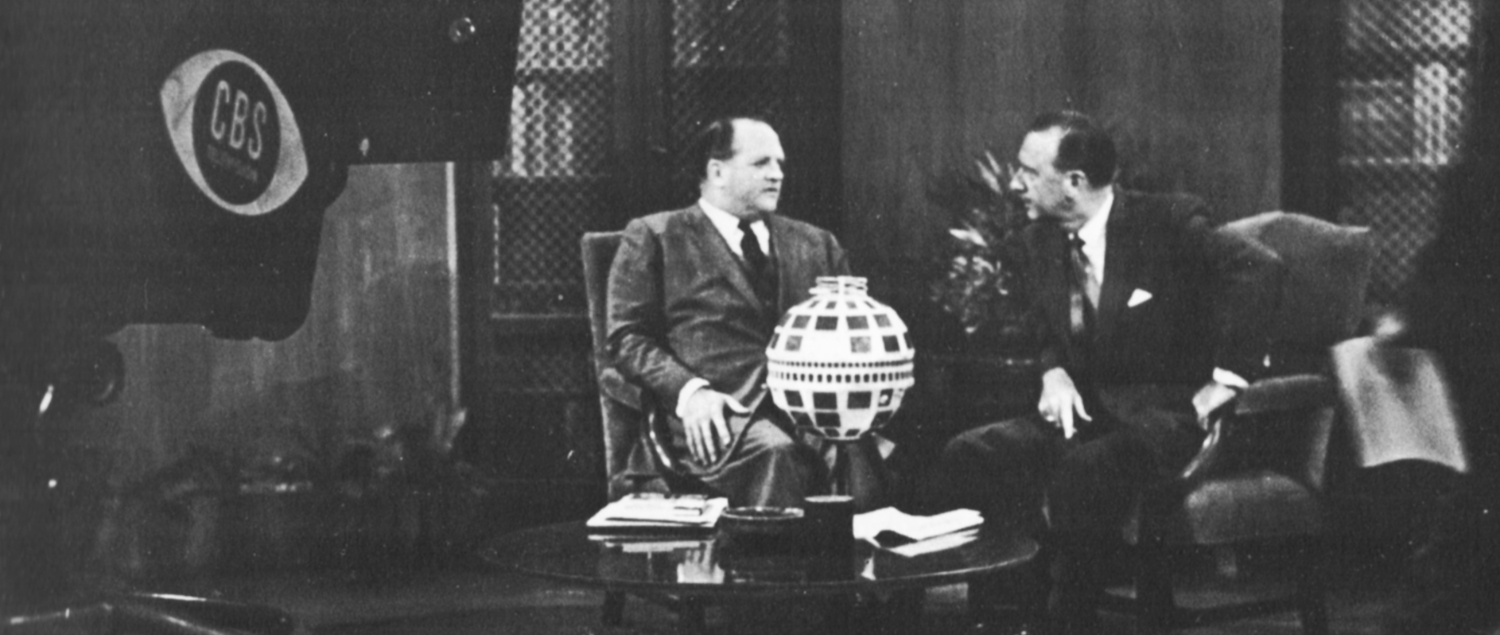
That one historic broadcast from Europe – that cheerful ‘Hullo, New York’ from Brussels – made Richard Dimbleby’s friendly face and ample figure almost as familiar in the United States as in the United Kingdom. Within twenty-four hours of his arrival he had appeared on CBS with Walter Cronkite and also on NBC Television. New York’s press corps waited upon him. Variety – that bible of American show-business – spread his story across three columns. And as he stood on 53rd Street, in the shadow of Rockefeller Center, getting ready to televise live to London, many an American passer-by knew exactly who he was.

Dimbleby surrounded by people
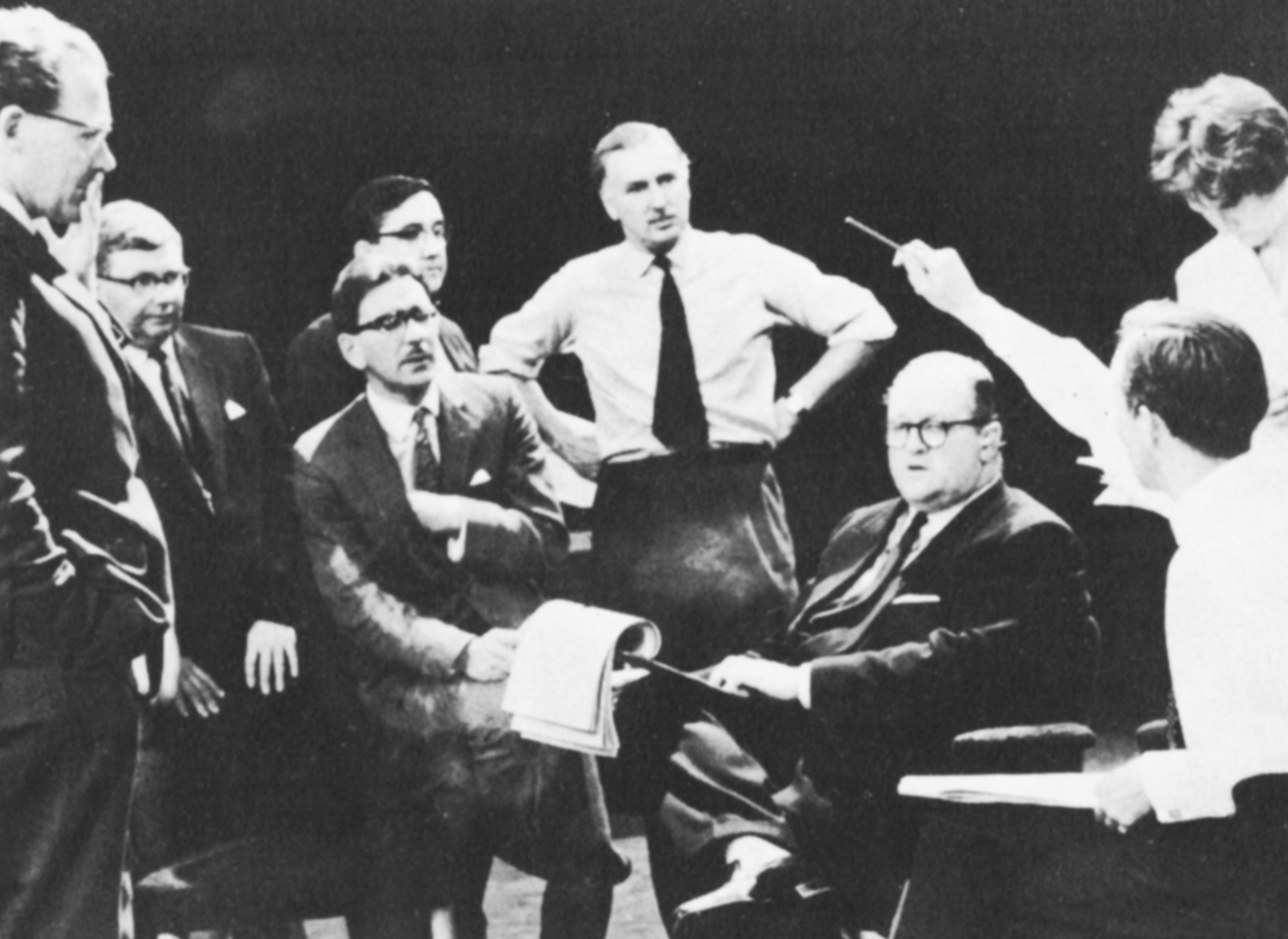
Preparing for the first Telstar programme, with, left to right, John Maddox (Science Correspondent, ‘The Guardian’), Dr W. F. Hilton, E. G. C. Burt (Head of Dynamics Division, Space Department, R.A.E., Farnborough), Aubrey Singer (Assistant Head of Outside Broadcasts, Television), Peter Dimmock (General Manager, Outside Broadcasts, Television); Gillian Savage (Secretary), Humphrey Fisher (Producer)

But they couldn’t have known that the first New York-based telecast was nearly swept off the screens. At the rehearsal, everything had gone smoothly. The cameras on the roof of the Rockefeller Center had pierced through the haze to give us perfect pictures of the towering Manhattan skyline. The camera in the Sixth Avenue drug store had just the right shot. A smooth and speedy commentary setting the scene was needed now; we only had ten minutes available; after that, we would lose the satellite. So there was a double nervous strain: the importance of the occasion with the twitching uncertainty whether the picture would successfully bounce off the moving satellite to England, and the urgent need to contain the programme within that limited span of time as soon as London signalled it was able to see New York.

With less than a minute to go, Richard’s monitor – the television set that would show him which picture was going out – collapsed. There he was, in mid-town Manhattan, the first Briton to televise live across the Atlantic, and he could not himself see any of the pictures that were being transmitted. Once again he was, for all practical purposes, blind. He could not see whether the pictures the American director was selecting were of the New York skyline or the cops or the drug store or the sidewalk. He had to guess and hope that the transmission would follow the rehearsal.

It did, fortunately. And after five hazardous minutes, the picture came back on Richard’s monitor. The trouble was over, though I doubt whether anyone at home ever noticed that something had gone very wrong, for Richard spoke as confidently as ever. But in those five minutes the American television crew learned and understood why he was the master of the craft of television reporting.

Dimbleby, Cronkite and a model of Telstar
Telstar, New York, with Walter Cronkite

Last Days

Leaving New York Richard again had an unlucky flight. His aircraft could not get beyond Shannon. He sat on a bench at the airport until well after dawn, uncomplaining, but unusually quiet. He introduced two more Panoramas. But the New York illness and temperature persisted. It was thought that he had picked up gastro-enteritis in New York, or had reacted to a TAB injection, or perhaps there had been a resurgence of his 1937 paratyphoid. His doctors suspected a gall bladder infection and told him so. Richard said philosophically, ‘You’d have thought it enough to have cancer. Now I have to have a gall bladder as well.’

It was announced that he had entered St Thomas’s Hospital for observation of suspected gall bladder infection, and this is what both he and his doctors then genuinely believed was keeping him from his Panorama place.

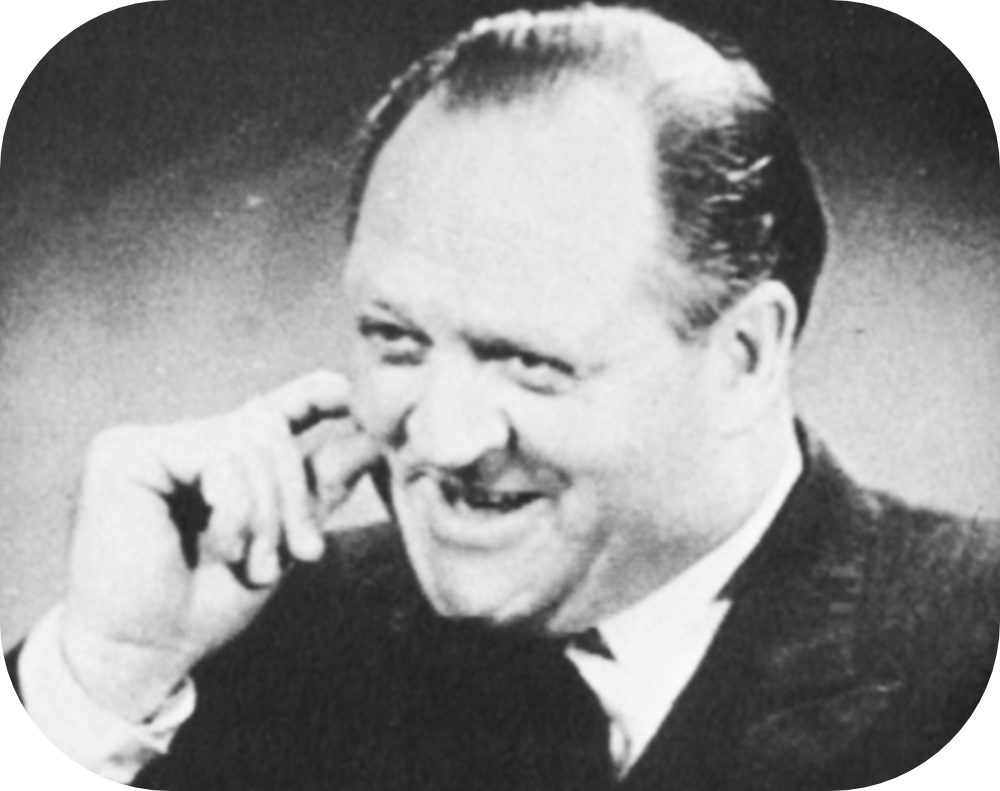
Dimbleby

But after an operation it was discovered that a secondary and widespread growth of cancer had given him the symptoms of a gall bladder infection. On 5 November Richard with characteristic courage and common sense told his son David to explain clearly why he was in hospital:

‘My father first contracted cancer over five years ago and has been undergoing treatment at various times since then. He asked me to explain this because he is very strongly opposed to the idea of cancer being an unmentionable disease. The reason he has not mentioned it is that in the last five years he has not lost a single day’s work because of it, but as he expects to be away for a few weeks he thought that people should know why.’

The news of Richard’s illness and the manner of its telling gave his friends, known and unknown, both sadness and enhanced respect. Over 7,000 wrote to him in the hospital. They included many ordinary people who suspected they had cancer and now were given the courage to consult their doctors. His announcement dramatically lifted a taboo. Large numbers of people found they could use a word they had always avoided before. The ‘Nursing Mirror’ was to write:

‘Any public figure has special opportunity for service denied to the man in the street, but does not always recognise it, or use it. In Mr Dimbleby’s case, the opportunity was seen, seized with both hands, and utilised to create an impact on this country which will surely never be forgotten, and which promises to be the forerunner of a change in attitude which will affect the lives of millions of people in the future.’

One day a uniformed guardsman arrived bearing champagne from the Queen. Other members of the Royal Family also asked to be kept informed of his progress. Both Lord Fisher of Lambeth and Cardinal Heenan sought to visit him, but few except his immediate family were allowed to his bedside. Dilys Dimbleby never left him.

On Sunday 19 December, Paul Fox went to the hospital:

‘He brushed aside all questions about himself. His interests even then centred on the people at Lime Grove; on the programmes; on the audiences. The past he had enshrined did not matter to him. His thoughts, as ever, were on the future.’

The next night, as Panorama ended, James Mossman spoke to camera:

‘There are many kinds of courage and it’s appropriate for me to refer to a particular example of it tonight. Richard Dimbleby, who has always been here to give an end-of-term flourish to the last Panorama of the year, is, as everyone knows, ill in hospital, and as everyone also knows, he was a very sick man long before he took time for hospital treatment, though he never during that time gave any intimation to colleagues, or viewers, of the strain he must have been feeling. That is what is known as professionalism, as well as courage. And what I would like to say, to Richard, because I hope he is watching, is that all of us here in Panorama, both on the screen and behind it, send you our very best wishes. I know all of you do also, judging from the seven thousand letters he has received. Yesterday he told a colleague of mine who visited him that he particularly wanted us to pass on his thanks tonight, and to wish all of you a Happy Christmas from him.’

Richard did see, and appreciated, that part of the programme. Two days later, on Wednesday 22 December 1965, he fell into a coma. Shortly after 9 p.m., with Dilys, David and Jonathan at his bedside, he died. He was 52.