Until the death of Stalin in 1953 the cold war numbed broadcasting relations between the Soviet Union and Great Britain. British camera teams were not allowed to enter Russia. Correspondents were denied visas. Broadcasts in the BBC’s European Service were systematically jammed. There were none of the normal interchanges of musical programmes or sporting events between broadcasting organisations.
In 1956 a slight thaw began. The Russians sent an engineer to observe the BBC’s experimental colour television demonstrations at Alexandra Palace. When Khrushchev and Bulganin came to visit Sir Anthony Eden in April of that year the idea of cultural exchanges was mooted. As a first step they invited an official delegation from the BBC to come and inspect radio and television in Moscow, Leningrad and Kiev.
By the end of April, even before Bulganin and Khrushchev had sailed back to Russia, seven of us representing BBC Sound and Television, Engineering and Programmes, External Services and News, had flown to Moscow, just in time to see the famous May Day parade through Red Square. Anatol Goldberg, the Programme Organiser of the BBC’s Russian section, was able to interpret for us. The Russians also provided as a guide and interpreter Boris Belitzky, who was one of the regular broadcasters in Moscow Radio’s English service. Belitzky had lived in New York as a boy and spoke excellent English. He left us on May Day to give the English language radio commentary on the parade. The Russian television service was also developing, and the parade was televised for the first time that year, with two outside broadcast units on opposite sides of Red Square. The broadcast was technically impressive, though the cameras were badly placed.
We had many discussions with the Russians, seeking ways of opening up broadcasting relationships without the sacrifice of principle on matters such as censorship, and without involving either of us in carrying the other’s propaganda. The discussions tended to founder when we brought up the question of jamming. Russians love metaphors and elaborate figures of speech, and so at one of their many hospitable occasions the Director of External Services, J. B. Clark, made a glowing speech about the beautiful garden which lay ahead, ‘but the gates of the garden have their hinges and locks corroded by jamming’. The Soviet Deputy Minister of Communications quickly replied, ‘The gates must be open, but the key to the gates must be in the pocket of the master of the garden’.
Nevertheless Frank Gillard, who was representing Sound Programmes, and I, representing Television, did return with one positive achievement. We had got the names of two broadcasters speaking excellent English who would be prepared to take part (in sound only) in hook-up discussions of current affairs, subject to official permission. One was Yuri Fokin, soon to become Head of News of Moscow Radio. The other was Boris Belitzky. This represented substantial progress, for the Russians at that time had no tradition of unscripted discussion at all. Moreover we returned with their telephone numbers, and had learned that the telephone appeared to pierce the Iron Curtain fairly easily. We also broached the question of a possible television hook-up as soon as the links across Europe could be established. At that time the Russians had not yet even linked Moscow with Leningrad.
Belitzky had welcomed the idea of contributing in sound only to Panorama. He knew Dimbleby well by voice and reputation. As soon as the Russians launched their first Sputnik I telephoned Moscow and in the next Panorama Belitzky’s voice took part in the studio discussion of the possibility of the space age.
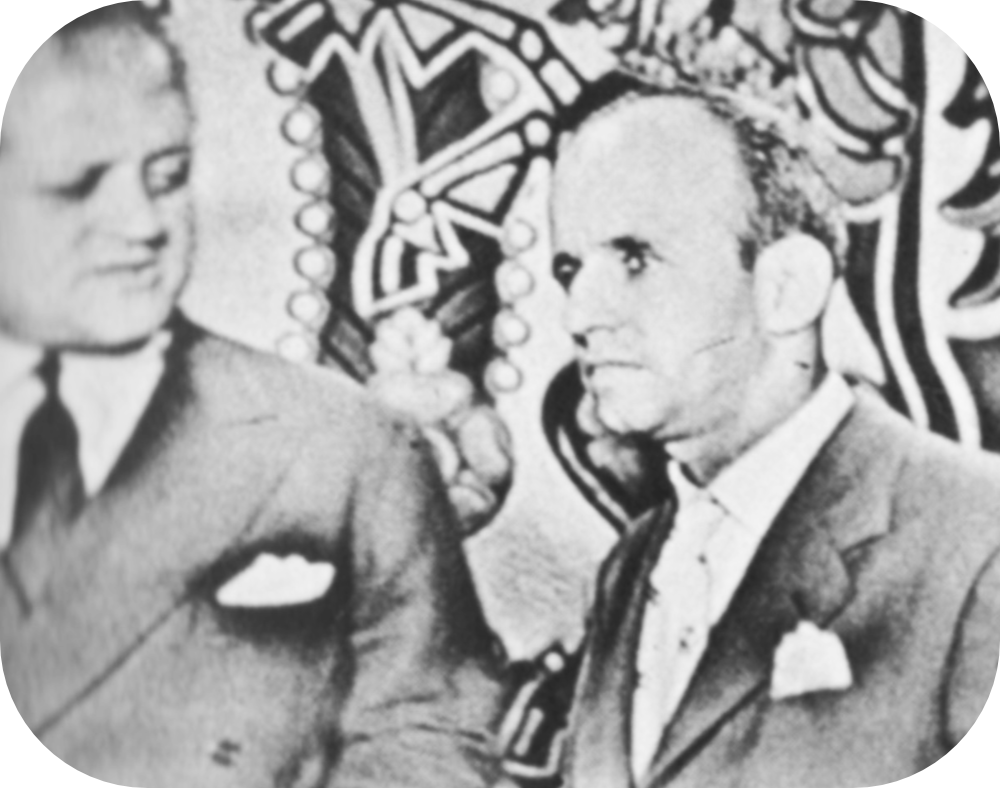
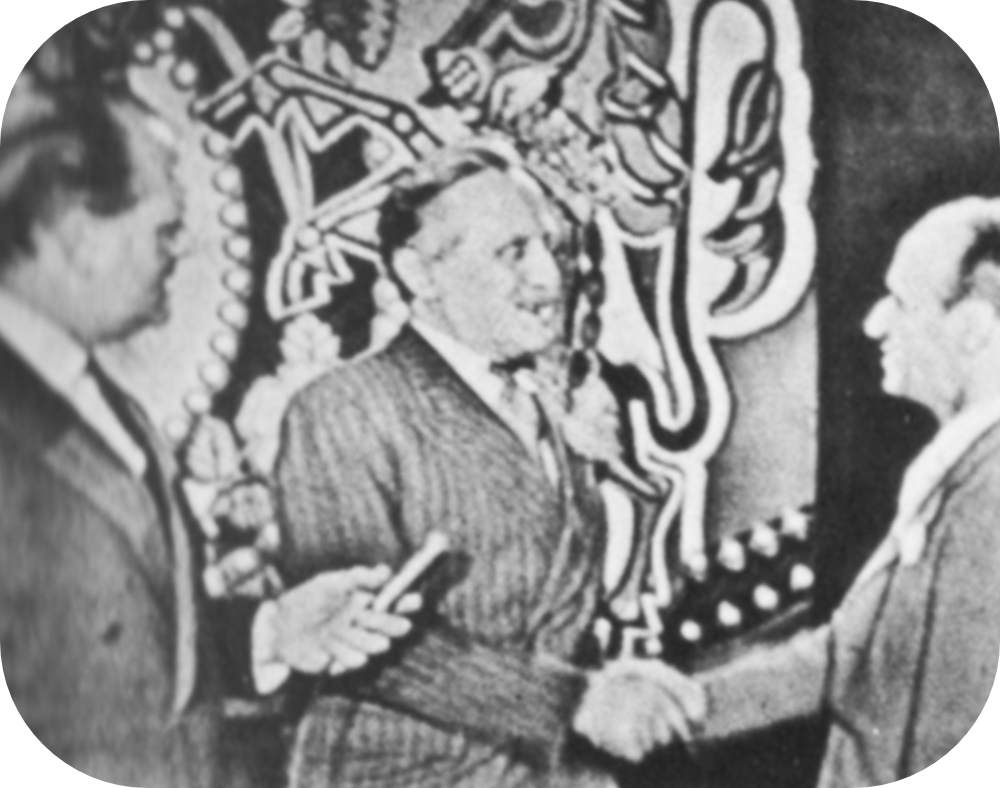
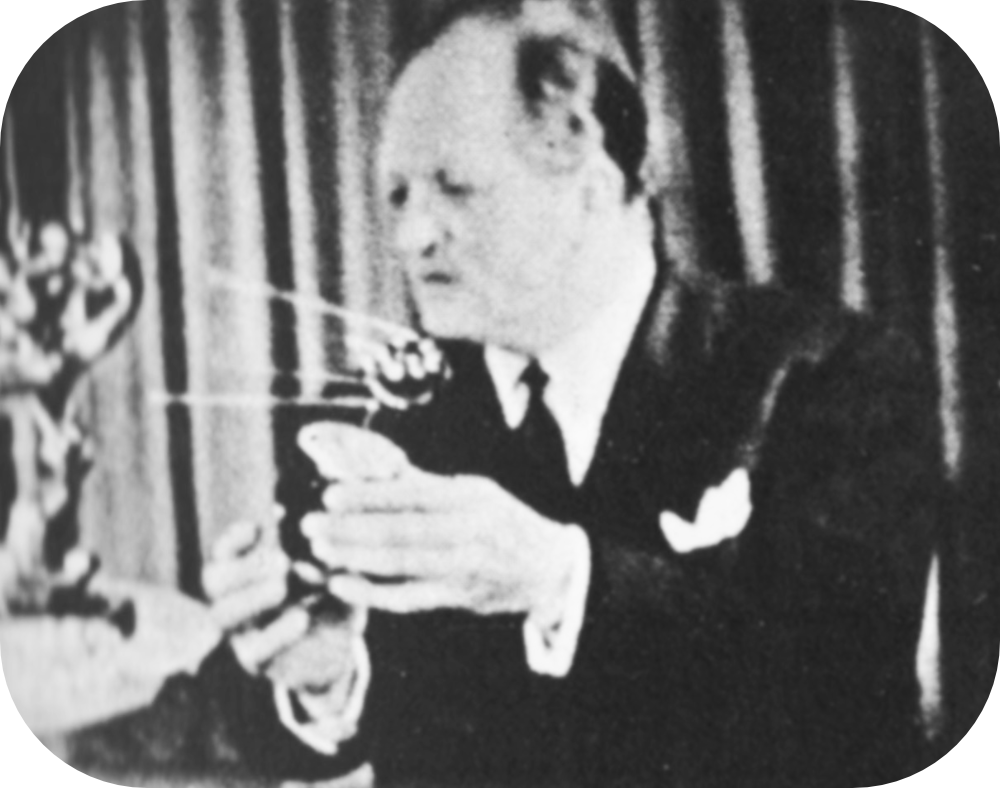
Brussels International Exhibition, 1958, with Boris Belitzky, Sir John Balfour, U.K. Commissioner-General, Model Sputnik III. Soviet cameras, a Flemish outside broadcast, the Eurovision link, standards conversion and photographed off the television screen.
In 1958 the television hook-up with Moscow moved one stage closer. At the International Exhibition at Brussels the Soviet Pavilion was equipped with closed circuit television. With the aid of a Flemish outside broadcast unit and the Eurovision link Dimbleby was able to introduce a BBC programme with the words ‘I am speaking to you direct from a studio of Radio Moscow’. He liked dramatic openings and this was literally true, for Radio Moscow had provided the television studio and cameras in the Soviet Pavilion.
Richard Dimbleby and Boris Belitzky, meeting face to face for the first time, then toured the Soviet Pavilion and talked to an attractive interpreter, Maya Malisheva, who displayed fur coats and Russian food delicacies, including one item that intrigued Dimbleby – porridge for dessert. It was a highly complicated programme for the BBC producer, Derek Burrell-Davis, for he was dealing with a Russian outside broadcast unit, a Flemish outside broadcast unit, and a Russian telecine machine, and the technical crews had no common language.
British viewers and television critics were fascinated by their first live view of Soviet activity. The ‘Guardian’ television critic commented: ‘A complicated broadcast which was well handled by Derek Burrell-Davis, the British producer, and by Richard Dimbleby, who had abandoned his baronial manner very successfully under the shadow of Lenin, and who did not forget to remind us, as the camera passed finally from sucking pig, salmon, chickens, sturgeons, mutton chops and porridge-for-dessert to a last glimpse of Sputnik III, that “there is always something like that looking down on you”.’
I was interested to note the next evening in Brussels that Flemish television repeated exactly the same programme for Belgian viewers, with one of their own commentators taking Dimbleby’s place, and a Flemish-speaking Russian instead of Belitzky. But they stuck entirely to the shape of the programme carefully prepared by Dimbleby and Burrell-Davis and did not even bother to issue another camera script to the technical crew. The Dimbleby moves and the Dimbleby questions could not be improved upon.
Peter Dimmock wrote to the Russian authorities warmly thanking them for their co-operation and hoping for further opportunities for the outside broadcast units of the two countries to work together in the future.
Other BBC visitors travelled to Moscow. Aubrey Singer went in search of scientific programme material, Peter Dimmock to arrange film of the USA/USSR athletics match. Dimmock reported that the Russians were hoping to create a television link with Prague via Warsaw in order to be able to receive the 1960 Olympic Games live from Rome. We continued to work for a live hook-up from Moscow. At the same time discussions went on from time to time to try to abolish jamming. Dimmock reported that the Russians were beginning to favour ITV on the film coverage of sport, because, as ITV did not broadcast to Russia, there were no complications over jamming.
In February 1960 the Soviet Union ceased its jamming of the BBC’s European programmes, and this obstacle seemed out of the way. Early the next year ATV proudly announced that they were going to achieve the first television link-up from Moscow to Britain, by live coverage of the British Trade Exhibition, due to open in Moscow on 17 May 1961, and even took advertising space in British newspapers and periodicals to publish the announcement in Russian.
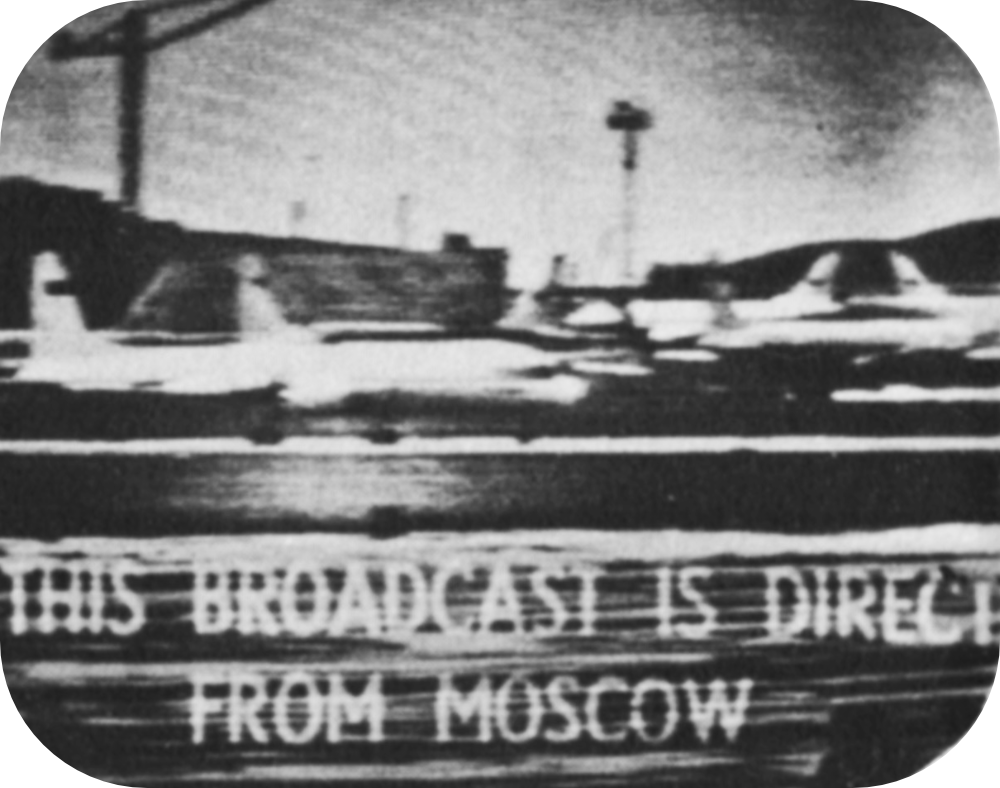
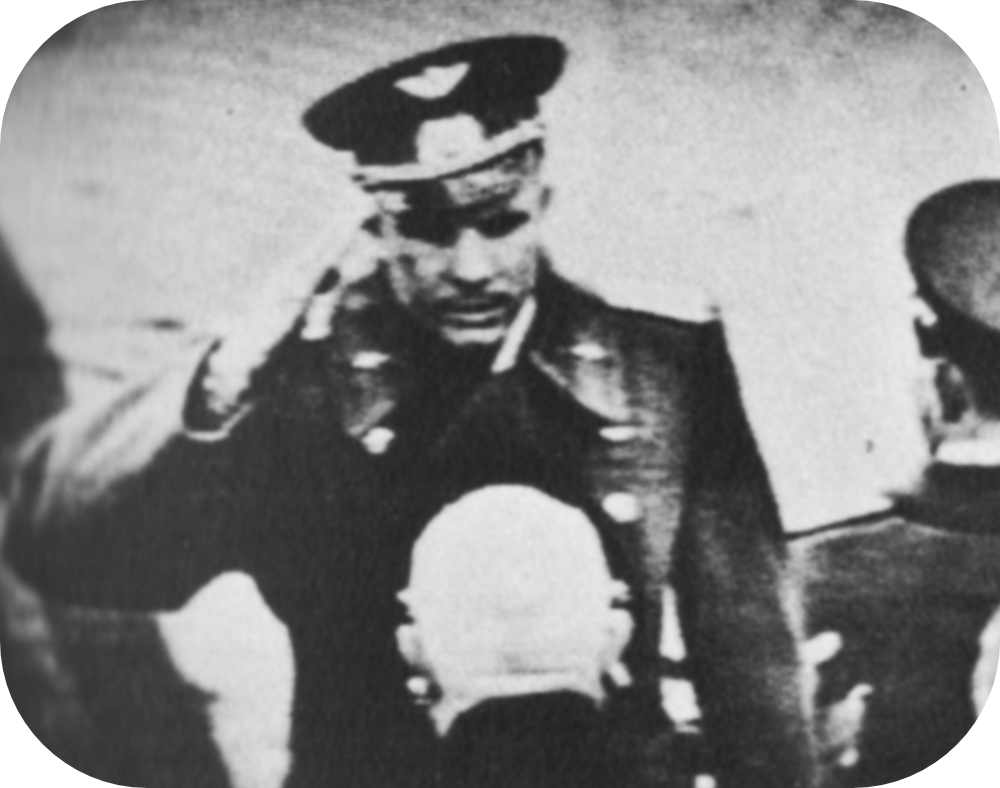
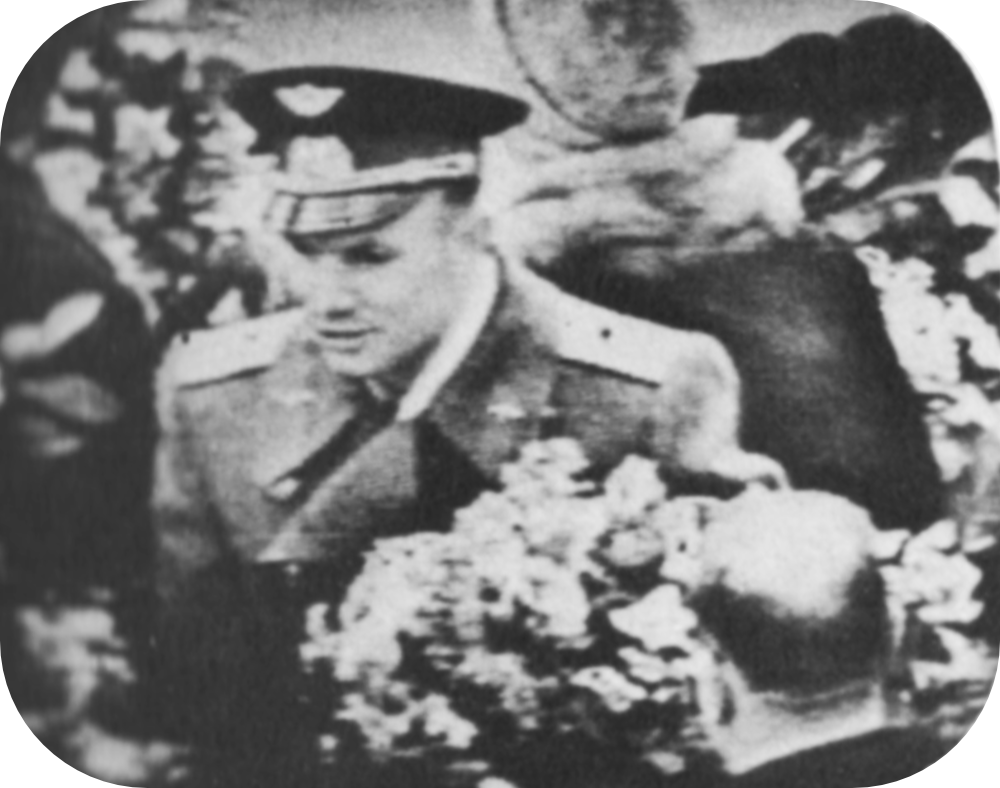
After all the BBC’s pioneering work on Eurovision, and its long negotiations with the Russians, this was too clear a challenge to be ignored. The BBC countered with an offer to relay the morning May Day parade from Moscow that year and, because 1 May fell on a Monday, to broadcast that evening a special edition of Panorama from Moscow. Richard Dimbleby would do both programmes. The Russian authorities agreed. Peter Dimmock and Tony Bridgewater, then the senior engineer on the outside broadcasting side, went to Moscow, and with generous help from the Russians and the Finns worked out a method of getting the Moscow pictures across the Baltic from Tallin to Helsinki, and so down the Eurovision link through Scandinavia to Britain. Paul Fox flew to Moscow to prepare the Panorama programme, Noble Wilson to arrange the relay of the May Day Parade. Paul Fox recalls:
Filled with doubts, I arrived in Moscow to arrange the Panorama side of things. Already installed in the National Hotel was Noble Wilson. And as we looked at our plans for this first-timer from Russia, something far bigger overtook us. A friend – an American correspondent – phoned us with the news that something was on: he couldn’t tell what. And even as we puzzled it out, the loudspeakers blared into action: ‘The Soviet Union has today launched the first man into space’.
Major Yuri Gagarin was circling the globe. And soon afterwards came the news that he was safely back – with Moscow getting ready for the hero’s welcome of all time.
Here we were, two television producers, sitting in on the most spectacular story for many a year, with not a hope of televising a second of it to the rest of Europe. What an anticlimax the May Day parade would be – we thought – when the Gagarin home-coming and parade was what everyone wanted to see. But was it really hopeless? Could not the much planned television link-up for May Day be brought forward by seventeen days? It might be and it was.
I was in my Lime Grove office on the evening of 19 April when Paul Fox came through on the telephone from Moscow to say he thought he had managed to get the programme through to Helsinki in time for the broadcast of Gagarin’s return to Moscow Airport the very next morning. I immediately announced to the press, and we began trailing heavily on both sound and television the news that we hoped to cover the Gagarin reception – the first man to travel in space, and the first live television pictures from Moscow. It could only be a hope, for official Soviet approval had not yet been given, and we had had no chance to test reception conditions.
I quickly telephoned Dimbleby, who dropped his other commitments to come in the next morning. I also corralled Anatol Goldberg from the BBC’s Russian Service, and at 10.30 a.m. on Friday 14 April we opened transmission.
Dimbleby explained, as he enjoyed explaining technicalities in layman’s language, the complications of getting pictures along the route from Moscow to London. We showed what little news film had come in from Russia, and Dimbleby and Goldberg talked in the studio for a quarter of an hour as we anxiously waited for pictures on the studio monitor. At 10.46 a.m. they miraculously came through, and television was now stretching from Moscow to Londonderry.
The pictures were remarkably good, but the sound was confused. Sometimes we heard a man in Helsinki, sometimes Boris Belitsky. Dimbleby thrived on confusions of that kind, and Gagarin’s walk across the apron of Moscow Airport to receive the bearhug embrace of Khrushchev needed no words of commentary.
Dimbleby had been there to open yet another chapter in television’s unfolding story. A few days later he flew off to broadcast in quick succession the May Day parade, Panorama’s special edition from Moscow, and the Queen’s State visit to Italy.