The Middle East Years

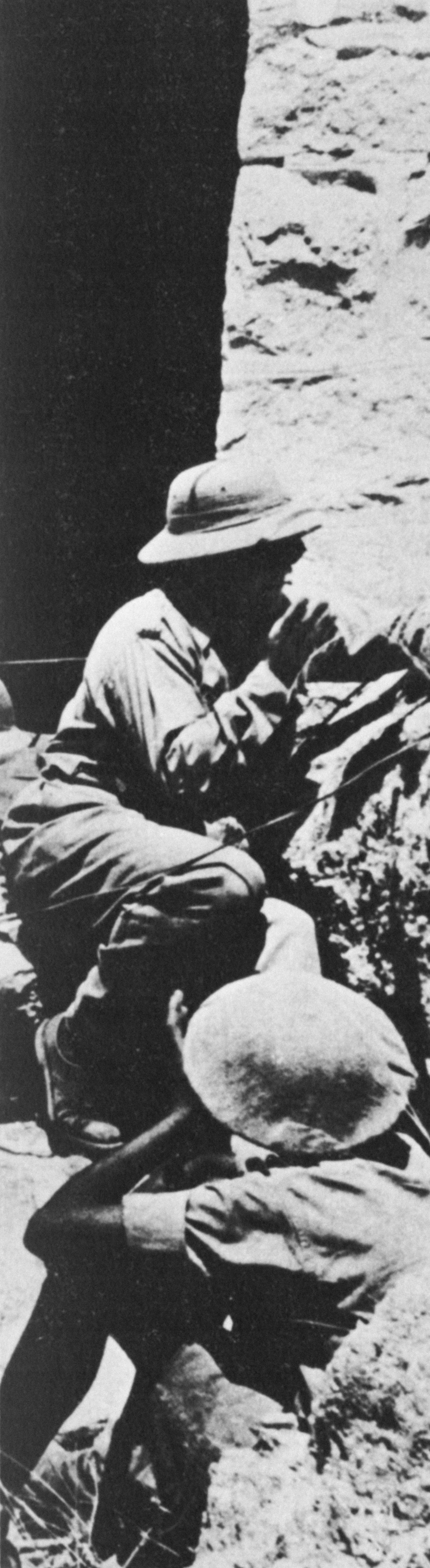
Two men crouch behind a stone wall
Describing Battle of Keren under shellfire

The BBC tried to maintain two men on the spot to cover the Western Desert campaigns and Middle East affairs generally. One was normally in Cairo at General Headquarters, and the other forward with the Army, and every few weeks they exchanged duties. Richard Dimbleby was one man of this pair for over two years, and for part of that time he had to tackle the total job singlehanded.

Of all warfare, desert fighting is the most bewildering. Few writers have ever described it adequately. With no natural boundaries to define the field of battle and to limit its movement, the action is liable to swing one way or another, and all too often it is impossible for any observer to say which side is on top. To this basic anxiety for the Western Desert correspondent was added the dilemma confronting the war reporter everywhere. Should he make his way to a forward position so that he could describe an engagement which he had seen with his own eyes, or should he base himself further back at some headquarters – Division, Corps or Army – at which he could be given frequent briefings on the changing position over an extensive part of the battlefront? If he went forward, he might well find himself watching a local episode totally unrepresentative of the larger action. He certainly stood a good chance of missing the most important story of the day, since nobody could tell in advance where the really significant things would happen. On the other hand, if he covered the day’s events from some headquarters, he was wholly dependent on second-hand information. He had no means of checking the accuracy of what he was told. There were times when some of the information filtering back to these headquarters was sadly over-optimistic if not misleading. In either case the risk remained that a favourable picture one day might be completely and unpredictably reversed the next in the fluid circumstances of desert fighting.

In this situation the BBC man was uniquely vulnerable. Correspondents writing for newspapers were safeguarded by the fact that it was six weeks before their despatches were seen by the men whose exploits and experiences they chronicled. It took that long for a London newspaper to travel out to Libya, or Tripolitania, and in such a lapse of time news became history. A press report, overtaken and perhaps made to look foolish by subsequent events, caused no more than a wry smile when it finally got back to the Army. Many things would have happened in the meantime to put it into perspective.

Not so, however, with the broadcaster. It usually required twenty-four hours for his despatch, recorded on the spot, to be sent back hundreds of miles to Cairo, to pass through the censors, to be transmitted by beam radio to London, and finally to be broadcast by the BBC’s shortwave services and heard throughout the Desert Army. When it was written, the story might well have sounded a well-justified note of optimism. But if in those intervening twenty-four hours things had gone badly, with fortunes perhaps reversed, there was little understanding on the spot for the unhappy BBC reporter. With some in the Army he became discredited, and sometimes confused and dispirited fighting men tended to find an outlet for their own understandable dejection in voicing harsh judgments against him. They are not too much to be blamed because they had no idea of the problems of radio reporting. The circumstances were inescapable, and the BBC war correspondent had to do his best in spite of them.

From Alamein onwards the situation was eased, because although there was severe fighting there were no more major British retreats. But Richard Dimbleby’s years were the pre-Alamein years, when success and defeat alternated alarmingly, depressingly and often inexplicably. We were ‘up in Benghazi for Christmas and back at Tobruk for New Year’ as it used to be said. So Richard became the innocent victim of factors for which he was not responsible and which he could do little to improve. His reporting throughout was totally conscientious and honest. He never spared himself in his efforts to give as faithful a picture as his own very shrewd and experienced observation, and his sources of information, would permit. Those sources were responsible, even if they let him down at times, because he enjoyed the confidence of the top command. Yet in the end, by the summer of 1942, it had to be recognised that in his own interests the time had come to withdraw him from the Western Desert and bring him back to London.
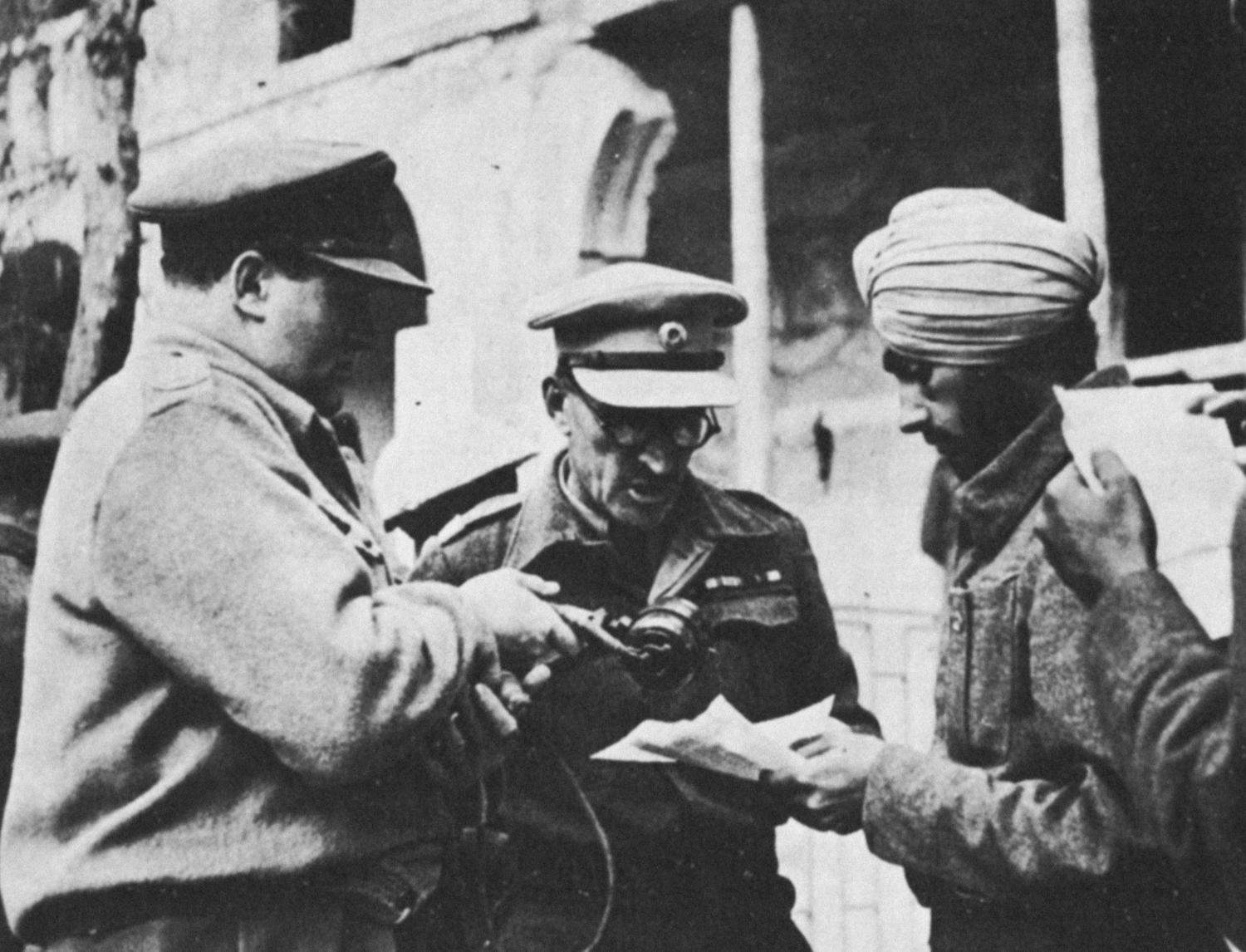
Dimbleby, a man in army uniform and a man in a turban
Recording messages to India from the Middle East

It was cruel luck, because the tide was so near the turn, and it fell to others, myself among them, to report the unbroken success story of the Eighth Army in the Montgomery era. But Richard took the blow philosophically, and, bitter as it must have been, he never showed his feelings openly in any way.

I was in the correspondents’ room on the day when he returned to Broadcasting House for normal duties. It was a routine day, with not a single assignment of interest in the diary. The best job that could be offered to him was a visit to Salisbury Plain to report on a demonstration of Army cookery. The BBC’s most experienced war correspondent, a man with a hard-earned and well-deserved national name and reputation, was asked to cover a story which would hardly excite a junior reporter. Yet he went off cheerfully, without question or comment.

This was the spirit in which he faced the two years of waiting, until D-Day brought him back, now as an Air Correspondent, into the forefront of active war reporting again. The prospect in June 1942 must have seemed bleak to him. Yet the period which followed was one of immense value. In it, Richard undertook occasional assignments of major importance such as his bomber flight over Berlin. During his spare time he stumped the country as a speaker in immense demand at armament factories and savings bond rallies up and down Britain. Most of all, he was helping to plan the BBC coverage of the great culminating phase of the war in Europe and to train the colleagues who would then be working with him.
Down Your Way

Dimbleby perfected his interviewing skill, and also his abiding knowledge of his own country, through his appearances on the radio programme Down Your Way which he made every week until 1953. He was prepared to go anywhere and do anything. John Shuter was his producer:

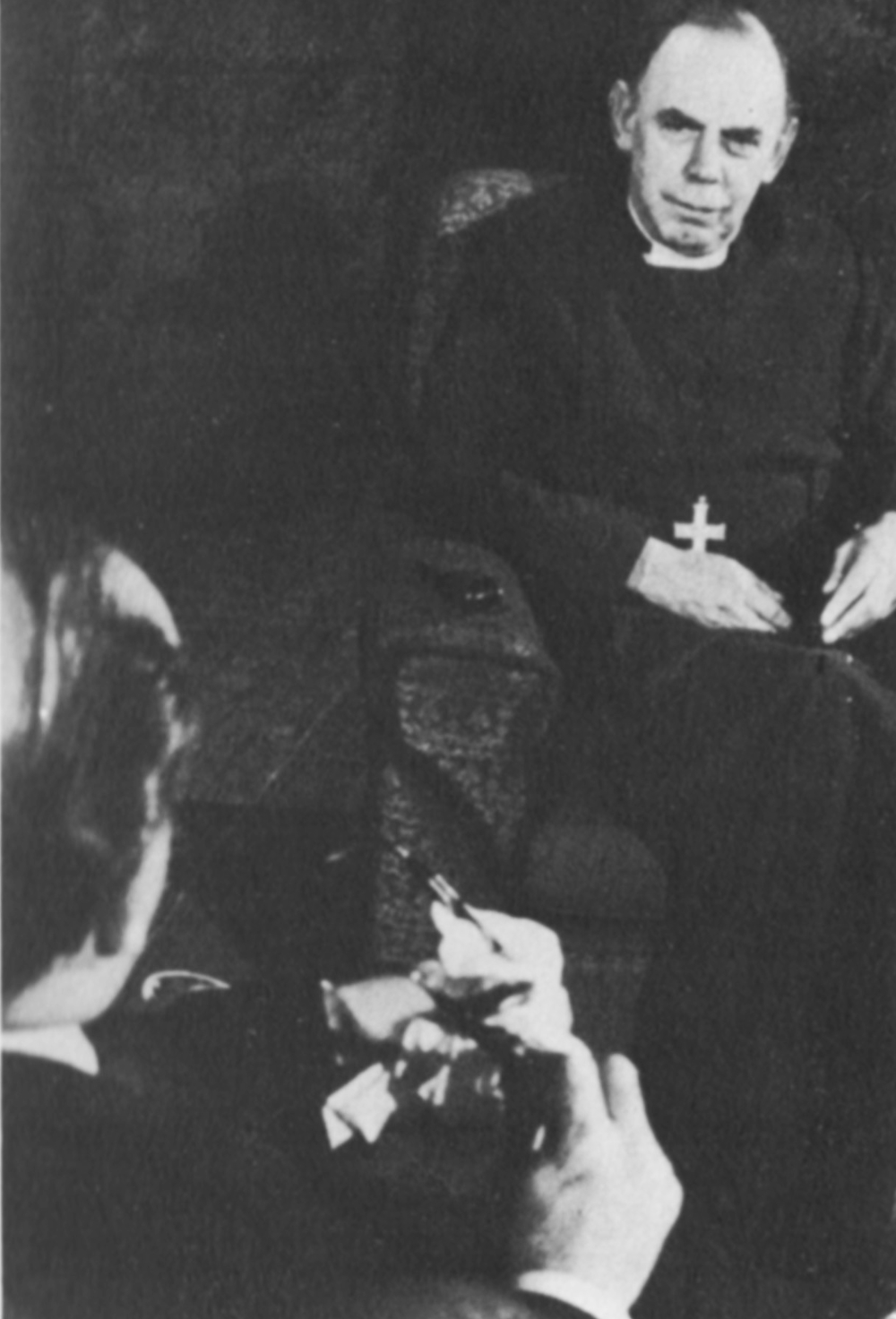
Dimbleby sits opposite a bishop
With Dr Robert Stopford, Bishop of London

The time was two o’clock in the morning. Richard Dimbleby was seated comfortably on what he had just described as the ‘hot seat’. In fact this was the live rail in one of the London Underground Railway tunnels hundreds of feet below Regent’s Park. Although the current was of course turned off, Richard insisted on exciting my imagination with delightful little word pictures conjuring up visions of a man at the substation miles away with his hand on the circuit breaker unwittingly about to switch on! We were recording a programme about the night workers of London. One of them described herself as a ‘fluffer’. In simple language this meant that her job was to clean the tunnels through which the trains thundered all day. Richard was so amused by this title that he asked me to try to include someone with an unusually titled job in each week’s programme.

This was a somewhat tall order, though we did eventually assemble quite an assortment from the lady ‘fluffer’ to a lady ‘white hot rivet catcher’ in a Newcastle shipyard, and including a Bradford family whose window sign advertised their occupation as ‘family rat catchers authorised by the Ministry of Food’. Throughout this recording the entire family each held one of the ferrets they used for their job. Richard Dimbleby’s one request was ‘Please don’t ask me to hold them’.

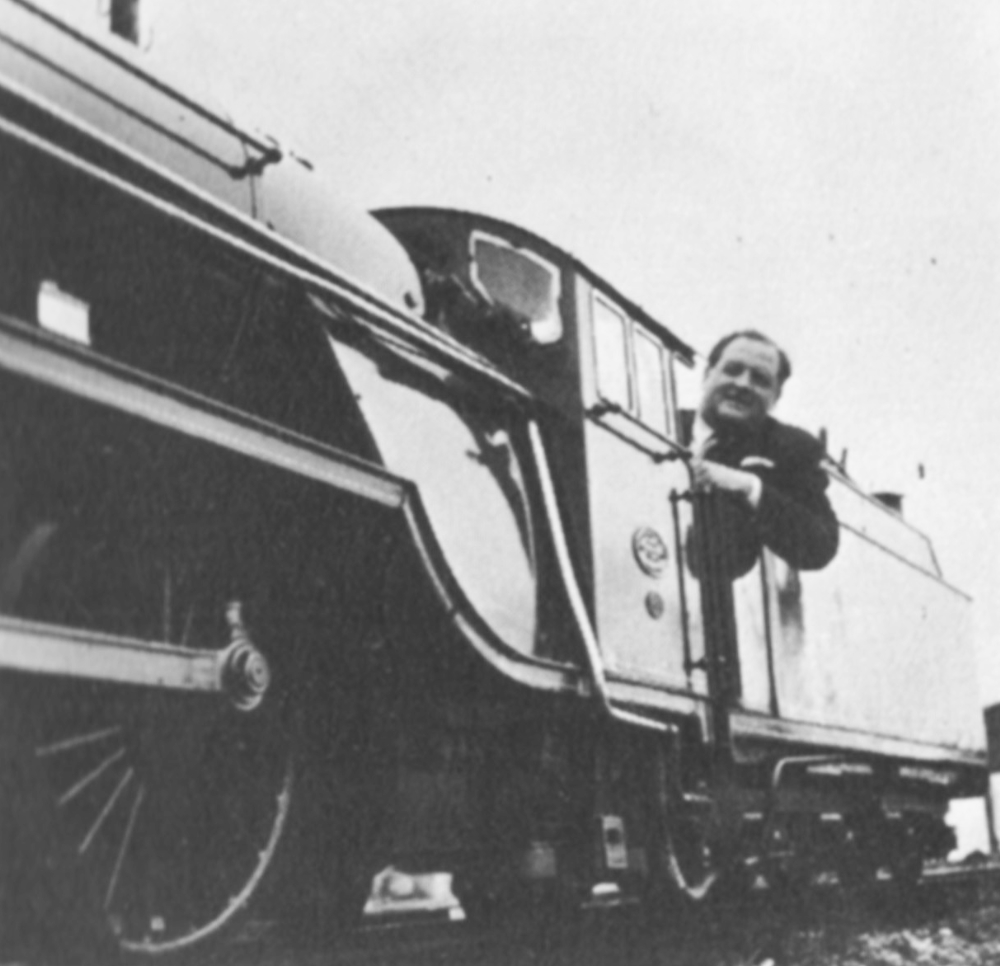
Dimbleby in a tiny steam locomotive
Down Your Way: Romney, Hythe and Dymchurch Railway

A weekly feature of Down Your Way was the interview with a local family. Often we would arrive at someone’s home to find the children, freshly washed and dressed in their best, naturally a trifle nervous at the arrival of such a well-known broadcasting personality. Within minutes and with a ‘I’ve got some like you lot at home’, Richard would have broken the ice, and there he would be down on the floor playing with trains, aeroplanes, animals, and any other toys which happened to be handy. The larger the family the better he liked it. I cannot remember exactly what the record was, but I know it was in excess of fifteen children in one mammoth interview.

Once we took Down Your Way under the sea in H.M. Submarine Alaric. Richard, nervous lest he be incapacitated by sea sickness – he was not a good sailor – crammed himself and me too with anti-seasickness pills before entering the submarine. Some of these remedies were based, in those days, on a drug with rather difficult side effects, which blurred the taker’s vision for a while. We both experienced some difficulty in negotiating the narrow gang plank leading from the depot ship Maidstone, much to the amusement of the submarine crews, who clearly thought ‘Here come the BBC, drunk again, and at 8 o’clock in the morning too’.

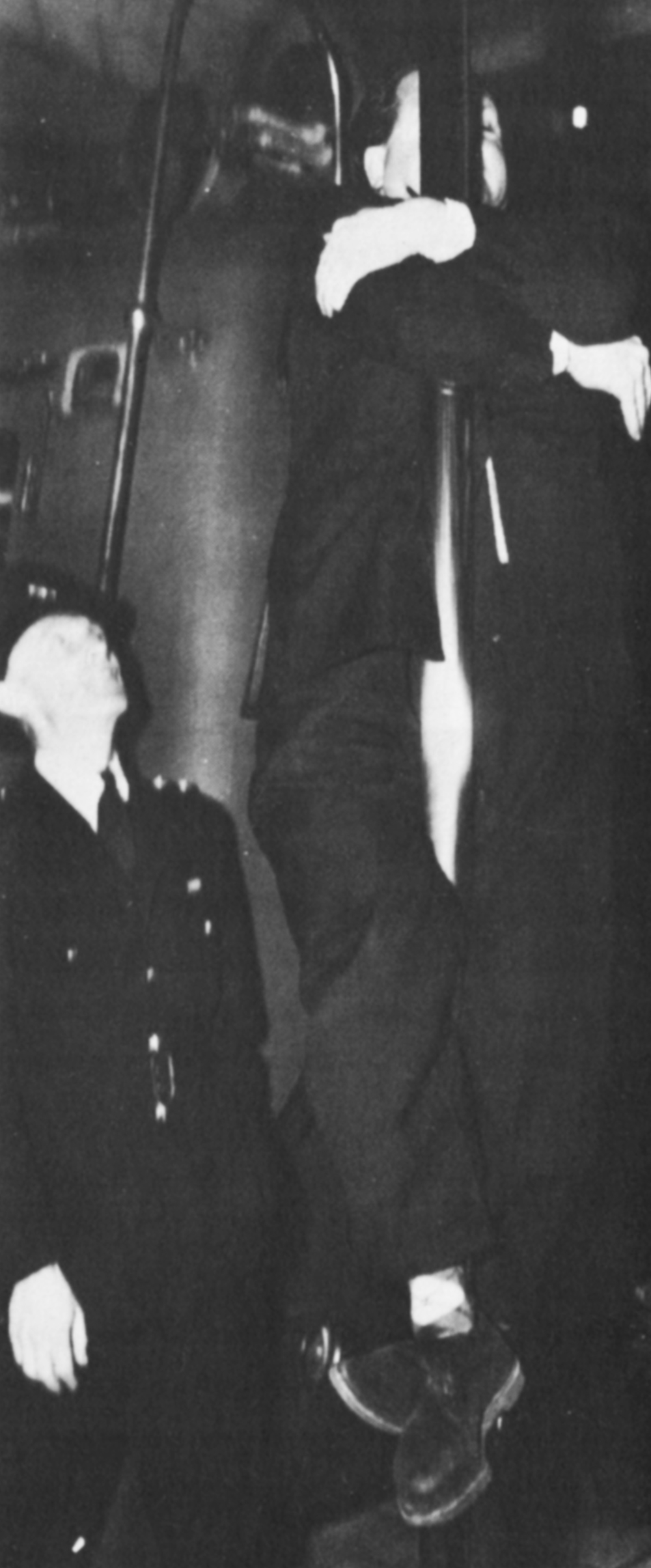
Dimbleby slides down a fireman's pole
Down a Fireman’s Way

Richard’s sense of fun could often be employed to good advantage in finding original material for the programme. Whilst doing the research work for a programme from Bond Street, London, I thought it might be amusing to have an interview with someone very well known to Richard, but who was seated in the chair of a beauty parlour, and whose face was entirely obscured by a face-pack beauty preparation. I had of course to tell Richard enough about this person, without giving the game away, to enable him to conduct the interview. He readily agreed, but his one worry was that when the well-known person’s face was revealed he might not recognise her. However, in the end he accepted my assurances. There was no doubt about his recognition, amidst shouts of surprise and a gale of laughter, of his own wife Dilys. In order to arrange this little bit of fun an enormous amount of cloak and dagger work had to be carried out. Since Richard was such an astute man I feared he would guess the secret well in advance if any hint of what was afoot was allowed to leak out. I had to meet Dilys beforehand in the strictest secrecy, and on the day of recording my wife conducted her to the beauty salon, whilst I kept Richard busy recording at the other end of Bond Street. In fact, he did not even know she was in London on that particular day.

After the war, whilst lunching with Tom Chalmers, then Head of the Light Programme, Richard Dimbleby is reported to have remarked ‘Down Your Way is the world’s easiest programme. It’s money for jam.’ ‘Well, if you think that, you can have it’, replied Chalmers. Some three years and 150 programmes later Richard had changed his mind. For him the routine went on week after week without a break, involving perhaps an all-night journey by sleeping car to some distant town, a long day’s work there, and an all-night journey back again. As with Aberdeen for example – 1,200 miles and a full day’s work in thirty-six hours. Alternatively, he might have to journey down from London on a Tuesday evening, record all day Wednesday, and journey back on Thursday simply because there was no other convenient train.

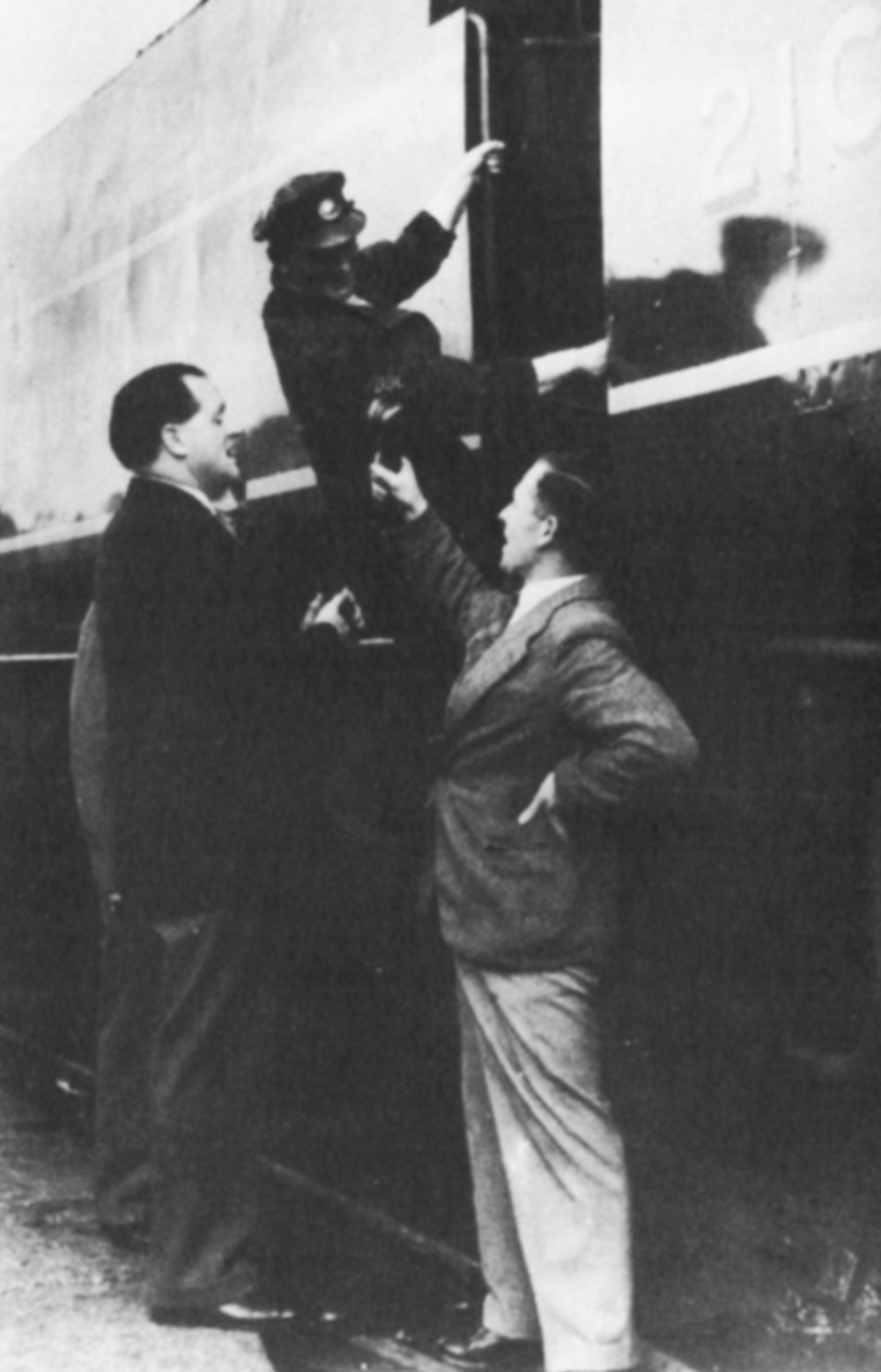
Dimbleby speaks to an engine driver who is climbing into his cab
Down Your Way: At Brighton Works with Arthur Phillips

Being an old newspaperman himself, Richard always went out of his way to help the local press, who showed an intense interest in Down Your Way. This was particularly so if there was a young or inexperienced reporter present, when Richard would deliberately throw out a gag line at his own expense. Arriving in Bognor Regis dressed in one of his favourite suits of herringbone tweed, a herringbone wool waistcoat, and a tie of obscure tartan, Richard was full of beans. ‘Ah, I see they have featured my arrival’ he remarked, drawing attention to a wrestling poster. ‘Abdul the terrible Turk – that’s me.’

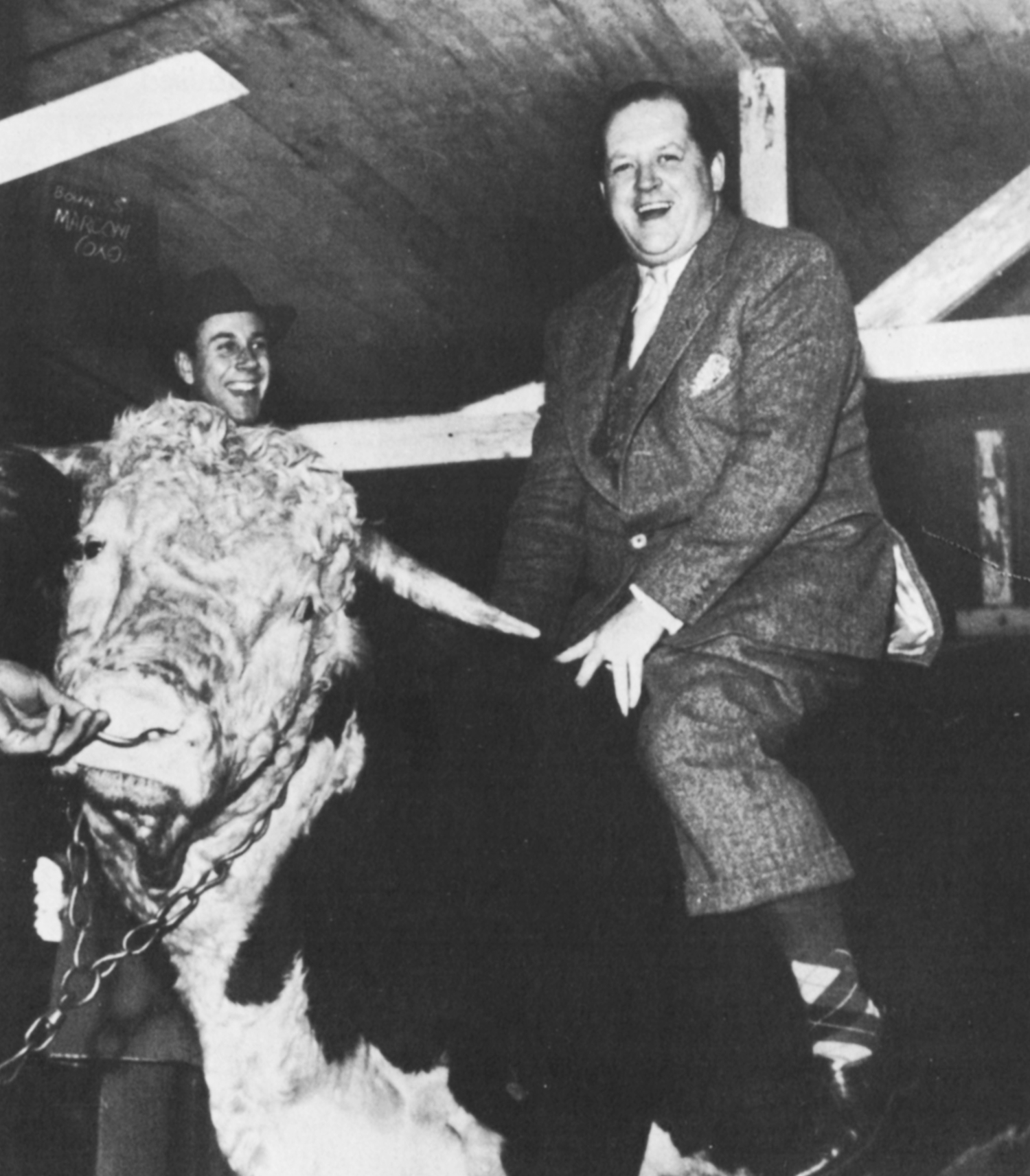
There was the picture which appeared on the front cover of Radio Times of Richard Dimbleby riding on the back of a Hereford bull at Wantage. We had just finished recording at a local farm, when a freelance photographer, who happened to be driving by, asked Dimbleby to pose with the bull. The farmer suggested that he should climb up on its back as it was quite used to that sort of thing. Despite a tight recording schedule Richard obliged, and the photographer went happily away with his scoop.

Dimbleby on the back of a bull

Another photographer, John McNulty, followed the BBC tour of Wisbech with an enormous reflex camera. At one stop when the party was posed for photographs, Richard commented on the size of the camera. ‘You haven’t seen half,’ said John. ‘It plays records too.’ ‘And I suppose you keep your lunch in a spare corner of it,’ Richard retorted.

At the next stop John was missing, but rushed in breathlessly as the party were preparing to move. ‘A moment, Mr Dimbleby,’ he said, flourishing his camera, ‘just one more picture.’

Dimbleby posed again. John hesitated. Something was wrong with the camera. He fiddled with the back – and produced a large paper bag full of sandwiches.

Charles Freer adds this footnote on one of the many occasions when ‘Down Your Way’ visited Ireland. They had gone to a tourist hotel for a meal at about 8 o’clock in the evening:

Having sat in the dining room for a full twenty minutes, Richard beckoned to a waitress and enquired if we were going to get any service. She disappeared into the kitchens and in about five minutes she came back and said, ‘I’m sorry you’ve been kept waiting, but I’m afraid you’ll have to wait a while longer for the Head Waiter’s having his dinner.’ I remember Richard’s reply: ‘Well, who am I to interfere with a waiter’s meal break. Ask him to leave some dinner for the guests.’

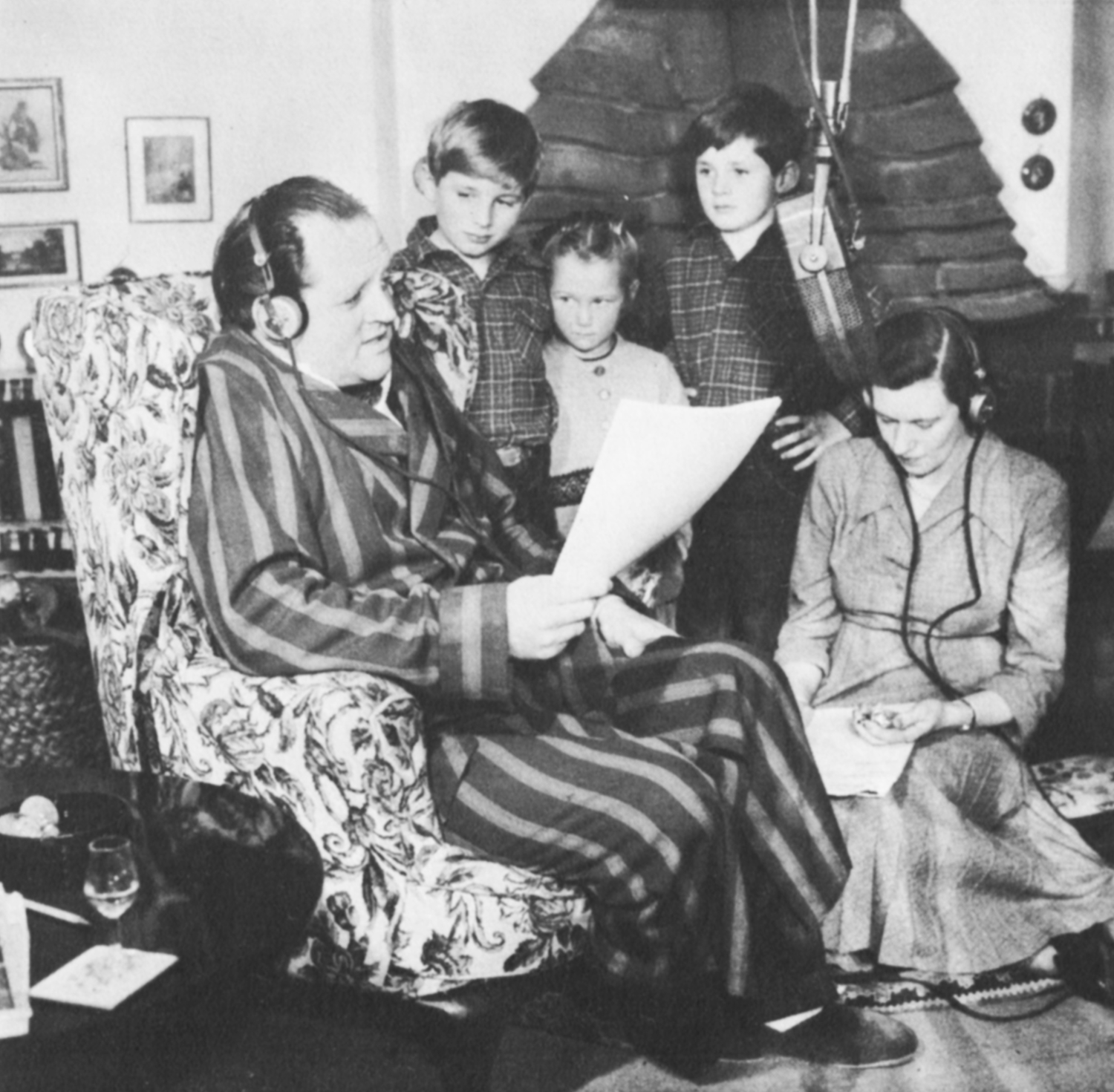
Only once did Dimbleby fail to go Down Your Way. A riding accident forced him to do the programme from his house, by remote control.

In 1953 he handed over the programme to Franklin Engelmann, who has written this:

I ought to tell you that until 1965 listeners still wrote to Richard as the interviewer on Down Your Way twelve years after he relinquished it. Of course, a proportion had stopped listening to it at that time and so were unaware of the change, but the rest must have genuinely thought his was the voice of the programme, so great was his impact. Local journalists have said to my face: ‘And what time does Mr Dimbleby arrive?’

The letters Richard passed on to me with a wryly amused ‘Yours, I think, Jingle’ written on the corner.

Dimbleby in a dressing gown, sat in an armchair, wearing headphones; his family surround him
Down Your Way from home