By the spring of 1965 the growth of Dimbleby’s cancer was accelerating. He was ill at ease in April when he introduced a television programme commemorating some of the great broadcasts made by his American colleague of nearly thirty years’ standing, Edward R. Murrow, who had died of lung cancer.
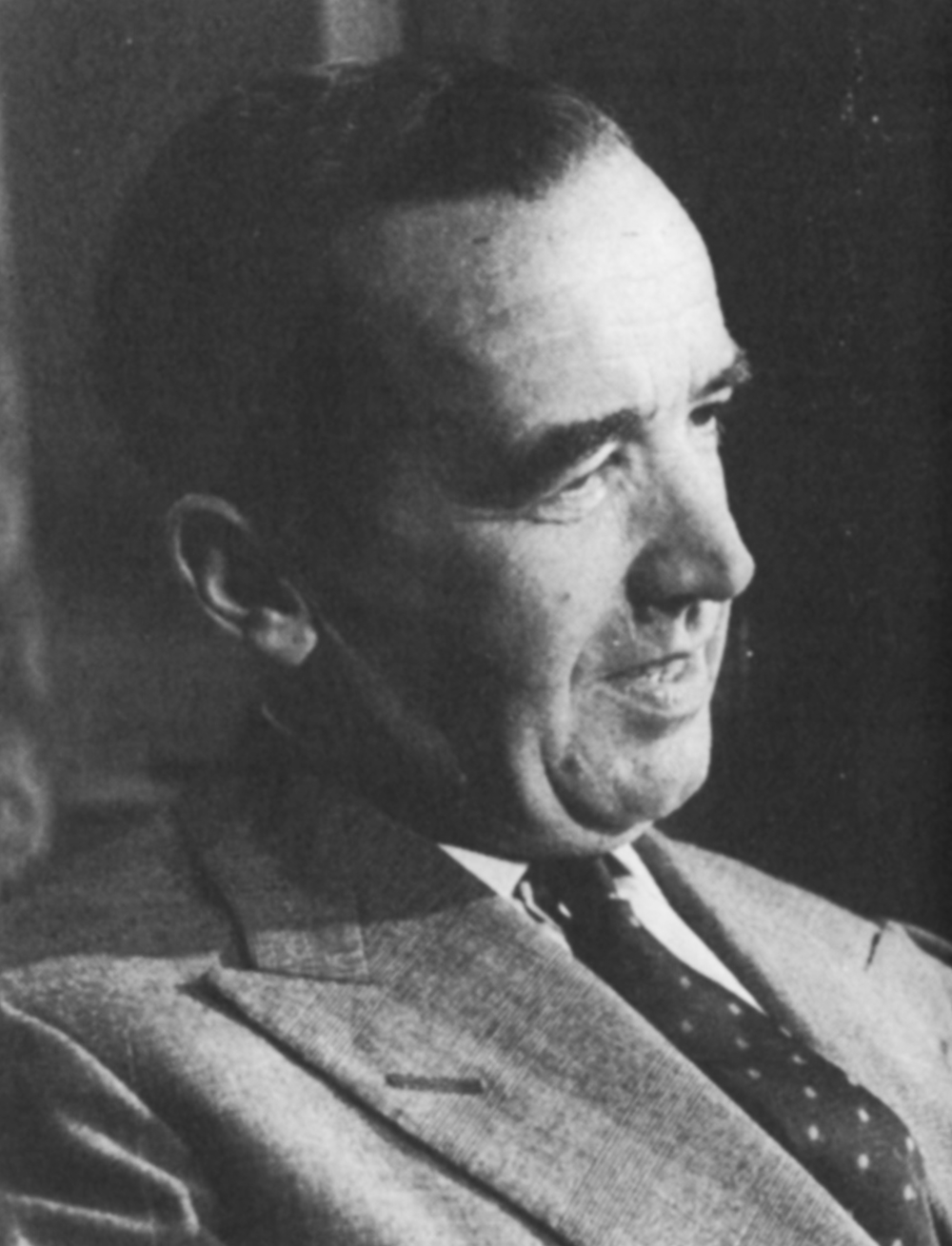
‘Jesus wept’ – two words of exasperation from a Dimbleby racked with pain, which reverberated round the world from the Royal Tour of Germany in May 1965. To most people, but not to some clergymen, Dimbleby had made an appalling irreverent blunder. Richard Francis was his Panorama producer during the Royal Tour of Germany:
It happened at the end of a tough day, Thursday 27 May. For hours the commentators of a dozen or more television networks had been doing their separate commentaries from Berlin on the Queen’s crowded progress round the city. Several times there had been technical breakdowns on the links between Berlin and West Germany. And Richard had to fit his commentary spells in with coverage of the First Test from Edgbaston.
Now, at 8.50 p.m., we were due to transmit from Berlin to Great Britain the edited highlights of the day, with a description, live on the circuit, by Richard. But to our horror all communication with London was lost just as the programme was about to go on the air. Six minutes late one vision line and one sound one were reopened and off we went. Richard was in good form and the delay soon seemed unimportant. But after two minutes, on another line, back came a message: London was not receiving us. We checked back, they were getting neither sound nor vision. Reluctantly we stopped the videotape. ‘Richard’, I said aloud, ‘hold everything. We’re not on the air. London isn’t getting us.’
‘Jesus wept.’
Which would have passed unnoticed, if London was not in fact receiving us perfectly! After a furious control-line conversation we started up again, still under the impression London hadn’t heard a word. What we did was to repeat the first couple of minutes. Richard’s professionalism made it worse; his introduction was word for word the same!
The supreme irony was yet to come. Despite losing the first ten minutes we were now ordered to end on schedule, at 9.15. And that meant fading the recording just as the Queen was approaching the Berlin wall. What an anti-climax.
Richard for once was silent at the end of a programme. More precisely he was speechless – with anger. Anger not for himself, but because he hated any BBC programme to fail, particularly one like this. There was no getting away from it, it had been a shambles. Glumly we thanked our hosts, ZDF; it was not their fault. The tension was only broken when one of the German engineers approached Richard and clicked his heels. ‘Mr Dimbleby I thank you very much. I am tonight very honoured. I always wanted to work with your BBC.’
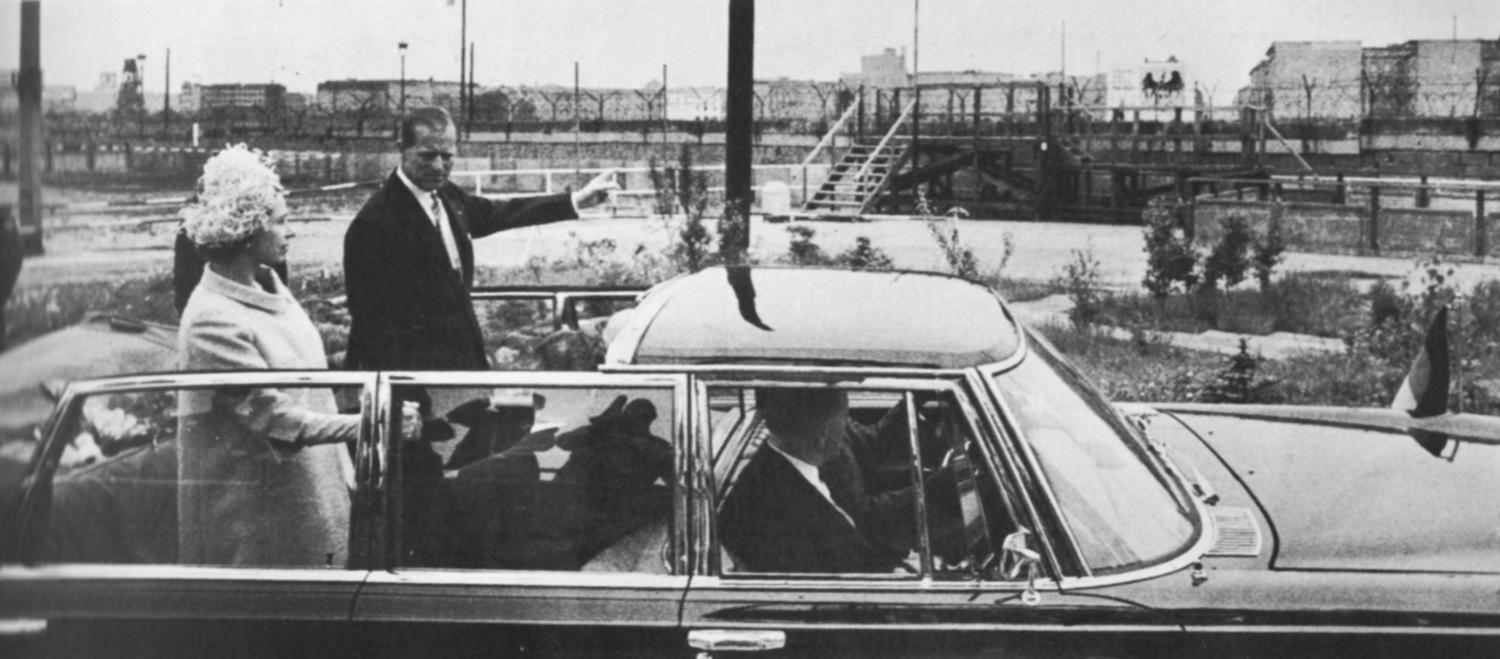
Of course Richard knew Berlin well. Before and at the end of the war, and later with the building of the Wall, he had made many broadcasts from there. The day before the Queen arrived, as was his wont, he had driven round the route she was going to take. Typically when he got to the Potsdamerplatz he told of his previous broadcasts from the place. There was the time in 1939 when he had described a mass rally passing down the Potsdamerstrasse and through the Platz. In their day they were to Berlin what Regent Street and Piccadilly Circus are to London today. Now they are desolate and deserted, and divided by the Wall. And just on the Western side he found the nail-head in the cobbles driven in at the end of the war to mark the limits of the American, British and Russian sectors. It was from this point that he had introduced Panorama on the night of 31 July 1961. Two weeks later the Wall was built.
At the Brandenburger Tor he stopped the car and got out. He saw an opportunity to gather something of the real flavour of life at the Wall. Two British M.P.s were manning an observation box at the bottom of the Street of 17th June. Recognising Richard they welcomed him to their raised platform. Fifteen minutes and a few small but revealing observations later, Richard continued his tour. The next day, when the Queen arrived at the Wall, his commentary was that little bit richer.
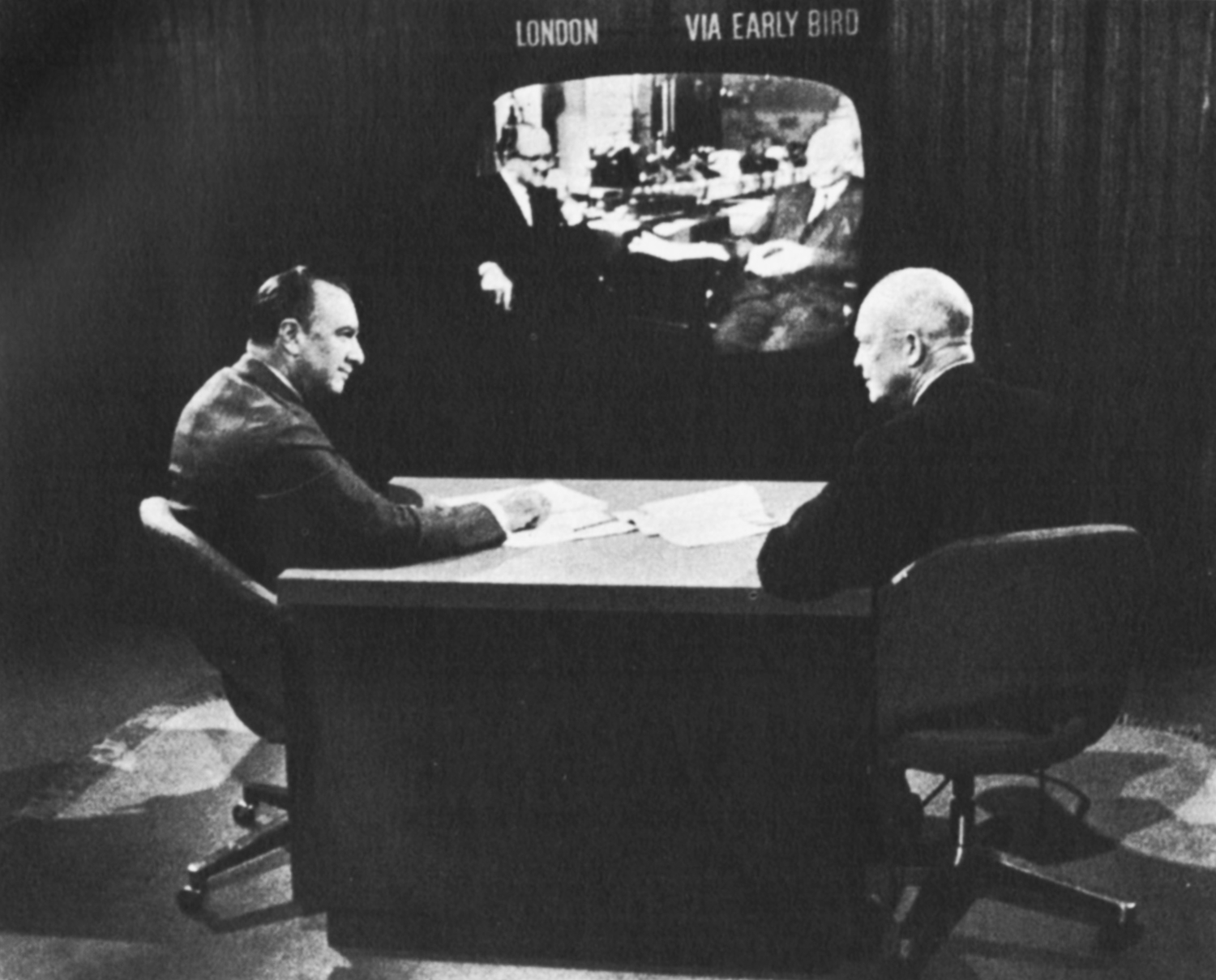
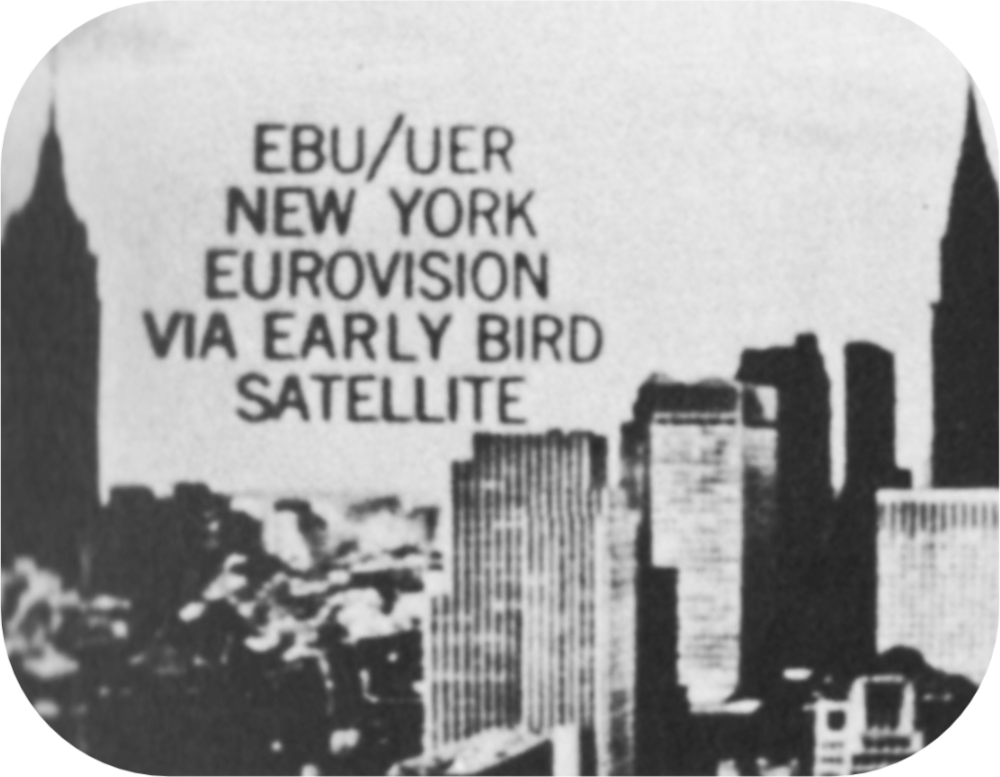
Richard spent most of the month of May 1965 either on or in the air. He started by flying the Atlantic three times in four days. After filming ‘New York’s Finest’, the police, he returned to introduce the Early Bird inaugural programme from London. The same night he flew out to introduce Panorama from Wall Street. Next day he rushed back to prepare for ‘VE+20’ with Monty and Ike taking part. That was the programme in which Richard took viewers round Churchill’s underground War Room, and proudly introduced David Dimbleby’s commentary from Belsen. After that a crowded fortnight following the Queen round Germany and continuing with Panorama each Monday. Seventeen transmissions and a dozen flights in one month.
It had been a tough ten days since Her Majesty started the tour. The night before she was due to arrive, Richard introduced Panorama from the Hotel Petersburg, at Königswinter. Two hours before we went on the air there was a terrible thunderstorm, and rain got into everything. When the programme started, we in the control van could not hear what Richard was saying. Never mind, we thought, he will follow the pictures. We didn’t know that his monitor had packed up just before transmission and he was commentating blind – imagining that our pictures were following his words. Fortunately he repeated almost exactly what he said in rehearsal, the pictures matched, and very few viewers would have noticed.
On the first evening of the Queen’s trip Richard was asked to comment on the arrival of Her Majesty for the banquet at Schloss Bruehl. This was due at 7.25 London time and so would fit in well with the end of Tonight. It would take about ten minutes.
Unfortunately the royal car was delayed nearly half an hour. Richard, as ever, continued implacably although the pictures offered little to talk about. Anxiously London demanded information about the Queen and why she was late. So too did Richard, with anguished facial expressions whilst he talked. The German police were approached; they knew she had left for the banquet but had no idea how far she had got. There were enormous crowds blocking the route. German Television were approached; they knew nothing. Then their producer had an idea: ‘Perhaps Herr Dimbleby knows?’
Richard was never the luckiest of people with his flights. Coming back from Hamburg at the end of the Royal Tour his Trident had to make an emergency landing. All three of the hydraulic systems failed in turn, and the plane was left without any brakes. It headed for Amsterdam, the nearest alternative airport, and Richard went back to exchange a jolly word with the rest of the BBC party. To his amazement he saw a block of seats occupied by London policemen in uniform. They had been in Hamburg to embellish the Queen’s visit. Jokingly Richard asked them if they were ready to die bravely. According to him, their reaction was to put their helmets on!